Back leaders for their policies, not personality cults
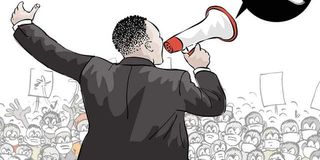
As 2027 beckons, voters should resist becoming participants in political theatre designed to mobilise emotions rather than encourage thoughtful debate.

As Kenya edges closer to the 2027 General Election, familiar political scripts are unfolding once again. Campaign rallies are becoming louder, accusations sharper, and politicians increasingly portray one another as irredeemable enemies. Their supporters often mirror this hostility, treating political competition as a personal battle rather than a contest of ideas.
History, however, tells a different story. Kenyan politics has repeatedly shown that today's fiercest rivals can become tomorrow's closest allies. More often than not, political relationships are shaped by interests rather than permanent enmity. Unfortunately, it is ordinary citizens—not politicians—who bear the greatest cost of these shifting alliances.
Kenya's recent political history offers several examples. Following the disputed 2007 General Election and the violence that claimed more than 1,000 lives, then President Mwai Kibaki and former opposition leader Raila Odinga put aside their rivalry to form the Grand Coalition Government under the National Accord and Reconciliation Agreement in 2008. The arrangement helped restore stability after one of the country's darkest moments.


A decade later came another dramatic turn. After months of political confrontation following the 2017 presidential election, then President Uhuru Kenyatta and Raila Odinga surprised the nation with the March 9, 2018 Handshake. Leaders whose supporters had viewed each other as bitter enemies suddenly embraced and pledged to work together under the Building Bridges Initiative.
The political realignments before the 2022 elections reinforced the same lesson. Alliances shifted, coalitions were reconfigured, and politicians crossed political divides in pursuit of electoral advantage. Leaders who had fiercely criticised one another found themselves sharing platforms when circumstances changed.
Coalition building
There is nothing inherently wrong with political cooperation. Democracy often requires dialogue, compromise and coalition-building. The problem arises when politicians spend months convincing supporters that their rivals are beyond redemption, only to later join hands without adequately explaining what has changed. Such reversals deepen public cynicism and leave supporters feeling used.
Many Kenyans become emotionally invested in these political contests. Friendships are strained, families divided, and communities polarised over politicians who may themselves be quietly negotiating future alliances. While citizens quarrel in public and on social media, political leaders frequently keep communication channels open behind the scenes.
As 2027 beckons, voters should resist becoming participants in political theatre designed to mobilise emotions rather than encourage thoughtful debate. Instead of focusing on who insulted whom at the latest rally, citizens should demand answers to more important questions. Which leaders have honoured their promises? Who has demonstrated integrity in public office? What practical solutions are being offered to tackle Kenya's economic and social challenges?
Those challenges remain urgent. Millions of Kenyans continue to grapple with the high cost of living, unemployment, expensive healthcare, struggling businesses and concerns over the quality of public education. These issues deserve far greater attention than the endless exchange of political insults.
Democracy works best when voters make decisions based on policies, competence and accountability rather than personality cults or temporary political feuds. Leaders should earn support through performance, not through carefully choreographed confrontations that may disappear the moment political interests change.
As the country heads towards another election, Kenyans should remember one enduring truth: politicians may fight fiercely in public today, but many will readily negotiate tomorrow if it serves their interests. The ordinary voter, however, continues living with the consequences of government decisions long after campaign slogans have faded.
The lesson is simple. Support leaders because of their ideas, integrity and record—not because they appear to be fighting someone today. Political alliances will come and go, but the need for accountable leadership, economic opportunity and better public services remains constant. Those are the issues that should guide voters as 2027 approaches.
Follow our WhatsApp channel for breaking news updates and more stories like this.
Benson Matheka is a journalist with Daily Nation.