“It is vibes and Insha’Allah.”
That is what the streets say now when speaking about Kenya’s leadership. Not with hope. Not with admiration. But with the exhausted sarcasm of wananchi who have watched promises dissolve like smoke above a traffic jam on Uhuru Highway.
Not on helicopters slicing through the sky while ordinary citizens drown below in floods, debts, taxes, and despair.
Yet here we are. A nation governed like a WhatsApp group admin forgot the agenda but kept forwarding motivational quotes.
The leadership moves from funeral to wedding, from harambee to church fundraiser, from televised insult to social media spectacle, while millions of Kenyans wake each morning to the mathematics of survival.
Mama mboga counts tomatoes like a battlefield medic rationing supplies. The boda boda rider watches fuel prices rise like a cruel elevator that never comes back down. Rent swallows salaries whole. Electricity tokens vanish in minutes. Even hope now feels taxed.
Country is bleeding money
The same government that ascended to power wrapped in the language of hustlers and empowerment now presides over an economy where nothing seems affordable anymore, except “Affordable Housing,” and even that phrase has become a national punchline.
The irony hangs over the country like Nairobi floodwater after heavy rain: thick, dirty, impossible to ignore. While citizens tighten belts already cutting into bone, the government’s appetite keeps expanding: convoys grow longer, guzzlers multiply and choppers buzz overhead like mechanical vultures surveying the carcass of this republic. Public officials speak the language of sacrifice while stomping on taxpayers with their red-bottom soles.
Meanwhile corruption is no longer shocking in Kenya. It has become routine background noise. Billions disappear from public coffers with the regularity of weather forecasts. Audit reports land with a thud, trend online for two days, then vanish into the same black hole swallowing accountability.
Even leadership itself appears to be eating its own. Promises once sold passionately to the electorate have mutated into weapons. Political allies turn on each other publicly. Loyalty shifts hourly. Governance feels less like national stewardship and more like elite turf wars conducted with microphones and motorcades.
And somewhere in the middle of this chaos stands the presidency, an office that once carried weight, restraint, and symbolic dignity regardless of who occupied it.
Today, Kenyans watch a president trade insults openly with opponents and their supporters, words flying carelessly from the highest office in the land. Public discourse has descended into a marketplace quarrel where vulgarity substitutes vision. Leadership now performs outrage instead of responsibility.
Even more disturbing is the moral decay spreading through sections of leadership. At a time when schoolgirls need protection, guidance, and safety, some women leaders choose instead to sexualize them publicly for applause and headlines. It is a betrayal wrapped in laughter. A generation of girls is growing up watching leaders reduce their dignity into entertainment.
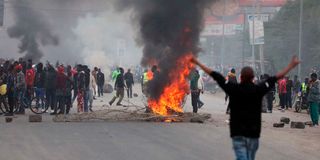
Then there is the shadow Kenya still refuses to fully confront: the blood spilled during the 2024 protests against the Finance Bill.
Young Kenyans marched carrying phones, flags, cardboard signs, and frustration. Some returned home in coffins. Others never returned at all.
That moment should have forced national reflection. It should have humbled leadership into listening. It should have marked a turning point.
Now, as debates around the 2026/2027 Finance Bill intensify, many Kenyans feel the same noose tightening around their necks. The proposed fiscal framework projects government expenditure of nearly Sh4.7 trillion, against revenues of about Sh3.5 trillion, leaving another massive borrowing gap to be filled by debt and taxation.