Media freedom is a basic right enshrined in law
Media freedom is not a privilege granted by those in power.

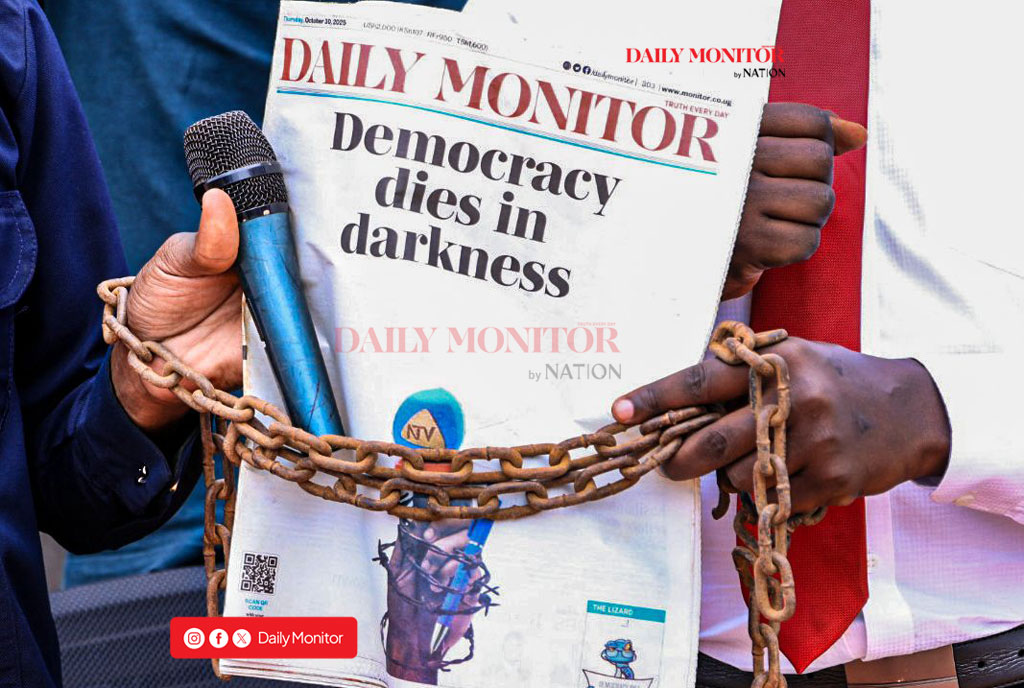
On June 28, 2026, Uganda’s Chief of Defence Forces, General Muhoozi Kainerugaba, ordered the immediate shutdown of two of the country’s most prominent independent media outlets — the Daily Monitor newspaper and NTV Uganda television station — both owned by the Nation Media Group.
Armed security personnel were deployed to the company’s headquarters in Namuwongo, Kampala, and its broadcast facilities at the Serena Hotel. Staff were prevented from entering or leaving, and broadcasts went dark in the early hours of Sunday morning. The General declared on social media that he does “not believe in a free press” and that the outlets would “not re-open without my permission.” He further stated that “ALL bad stories about Uganda have to be cleared by my office.”
This brazen military intervention is not an isolated incident. It represents a disturbing return to primitive methods of control after what had been a relatively long period of relative restraint.

As someone who served as Chief Executive Officer of Nation Media Group — a regional media house with operations across East Africa — I witnessed repeated attempts to intimidate, harass, and silence independent journalism in Uganda during my tenure. Similar pressures, though less extreme in scale, have also occurred in Tanzania and Kenya over the years. Yet Uganda has consistently stood out as the most notorious in the region for its hostility toward a free and independent press.
Media freedom is not a privilege granted by those in power. It is a fundamental right enshrined in Uganda’s Constitution. Its primary purpose is to inform citizens, but its even more critical role is to serve as a check on the executive, legislature, and judiciary. An independent press exposes corruption, holds leaders accountable, amplifies the voices of ordinary citizens, and ensures that power is exercised transparently.
Military sieges
When governments resort to closures, raids, and military sieges, they do not eliminate inconvenient truths. History shows that such actions often achieve the exact opposite of what is intended. Banned or restricted outlets frequently gain greater visibility and credibility. Readers and viewers turn to alternative platforms, and social media, and attempts at suppression only amplify the very stories authorities wish to bury.
Beyond the immediate damage to information flow, these actions carry serious long-term costs for the country. Potential investors carefully assess the rule of law, regulatory predictability, and respect for property rights. A nation that deploys soldiers to shutter major media houses signals that business operates at the whim of those in uniform. Tourism, too, suffers when a country projects an image of repression rather than openness and stability.
Uganda aspires to be seen as a modern, democratic state. It holds elections, maintains a multi-party system, and is a signatory to regional and international human rights instruments. Yet no democracy can genuinely thrive — or even credibly claim the label — when the fourth estate is systematically muzzled. The separation of powers and the ability of citizens to make informed choices depend on access to diverse, independent information.
The recent closure should be condemned unequivocally by all progressive forces: governments committed to democratic values, regional bodies such as the East African Community and African Union, international organisations, civil society groups, and media freedom advocates worldwide. Silence or muted responses only embolden those who view the press as an enemy rather than an essential pillar of accountable governance.
Defending specific stories
This is not about protecting any single media house or defending specific stories. It is about defending a principle that benefits every citizen — the right to know, to question, and to hold power to account. Uganda’s people deserve better than a return to the dark days of arbitrary shutdowns and military intimidation.
The current leadership has the opportunity to reverse course immediately: lift the siege on Nation Media Group premises, allow the outlets to resume operations without preconditions, and engage in constructive dialogue rather than threats. Anything less will further erode public trust, damage Uganda’s international standing, and confirm that the country is sliding backwards into authoritarian practices that have no place in the 21st century.
A free press is not a threat to stability. It is the foundation of a stable, prosperous, and truly democratic society. Uganda must choose which path it wishes to follow.
Follow our WhatsApp channel for breaking news updates and more stories like this
Linus Gitahi is a Nairobi-based businessman and former CEO of the Nation Media Group. [email protected]