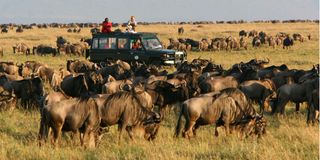
For decades, Kenya’s tourism sector has been hailed as a cornerstone of the national economy – a vibrant industry that showcases the majesty of our wildlife, the beauty of our landscapes, and the richness of our cultures.
But here is the uncomfortable truth: the benefits of tourism remain largely concentrated in Nairobi, Mombasa, and major safari hubs, while rural and indigenous communities – often the actual custodians of the very attractions tourists come to see – continue to watch from the margins.
It is time to change that. Kenya must embrace a more inclusive, community-led tourism model – because when tourism is done right, it does not just bring in foreign exchange; it transforms lives.
Dominated by safaris and beaches
Consider the Il Ngwesi Group Ranch in Laikipia, a Maasai-run eco-lodge that channels profits directly into the community. Built with local materials and staffed by local people, Il Ngwesi funds education, healthcare, and conservation initiatives – all while offering visitors an authentic cultural experience. In Kakamega Forest, trained local guides lead bird-watching and forest walks, creating jobs while incentivising environmental protection.
Let us be honest: the tourism narrative has long been dominated by safaris and beaches. But Kenya is more than lions and lodges. It is the Taita women weaving baskets in Voi, Samburu warriors performing age-old dances in Archer’s Post, and Lake Victoria fishermen hosting visitors on traditional fishing expeditions. Today’s tourists seek authentic, immersive experiences – and that means rural Kenya, with its heritage, foodways, music, and crafts, sits on untapped value.
A thriving tourism sector can be a catalyst for local development. Roads, water infrastructure, power lines and markets – first built to support tourist traffic – end up serving entire villages. In Magarini, Kilifi County, the expansion of a local eco-resort prompted government to improve access roads. Now, farmers move produce faster — not just tourists.
But this change does not happen by luck. It demands deliberate policy and investment. Sustainability must also be taken seriously – not as a fashionable buzzword but as a practical, economic imperative. Kenya’s natural assets are finite, and every season of drought, forest fire, illegal grazing, or sand harvesting erodes the very foundation that tourism depends on.
Community-owned experiences
If communities continue to be sidelined, illegal exploitation becomes a survival strategy. But when communities benefit financially from wildlife protection, river conservation, or preserving sacred groves, they become the frontline defenders of biodiversity. In reality, community conservancies have already proved that environmentally sensitive tourism can exist in fragile landscapes without degrading them – this is the future Kenya must scale.
Improving market access is also key. Too many gifted basket weavers, bead makers, chefs, drummers, potters and herbalists cannot access the market beyond their village centres. County governments and the private sector must come together and intentionally build rural tourism circuits – like wine routes, heritage trails, culinary tours or annual craft markets – that create structured demand. Digital access must also expand – rural artisans should be visible on tourism apps, airline magazines, and e-commerce marketplaces. Domestic tourism also remains an underleveraged market. Kenyans travelling within Kenya should be deliberately nudged towards community-owned experiences – not only high-end commercial products.
Finally, supportive policy is non-negotiable. Licensing regimes today remain bureaucratic, expensive and intimidating for ordinary citizens. Many community groups do not have the costly paperwork needed to even apply for formal recognition. Government – both national and county – must introduce simplified compliance systems, provide low-interest revolving loan funds, support cooperatives with business mentorship and enforce benefit-sharing frameworks in protected areas and heritage zones. Tourism cannot be inclusive while the regulatory architecture remains elitist. Public agencies must also track data – because without evidence, it is impossible to evaluate whether rural households are actually earning more, or whether benefits continue to be captured by the same elite networks.
Tourism is not just an economic statistic – it is about people. When a tourist buys a locally woven kikoi, eats in a village restaurant or sleeps in a community-run homestay, that money does not just support a business – it feeds a family, pays school fees, sustains culture, and keeps ecosystems protected.
That is the Kenya we must build – one where tourism uplifts, includes and empowers.