Hello

Your subscription is almost coming to an end. Don’t miss out on the great content on Nation.Africa

Ready to continue your informative journey with us?

Hello

Your premium access has ended, but the best of Nation.Africa is still within reach. Renew now to unlock exclusive stories and in-depth features.

Reclaim your full access. Click below to renew.

Vetting of Somalis for IDs discriminatory, must end

When you apply for an ID in North Eastern Kenya, your application is vetted by a security committee that includes the NIS, chiefs, police and elders.

What you need to know:

  • The Somali vetting is not similar to the vetting of applicants in other border areas.
  • Over the decades, it evolved as collective punishment and a corruption network.

Most Kenyans do not know the challenges the Somali community in Kenya faces in obtaining identity documents such as ID cards and passports. It doesn’t matter whether one lives in Nairobi, Mandera or Kisumu. Nor does it matter whether one is born in North Eastern counties, Nairobi or any other part of the country. If one is Somali by tribe, they are subject to a discriminatory vetting process. I will cite my own experiences.

In 2018, I went to the Lang’ata area offices to change a simple error on my ID card. The team at the office knew me. But to comply with the vetting requirements, I was asked to get a copy of the Kenya Gazette in which my election as Mandera Senator was published. I served as MP and Senator, but the profiling still applied to me simply because my home county is Mandera.
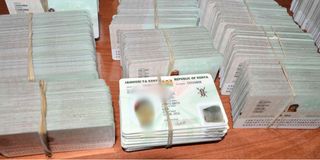
When my daughter cleared Form Four a few years back at a Nairobi school, the registration team that visited her school to give students ID application forms declined to give her one because she was a Somali. Instead, she was asked to visit a registration centres to apply because she is subject to vetting. She was born in Nairobi and has not been to Mandera.

Similarly, when my son applied for passports for his children three years ago, his application was sent to Mandera for vetting by the NIS. Never mind that both him and his children were born in Nairobi.

Applications get rejected

A friend of mine, a prominent Somali surgeon in Nairobi, was distraught last year when he was asked to bring his six-month-old baby to Nyayo House for vetting for passport application. When I told him that’s what we go through in Kenya, he riled at me for allowing this profiling to continue all the time I was in Parliament. 

All Kenyans do remember in 2015 when a prominent TV journalist from the region was asked to bring his six-month-old baby to Nyayo House for vetting. Many Kenyans found it ridiculous. But the State stuck to its guns.

When you apply for an ID in North Eastern Kenya, your application is vetted by a security committee that includes the NIS, chiefs, police, elders etc. After the application is approved, the forms are submitted to Nairobi for processing, and a further vetting is done at Nyayo House. Thousands of applications get rejected at this stage simply because of profiling.

When we presented a complaint against this odious policy to former President Kibaki in 2005, he asked the immigration team, in our presence, just how it vetted applications in Nairobi for people they do not know, and who have already been vetted by the local team in the regions.

Discriminate and Profile Somalis

Their answer as you would expect was simple – national security! The usual excuse for harassing Somalis in the country since independence. Kibaki warned them that this was nonsense and should stop. But it didn’t. 

In 2003, the then Cabinet Minister for National Security tasked the head of NIS to investigate me and a senior State Counsel on our nationality. I was the Shadow Finance Minister then, and the SC was the chair of the anti-corruption watchdog. We were critical of corruption in his office. Even after NIS cleared us after tracing our roots to our villages, the minister was sceptical and directed one of his cousins in NIS to repeat the exercise!

The Somali vetting is not similar to the vetting of applicants in other border areas. This is a deliberate policy to discriminate and profile Somalis. In 1990, the infamous screen card was introduced for Somalis to enhance the profiling. Over the decades, it evolved as collective punishment and a corruption network.

Thousands of residents in the region do not have ID cards. Students lose out on colleges and jobs often from lack of this document. Under the current constitutional dispensation, vetting is discriminatory and unlawful. It must end.

Mr Kerrow is former Mandera County Senator. [email protected]


