Victims of gender-based violence need more access to care and justice
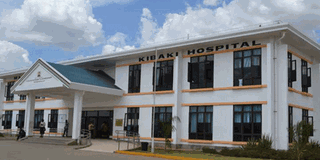
Mama Lucy Kibaki Hospital where Médecins Sans Frontières has implemented a simplified and integrated model using nurses as first-line responders to gender-based violence. FILE PHOTO | NATION MEDIA GROUP
According to the 2014 Kenya Demographic and Health Survey, 45 per cent of Kenyans aged between 15 and 49 had experienced physical violence since the age of 15. Of these, 56 per cent of women and 72 per cent of men had not sought assistance to put an end to the violence.
Too few health facilities in Kenya today have the necessary means to implement gender-based violence care, lacking dedicated trained staff and sufficient resources.
In MSF supported facilities, around 80 per cent of the victims are admitted within 72 hours.
Last week, the Kenyan government together with the United Nations launched the National Program to address gender-based violence. This is a positive step that shows a growing awareness at the highest levels of a nation-wide issue that requires more coordinated effort from all actors involved.
Médecins Sans Frontières has been providing medical care for victims in Nairobi Eastlands since 2008, with a focus on sexual violence. Last year, our teams treated more than 2,500 patients and the vast majority (>90 per cent) were female. More than half were aged below 18. This is currently our largest gender-based violence project worldwide.