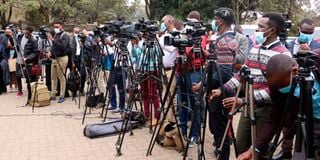
Journalists usually play the role of a neutral observer and describer of facts and events. Occasionally, however, they pass judgment in what’s called interpretive journalism. One of the ways they do this is to “name and shame” persons or organisations involved in wrongdoing.
Let’s say a fight breaks out in a church. It’s normally sufficient for a journalist to narrate what happened and let readers decide whether it is shameful or not. But in interpretive journalism, the journalist decides for the reader.
Journalists do this to right the wrongs and discourage likely wrongdoers. They may also want to humiliate the wrongdoers. They argue this is justified in the public interest.
The most common practice is to write a shaming headline. “Shame of UhuRuto men in church fight ” is such a headline. It appears in the Daily Nation of September 6, 2021. The story opens with the condemning words: “A tiny church in Kieni, Nyeri County, was yesterday turned into a theatre of political intolerance that pitted President Kenyatta’s supporters against those of his estranged deputy William Ruto.”
Some of the shaming headlines are mild. Others are harsh. “Shame as government snubs Senegal-bound national team ” is a mild headline. It’s appears in the Daily Nation of August 7, 2019, tucked away in the sports pages. The story explains why the national team for the Africa Cup of Nations (Afrobasket) championships in Senegal was reduced from 17 to 14 as the government failed to provide funds.
“Shame: Revenge law to kill SRC” is a crying shame headline. It’s published as a splash in the Daily Nation of June 10, 2019. “Here are the details of a scheme by MPs, angered by salary watchdog’s bid to tame their greed, to abuse their legislative power, and wipe out the regulator,” reads the damning kicker.
Even harsher is “Day of Shame”, the front-page headline of the Daily Nation of March 5, 2021. It deplores the bribery, intimidation and violence during the by-elections in Mutungu, Kabuchai, Kiamokama and Nakuru.
There are three types of shaming. The most impactful is when a newspaper makes the shaming part and parcel of the story. For example, “Shame: Grabbers’ title deeds axed”, the frontpage headline in the Daily Nation of July 27, 2017. The kicker to the headline names and shames: “Musalia Mudavadi, Joe Nyagah among big losers in massive recovery of illegally allocated land.”
The second type is given as an opinion of the newspaper. For example, “Broke EAC is a big shame” is the title of an editorial in the Daily Nation of December 23, 2015. It says the East African Community Secretariat in Arusha might not pay staff their December salaries as it was gripped by a financial crisis, which was “a monumental shame”.
The third type is when the newspaper is merely quoting the source of the story. For example, “Raila: Shame on the observers asking Nasa to concede defeat”, published in the Daily Nation of August 17, 2017.
The latest naming and shaming headline, “Shameless MPs”, is splashed across last Friday’s front-page of the Daily Nation . The newspaper says the MPs are “shameless” because they were not present in the House “on the day the most important issue in our lives — the high fuel prices” was being debated. Instead, eight of them were “accompanying Deputy President William Ruto and ODM leader Raila Odinga on the campaign trail”.
Shaming headlines aren’t always deserved. It’s tempting for journalists to go over the top. The “Shameless MPs ” headline appears to be OTT. The story tells us that only 80 MPs attended the debate and 269 failed to attend but it accounts only for the eight who were on the campaign trail. And it doesn’t tell us how many MPs normally attend debates, and whether the debate would have had a different outcome had more attended.
What the story says is that the most important issue in our lives is the high fuel prices — not campaigning for the next president.
It is necessary to add context to a story that makes shaming its logical conclusion. The elements of shaming must be genuine. Shaming should only be done when it’s deserved.
The Public Editor is an independent news ombudsman who handles readers’ complaints on editorial matters including accuracy and journalistic standards. Email: [email protected] . Call or text 0721989264.