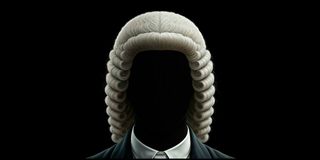
Something has shifted in the Nation Media Group’s coverage of court proceedings in the recent past. Some of the stories refer to judges’ and courts’ decisions, and advocates’ arguments, without naming them, a move that has elicited debate and concerns.
The editors cite a clause in the Editorial Policy Guidelines and Objectives and advice from the Legal department for the change, but there’s a question of how these are being applied.
On December 20, 2025, Senior Counsel Ahmednasir Abdullahi sparked a debate on X when he described the shift as “an opaque policy, with a view to diminishing public scrutiny, accountability and debate on courts’ judgments, especially those involving controversial personalities and corruption cases”.
He was reacting to a story on former Kiambu Governor Ferdinand Waititu’s case, in which the judge ruled that the former county boss would lose assets worth Sh131 million out of Sh1.9 billion in wealth that the Ethics and Anti-Corruption Commission had sought to seize. The story did not name the judge who made the ruling.
In an email to the Public Editor, Mr Abdullahi adds that, by omitting the names of the judges, the Nation is covering up for the corrupt judges and denying the upright ones the public appreciation and approval they deserve.
Transparency and accountability
A senior editor referred the Public Editor to a note from the Legal department reminding journalists to comply with the Group’s Editorial Objective Number 10, which states that “stories must concentrate on events themselves, not on the names of officials associated with them. A magistrate's or judge’s name and title, for example, should not be published unless his/her actions, remarks, or other involvement are pertinent to the case or the story”.
The note emphasises the concern (from a reader) that NMG platforms were citing “unnecessary information, such as judges’, magistrates’, or even advocates’ identities, more for promotion than for the readers’ benefit”, contrary to the objective.
No doubt the Editorial Objective (which has been in place for several years) and the Legal department’s advice are well-meaning. The spirit of this guideline was to stop stories that merely state, “the accused is represented by Mr XY”, or “the case is before Judge AB”, where the names add no value to the story, and only provide publicity for the named individuals. The trouble, however, is how the guideline and advice are being applied.
It is even more worrisome that the application of the advice is inconsistent. We sampled several articles and found that magistrates and judges are named in some and not others. We found no logic to the inconsistency.
Over the years, the Judiciary has undergone a major transformation, becoming more open to the public in a bid to promote transparency and accountability. Other than in matters involving children, or State security, or for purposes of witness protection, most cases in Kenya are held in the open court, with full access to the media.
Television stations sometimes show video clips of court proceedings, putting the judges, magistrates and advocates in the public view. In virtual court proceedings, all court officers must turn on their cameras. Additionally, the list of cases before the various courts, which is on a public portal, includes the names of the judges or magistrates. Concealing the names in the media, therefore, serves no value.
Courtroom of hooded officers
It is only fair that court officers’ quotes in rulings and judgments are attributed to them so that they, too, can be judged in the court of public opinion. This is more so in matters of high public interest, where the public would want to understand how decisions were arrived at.
More importantly, judges and magistrates make decisions as individuals and append their signatures to them. True, their decisions become court rulings or judgments, but individual judges and magistrates remain responsible for them. That is why the Judicial Service Commission’s Disciplinary Committee holds magistrates and judges personally liable when their rulings or judgements are not founded in law, or are found to be driven by personal interest. That is why litigants can apply for a judge or magistrate to recuse themselves if they have grounds to believe the court officer will not act fairly.
That is also why, in the standard application of precedence in their arguments and submissions, lawyers attribute quotes to the individual judges who uttered the words, not to the courts where they were made. Magistrates’ and judges’ performance, including their years of experience and the rulings and judgments they made, are major contributors to decisions about appointments to more senior roles.
Back to the Nation’s Editorial Policy Guidelines and Objectives. What can be a more “pertinent action” by a judge or magistrate than the ruling they make? For an advocate, what can be a more “pertinent action” than the legal arguments and submissions they present before the court?
Imagine a courtroom where the advocates and prosecutors are hooded, and the judge is behind a heavy curtain, from where she or he listens to presentations by plaintiffs and defendants, and then makes a ruling. And the document with the ruling is simply stamped “By order of the court”. This is exactly what the Nation’s latest style of covering court proceedings is serving the public.
Contact the Public Editor to raise ethical concerns or request a review of published material. Reach out: Email: [email protected] . Mobile number: 0741978786.