Beyond awareness: How community action and responsible self-care are changing the fight against malaria
Sponsored by Haleon Sub-Saharan Africa
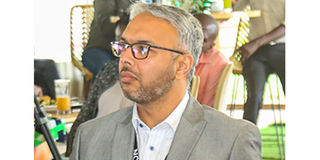
Himanshu Raj, General Manager, Sub-Saharan Africa.
By Himanshu Raj
Malaria remains one of the world’s most persistent and complex public health challenges, yet it is both preventable and treatable. In Kenya, it continues to shape the daily realities of millions.
In many communities, a simple fever is not just a passing illness but a potential warning sign of the life-threatening disease, one that disrupts schooling, livelihoods, and already stretched health systems.
According to the World Health Organization (WHO), more than 6.8 million confirmed and suspected cases were recorded in the country in 2024 alone, alongside over 10,000 lives lost.
The WHO African Region continues to carry a disproportionate share of the global malaria burden, accounting for approximately 95 percent of all global cases (265 million) and deaths (579,000). Within this context, Kenya offers a nuanced picture of both progress and persistent challenges. Encouragingly, national malaria incidence has declined from 104 to 72 cases per 1,000 population between 2023 and 2025. This progress reflects strengthened accountability, expanded local production of antimalarial commodities, and sustained advocacy through initiatives such as the Zero Malaria Campaign.
These figures are a stark reminder that while progress has been made, the fight against malaria is far from over – particularly in Sub-Saharan Africa, where new outbreaks of the disease continue to be reported, sounding the alarm for strengthened surveillance, early detection, and prompt treatment.
This year’s World Malaria Day theme, “Driven to End Malaria: Now we can. Now we must”, captures a pivotal moment in this centuries-old fight against the disease.
The tools to end malaria exist. The question is whether we can deploy them equitably, sustainably, and at scale – particularly in high-burden regions such as Kenya where over 70 percent of Kenya’s population remains at risk, with more than four million cases reported annually.
The disease is responsible for an estimated 40 percent of fever-related illness, and its economic toll is significant, with over 170 million working hours lost each year.
The reality is that the disease is not merely an environmental or biomedical issue, it is socio-economic and political. It requires the buy-in of communities and the government alike in addressing its ever-rising scourge.
Kenya’s Malaria Strategy 2023–2027 calls for inclusive, equitable, and multisectoral action. Central to this is the goal of universal coverage of vector control interventions, including long-lasting insecticidal nets, indoor residual spraying, and larval source management. These interventions, combined with early diagnosis and treatment using artemisinin-based combination therapies, have proven effective. However, their impact is often constrained by gaps in access, utilisation, and community engagement.
In November 2025, a partnership between Haleon Kenya Ltd and Amref Health Africa in Kenya was formalised to advance precisely this model. Focused on prevention, awareness, and treatment, the initiative aims to reach approximately 75,000 people in Siaya County – engaging 200 community health promoters, 30 community health assistants, nearly 200 teachers, and over 45,000 schoolchildren.
Over nearly six months, the programme has prioritised practical, locally grounded interventions: Community education on fever management associated with malaria, distribution of insecticide-treated nets – particularly to children’s homes – and the training of healthcare workers and community health promoters. By integrating malaria prevention messaging into schools and health facilities, the initiative strengthens both individual knowledge and system-wide resilience.
Malaria elimination will not be achieved solely through top-down programmes or medical interventions. It requires empowered communities that can recognise symptoms early, seek timely care, and adopt preventive behaviours. It also demands strong partnerships that bridge public and private sectors, combining resources, expertise, and reach.
The partnership between the organisations has brought to life the Together for Better Health campaign, which exemplifies this integrated model. By promoting community-based fever and pain education, improving access to responsible and affordable fever relief through Haleon brands such as Panadol, and expanding the distribution of insecticide-treated nets, the campaign addresses both the immediate and underlying drivers of malaria. Its ultimate goal is clear: To strengthen community health systems and accelerate progress toward elimination.
Kenya’s health system, like many across the continent, faces structural constraints. Access to care remains uneven, particularly for marginalised communities, and out-of-pocket payments continue to drive catastrophic health expenditures for many households. As a result, over-the-counter medicines are often the first point of care. Paracetamol – through trusted options such as Panadol – provides an accessible, evidence-based solution for relieving fever and pain, helping communities to manage early symptoms while supporting appropriate care-seeking.
Across the region, malaria continues to pose a cross-border threat, as evidenced by recent spikes in cases in parts of Southern Africa. The need for coordinated regional responses, data sharing, and sustained investment remains urgent.
The path to a malaria-free Kenya – and indeed a malaria-free Africa – is within reach. It demands a fundamental shift toward community-centred, equity-driven strategies that prioritise those most at risk. It calls for sustained political will, innovative financing, and partnerships that extend beyond traditional health actors.
We are, as the World Malaria Day theme suggests, at a moment of possibility. The science is clear. The strategies are known. The impact of inaction is undeniable.
Now we must ensure that the final mile is powered not just by interventions, but by people – by communities equipped, empowered, and supported to lead the fight against malaria where it matters most.
____________________
Himanshu Raj is the General Manager at Haleon Sub-Saharan Africa