Experts on how to turn agroforestry policy into action in East Africa
Sponsored by Vi Agroforestry
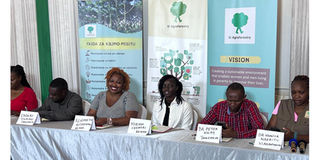
East Africa Drylands Agroforestry Experts Group during the post-policy brief dialogue in Musoma Tanzania.
By Hellen Miseda
In a direct move to combat climate change and food insecurity, Vi Agroforestry and the Swedish International Agricultural Network Initiative (SIANI) hosted a major Agroforestry Symposium on November 13-15 in Musoma, Tanzania.
The event was strategically timed to build on the momentum of a pivotal new policy brief – “Scaling Agroforestry as a Climate Resilience and Food Security Solution in Drylands of Kenya, Uganda, and Tanzania”.
Launched in July by the East Africa Dryland Agroforestry Expert Group, the brief provides a compelling evidence-based roadmap for using agroforestry to restore degraded land and improve food security in the region’s arid areas.
According to organisers, the symposium served as a dynamic platform to translate this policy into tangible action, bringing together farmers, researchers, government officials, and development partners.
“The policy brief has given us the roadmap. This symposium is the vehicle that will accelerate our journey, uniting key stakeholders to advance sustainable land management and build resilient livelihoods for dryland communities,” said the Regional Environment and Climate Change Resilience Advisor at Vi Agroforestry Dr Monica Nderitu, during a press conference in Musoma, Tanzania, ahead of the event.
A key highlight was a high-level “Post-Policy Brief Dialogue” held on November 12 in Musoma, to forge a concrete regional action plan, secure commitments, and establish partnerships to drive the widespread adoption of agroforestry among smallholder farmers. This session was live-streamed to facilitate broader public and media participation.
The keynote speaker at the Post-Policy Brief Dialogue Sarah Kezia noted that agroforestry – the deliberate integration of trees with crops and livestock – was far more than a land-use technique.
“It is a strategic development approach that strengthens resilience, stabilises ecosystems, and enhances livelihoods. Evidence continues to demonstrate its power. Agroforestry can increase crop yields by up to 58 percent, rebuild soil organic matter by more than 30 percent, improve biodiversity, and open new income streams for households that depend on dryland economies,” she stated.
The Musoma symposium is also being hailed as a critical opportunity for key groups most affected by climate change. Elizabeth Githendu, a researcher from the University of Nairobi, emphasised its value for women, who form the backbone of agriculture in the drylands, noting it will connect them directly with vital knowledge and technologies.
Miriam Chemtai, a Field Officer with the Paran Women Group, highlighted the focus on engaging youth, stating that the event’s interactive sessions were a “golden chance” for them to gain practical skills and see a future in a revitalised agricultural sector.
Dr Peter Mlay, an agronomist from Tanzania Agricultural Research Institute (TARI), speaking during the Dialogue, emphasised that for any technology to be successfully adopted in farming, farmers must be empowered and extension services must be strengthened.
The symposium, a free public event, featured interactive field demonstrations, farmer-led sessions, and a knowledge and networking hub.
Vi Agroforestry is a Swedish development organisation that, since 1983, has worked to combat climate change and environmental degradation, using trees as a tool.
Through sustainable methods, trees are grown together with crops to restore land, increase carbon storage, and strengthen ecosystems. Since the start, more than 160 million trees have been planted, and nature is recovering in the areas where Vi Agroforestry operates.
The Swedish International Agricultural Network Initiative (SIANI) is a globally recognised network dedicated to combating poverty and fostering sustainable development through better food systems. It acts as a bridge between research, policy, and practice.