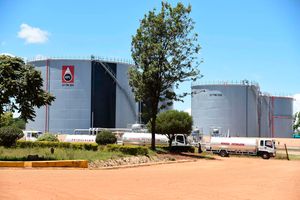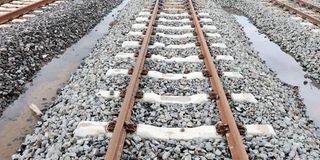
Some car dealers have opted to use the Metre Gauge Railway to ferry imported vehicles to Nairobi.

Fuel supply disruptions have affected cargo movement around the Mombasa port and adjacent holding depots, forcing car importers to switch to rail services for deliveries and raising fears of greater congestion at the gateway, as truckers also reported difficulties sourcing diesel.
A spot-check by the Nation showed that some car dealers have now even opted to use the Metre Gauge Railway to ferry imported vehicles to Nairobi and other hinterland areas, including Naivasha.
“This is a new norm, we have to do business and the units have to reach the owners, hence it is upon the dealer to use any mode to cut costs,” Car Importers Association of Kenya chairman, Peter Otieno, said.
Previously, car importers fueled their units and delivered them to showrooms across the country by road.
The fuel shortage around Mombasa has raised fears of deeper congestion at the port, which has, since 2024, witnessed a pile-up due to high container volume and previous system bottlenecks. At least 3,500 trucks pick up cargo at the port daily, and a fuel shortage would mean many of them are kept off the road, resulting in congestion at the gateway.
With more than 3,500 trucks picking up cargo at the port of Mombasa and different depots, congestion in the different depots will likely result in a serious commodity supply chain.
Apart from handling local cargo, Mombasa port serves different countries, among them Uganda, South Sudan, Rwanda, the Democratic Republic of Congo, and Burundi.
Newton Wang’oo, chairman of the Kenya Transporters Association, said that long-distance drivers have reported fuel shortages along key transit routes.
“Road transport is the backbone of Kenya’s economy and regional trade within the East African Community. The current situation threatens movement of essential goods and transit cargo, stability of supply chains, Kenya’s position as a regional logistics hub,” he said.
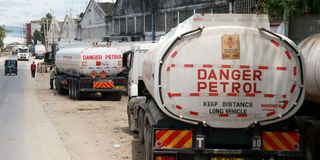
Empty fuel tankers queue near Shimanzi Depot in Mombasa on April 8, 2026 as fuel shortages hit the country.
Ms Jane Wanjiru, a shipper in Nairobi, said she expected three cargo containers by around Wednesday but had not received them days later due to fuel shortages.
Motorists in several parts of the country have reported fuel supply disruptions, nearly two months after the US-Israel war with Iran started. The Middle East war began on February 28 when the US and Israel carried out surprise airstrikes in Iran, killing Supreme Leader Ali Khamenei and other officials. Iran retaliated with missile and drone strikes against Israel, US bases, and allied countries.
This escalation has resulted in the closure of the Strait of Hormuz, a critical global trade route that handles about 20 percent of the world’s oil supply and 30 percent of maritime trade. A temporary ceasefire between the US and Iran has seen the reopening of the passage, but with restrictions.
Follow our WhatsApp channel for breaking news updates and more stories like this.