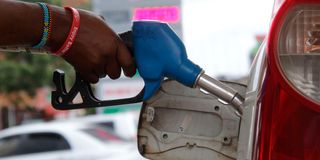
Diesel consumers missed out on price drops after the government opted to use the commodity to prevent a rise in petrol and kerosene prices through a cross-subsidy.
The cross-subsidy — using one product to lower another’s cost — kept diesel prices unchanged despite consumers being in a position to enjoy a Sh3.69 per litre price cut following a fall in shipment costs.
This also left petrol and kerosene prices unchanged after the subsidy from the diesel users prevented the products from increasing by Sh0.46 and Sh3.29 per litre, respectively.
Cross-subsidisation of fuel has in the past been challenged in the courts on grounds that it is unfair and illegally denies consumers of one grade of fuel price cuts.
MPs have also questioned its application, saying that it is not provided for in the Energy Act 2019.
“In the period under review, the maximum allowed petroleum pump prices for super petrol, diesel and kerosene remain unchanged,” said Energy and Petroleum Regulatory Authority while announcing the new prices.
Last year, petitioners filed a case at the High Court in Mombasa, challenging cross-subsidy.
Litigants then argued that Epra abused pricing regulations by overcharging super petrol consumers to cushion users of diesel.
In the latest pricing review, shipment costs (landed costs) of diesel fell 4.34 per cent to $608.61 (Sh78,808) per cubic metre last month from $636.22 (Sh82,460) for same quantity in September, setting the stage for price cuts.
But the landed costs of petrol rose 0.54 per cent to $641.14 (Sh83,021) per cubic metres last month from $637.70 (Sh82,652 in September while those for kerosene jumped 3.97 per cent to $648.15 (Sh83,928) from $623.39 (Sh80,797) in September, in what was to trigger price increases for the two grades of fuel.
The rising shipment costs of petrol and kerosene forced the government to opt for the cross-subsidy and cushion the two fuels used by minority sectors of the economy.
A litre of petrol remained unchanged retailing at Sh180.66 in Nairobi while that of diesel is going for Sh168.06. A litre of kerosene is retailing at Sh151.39 a litre.
Last month, pump prices dropped by the highest margin in over one and half years with a litre of petrol falling by Sh8.18 to Sh180.66 in Nairobi while that of diesel fell by Sh3.54 to Sh168.06 even without the subsidy.
The decision to use diesel consumers to cross-subsidise the rest of the economy has dashed hopes of a further easing of inflation, given that the Kenyan economy is mainly diesel-driven.
A drop in the cost of diesel would have significantly been felt across the economy, helping the government to contain public outrage in an economy hurt by high unemployment rates and increased taxation of workers and businesses.