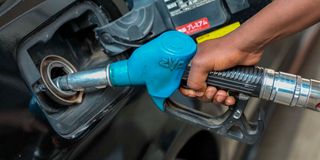
Pump prices have hit a historic high, with a litre of diesel jumping by Sh46.29 to retail at Sh242.92 effective Thursday midnight as consumers take a hit from the US-Israel war on Iran.
A litre of petrol will now retail at Sh214.25, reflecting an increase of Sh16.65, while kerosene remains unchanged at Sh152.78. The prices will remain in force until June 14.
The steep prices come despite subsidies of Sh15.67 per litre of diesel and Sh98.60 per litre of kerosene. Petrol has not been subsidised as the State seeks to ease pressure on an Exchequer already grappling with subsidy arrears estimated at Sh17 billion.
The surge in pump prices reflects the impact of the US-Israel war on Iran, which triggered a global rally in fuel prices in March and April amid tightening supplies and the blockade of the Strait of Hormuz.
Prices of Brent crude hit a four-year high of $126.41 (Sh16,325.85) per barrel in April following the escalation of the Middle East conflict. Brent crude is the global benchmark for oil prices.
The record-high pump prices are expected to trigger fresh inflationary pressure and further increase the cost of goods and services. Inflation rose to 5.7 percent last month amid rising fuel costs.
Diesel is the main fuel powering Kenya’s economy, and the higher prices are likely to affect farmers, manufacturers, power producers and public transport operators, who will pass the additional costs on to consumers.
Kenya currently imports fuel under the Government-to-Government (G-to-G) arrangement, whose suppliers had already warned of escalating prices.
Constrained global supply, coupled with logistical disruptions caused by Iran’s blockade of the Strait of Hormuz, has driven up fuel prices internationally.
Aramco Trading Fujairah (ATF), one of the three suppliers under Kenya’s G-to-G deal, warned that six cargoes of diesel would be priced higher due to supply disruptions linked to the Iran war.
“Sourcing from these alternative locations will extend delivery timelines and, when combined with the current elevated price environment, will directly and materially affect the prices at which we source our cargoes,” ATF said in a letter to the Kenyan government dated April 1, 2026.
“We are of the view that the events constitute a ‘MAC Event’ as defined under the Master Framework Agreement. We would like to formally request that the prices of the following upcoming shipments be amended accordingly,” the company added.
Abu Dhabi National Oil Company (Adnoc) and Emirates National Oil Company (Enoc) are the other Gulf oil majors supplying fuel to Kenya under a 180-day credit arrangement. The deal, which began in March 2023, is expected to lapse in the first quarter of 2028.
ATF has since been forced to source diesel, petrol and kerosene meant for Kenya from alternative markets, including India, to avoid disruptions caused by the Iran war. Previously, most of the fuel was sourced from ports in the Gulf region.
Iran blockaded the Strait of Hormuz in February, and together with attacks on major refineries in the Gulf region, the move significantly disrupted global fuel supplies.
Nearly a quarter of the world’s fuel shipments pass through the Strait of Hormuz, underlining the global impact of the blockade.
The soaring global fuel prices have pushed several countries to temporarily waive taxes in a bid to cushion consumers.
Kenya last month halved Value Added Tax (VAT) on fuel to eight percent as part of efforts to contain rising pump prices.
However, the latest increase is likely to spark public outrage over the heavy taxation of fuel, even as other countries continue easing levies on the commodity.
Kenya imposes seven levies and two taxes on fuel, making it one of the countries with the highest fuel taxation levels globally.
These include VAT, the Roads Maintenance Levy of Sh25 per litre on petrol and diesel, excise duty, the anti-adulteration levy of Sh18 per litre of kerosene, the import declaration fee and the railway development levy.
Others are the Petroleum Development Levy of Sh5.40 per litre of petrol and diesel and Sh0.40 on kerosene, the merchant shipping levy and the petroleum regulatory levy.
South Africa suspended fuel levies for one month, while Namibia halved taxes on the commodity for three months. Zambia suspended excise duty and zero-rated VAT on petrol and diesel for three months, with the changes taking effect on April 1.