Invasive species put a damper on use of irrigation in arid areas
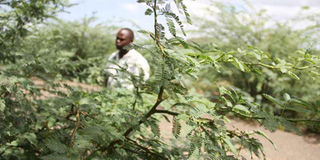
A Mathenge plant in the semi-arid Marigat area, in Baringo County. The efforts to introduce irrigation in the arid and semi-arid lands in Kenya are being hindered by proliferation of invasive plants such as Ipomea and Mathenge. FILE |
High levels of poverty also present a big challenge to the exploitation of the productive potential of the ASALs.
This is besides other threats such as population growth, land degradation and climate change that face Kenya’s ASAL regions.
The arid and semi-arid areas in Kenya face serious threats from invasive species, which hinder the productive potential that may arise from wide scale adoption of irrigation.
This is according to Ministry of Agriculture’s deputy director, range management division, Mr Ernest Mbogo, who says that efforts to introduce irrigation in the arid and semi-arid lands (ASALs) are hampered by proliferation of invasive plants such as Ipomea and Mathenge (invasive shrubs).