Premium
Kenya lifts harvesting ban on macadamia nuts as global demand surges
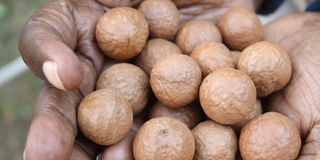
Kenya's Agriculture and Food Authority (AFA) has reinforced a ban on the export and transit of all raw macadamia nuts, regardless of origin, through its ports and border points.

Farmers in macadamia-producing zones will from tomorrow resume harvesting following the re-opening of the seasonal harvesting and trading window by the Agriculture and Food Authority (AFA).
The move comes after more than a month of surveillance by the authority, which had imposed a seasonal closure on the harvesting and trading of domestically produced macadamia nuts starting December 1 last year.
The ban was introduced due to concerns over immature crop development and was aimed at safeguarding kernel quality, oil content, shelf life, and Kenya’s reputation in premium international macadamia markets. Initially, the closure was set to end on January 15 this year.


The seasonal export and harvesting closure was intended to allow sufficient time for the crop to attain full maturity and to ensure that all exports meet the required quality standards.
AFA notified all value chain actors — including processors, exporters, importers, and marketing agents of the directive.
According to the authority, the ban was necessitated by findings from a macadamia phenological survey conducted across the main production zones, which established that a significant portion of the nuts was not ready for harvesting and required more time to mature.
In a statement issued this week, AFA Director General Dr Bruno Linyiru said that during the closure period, the Authority continued to monitor crop maturity trends and enforce compliance, particularly following reports of violations in some production areas.
“Between January 19 and 23, 2026, AFA conducted a targeted macadamia maturity surveillance exercise across major macadamia-growing counties to ascertain the prevailing maturity status. The surveillance findings revealed variable maturity levels across agro-ecological zones,” said Dr Linyiru.
Kenya is among the world’s leading macadamia producers, ranking third globally.
The crop is mainly grown in the central and coastal regions, with Embu, Meru, Kiambu, and Murang’a being among the leading producing counties.
The Authority noted that most nuts in lower-altitude, coffee-growing zones had attained physiological maturity, with some mature nuts naturally dropping to the ground, necessitating collection and home drying.
“In view of these findings, and following requests from stakeholders, the Authority will officially re-open the harvesting and trading of macadamia nuts effective February 1, 2026,” Dr Linyiru said.
However, AFA reported that nuts in higher-altitude, tea-growing zones were largely immature.
The surveillance also confirmed that maturity periods vary by variety, with some cultivars maturing earlier than others.
The decision to lift the one-and-a-half-month ban was reached following demonstrated cooperation between the Authority and stakeholders in the macadamia industry, with AFA reiterating its commitment to sustainable production, quality assurance, and continued market access for Kenyan macadamia nuts.
The state-owned agriculture and food regulator is urging stakeholders, particularly farmers, to harvest only mature nuts and allow immature ones to continue developing.
Follow our WhatsApp channel for breaking news updates and more stories like this.