How mask technology can save lives
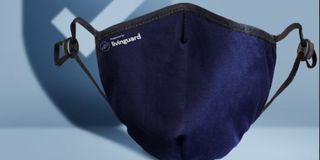
Livinguard face mask.

When the Covid-19 pandemic hit the world in March 2020, it threw everyone into disarray. At first, governments and pathologists did not know what to do but as the pandemic kept spreading around the world, scientists folded their sleeves and worked day and night trying to find solutions to curb a virus that was fast mutating and affecting different regions disparately. Three years down the line, several technologies have been fronted in the fight against the disease. 4IR journalist Faustine Ngila spoke to Vice President, Sales and Key Accounts - Middle East and Africa of Livinguard, a global hygiene tech firm, Ms Shivani Swamy on a mask technology the company created during the Covid-19 pandemic.
1. Please explain how the technology behind the masks works.
Livinguard face masks are made of 100 per cent cotton fabric. The outer fabric layer of the mask has Livinguard Tripellent Technology, which has three levels of protection. The Livinguard Antiviral Technology is coated on both sides of this fabric, as well as into the fibres of the fabric. When a virus comes into contact with this fabric, its capsid (protein envelope) is destroyed and the virus essentially explodes, rendering it harmless.

The fabric continues working in this manner, without any chemicals leaching out of it, and remains unaffected upto 30 washes. Both these layers destroy bacteria and viruses, including SARS-CoV-2, as proven by the University of Berlin. Researchers from Freie Universität Berlin and ITA RWTH Aachen, two of the most recognized academic institutions in virology and textiles, have confirmed the efficacy of a new self-disinfecting technology to permanently destroy the new coronavirus when applied to textiles or surfaces. The textiles in these masks can thus continuously inactivate the exhaled viruses and can make handling these masks even safer overall. In addition, such textiles could also help to reduce hygienic issues in other general and medical areas, even beyond COVID-19. The Pro and the Ultra masks offer an additional one or two layers respectively of industry standard melt blown filtration media for more efficient filtration and protection. All of these technologies in combination protect both the wearer from inhaling the virus, as well as those around them from exhaling the virus. The beauty of this design and technology is that the masks only need to be washed once a week, as it continuously destroys microbes that would normally have posed an infection risk. This means that it is good for 210 uses. The key here is that it is far safer for the wearer relative to reusable and devoid of any harmful metals (like titanium, silver, zinc) based antimicrobial masks and poses a 0.5 per cent waste burden on the environment relative to single use masks.
2. What unique qualities do the Livinguard masks have that other masks lack? What approval protocols have they undergone?
Each Livinguard mask has undergone testing for performance and filtration as per the standard claimed on the mask type. Moreover, our masks have been tested for inhalation and skin contact safety. The true unique features for the mask are that they can destroy infections including variants and mutations of the virus. We have tested our technology against Coronavirus 229e, SARS CoV-2, an Indian isolate and the Delta variant with constant results. We have also tested our masks against Tuberculosis. They are washable and reusable for 6 months, meaning they can replace 210 disposable masks and require significantly less water and soap as compared to regular cloth masks. They do not have heavy metals in the fabric and therefore result in no chemical leaching. They are breathable, available in multiple sizes and styles for user comfort.
3. How much do they cost, what's the user experience?
The average retail price of the masks differs depending on the layers of filtration the mask offers. There are three types of Livinguard masks being sold in Kenya. The first is the street mask, which has two layers of filtration, going for Sh1,900 per mask. As the mask can be worn 210 times, for up to 6 months, the price per use is Sh9, making it cheaper in the long run. The Pro-mask has three layers of filtration (95 per cent filtration), going for Sh3,400 and the unit cost for 210 uses (6 months) is Sh16. The last type of mast is the Ultra Mask, which has four layers of filtration, which is primarily used by healthcare professionals. Phillips will be supplying the mask directly to hospitals and clinics and has also partnered with pharmacy chains such as GoodLife and HealthyU to supply the mask directly to consumers. I started using the Livinguard mask during our first COVID-19 peak in Kenya and have been using the technology ever since. I have worked in the ICU on a daily basis during the entire pandemic phase. When the mask was introduced to me, I was skeptical at first. However, I did my own research and came up with significant literature and reviews about the new technology and decided to give it a try. I remember thinking how comfortable the mask was compared to the N95 masks I have been using which usually left marks on my face. Livinguard is safe, comfortable with its light weight.
4. Around the world, masks are contributing to medical waste every day. What is Livinguard doing to control this?
It is not news that the increase in the use of masks by non-healthcare workers as a result of the pandemic has had a severe impact on marine life, our oceans, beaches and much more. Livinguard masks rely on unique continuous disinfecting properties, which has been proven by some of the world’s leading scientific institutions. The Department of Environmental Science at the University of Arizona, scientifically confirms the technology’s antiviral properties. These researchers confirmed masks treated with Livinguard technology kill greater than 99 per cent of SARS-CoV-2, and many other common viruses. When used daily and washed weekly (upto 30 times), these masks can be reused for 6 months, effectively replacing 210 single-use masks. Made from 100 per cent cotton fabric, it is eco-friendly, 90 per cent biodegradable and results in less than 0.5 per cent waste. Research shows that if a million people use one reusable Livinguard mask 210 times, we can save 36,000 tonnes of waste. With a simple switch from a disposable mask to the Livinguard mask, we can protect both people and the planet.
5. As a medical practitioner who was at the forefront in the fight against Covid-19, how critical is this innovation in the fight against the virus around the world?
With the pandemic spreading over the globe, all research and technology stakeholders have concentrated on finding a way to help combat the situation and save lives. Engineers behind the Livinguard technology came up with this brilliant idea of a self-disinfecting textile that they could produce N95 and N99 masks which kills/removes the bacteria and viruses that they come across in addition to the filtration mechanism that any N95 and N99 is equipped with. The more people use the technology, the more effectively we will eliminate the virus.
7. What are your thoughts now that there is a lift on the mask mandate and people are no longer required to wear masks in Kenya?
The fight against diseases starts at the personal level. Using a mask, hand hygiene and social distancing are essential to stick to as part of a new way of living. Each pandemic has taught humanity new ways of protecting themselves against diseases and survival. Law cannot dictate a consistent mandating for such preventative measures, but we can take actions to protect ourselves, our families by continuing to take those measures in public. Some cultures such as Far-Asian communities have been using masks during travelling, sports events, concerts or other crowd activities for many years. It’s a culture change we need at this point in Kenya and take our health and self-care as a priority and protect ourselves especially in high-risk environments by wearing our masks as well as using other simple measures that has become a part of our life in the past two years already.
8. Where do you see the future of the fight against viral airborne diseases?
Viral diseases will always be present in our lives, whether its influenza, corona or other types of viruses, there are common preventative measures that we have to always keep in mind; wearing a mask, personal/hand hygiene and social distancing. Our personal efforts and diligence will be the essential weapon in this fight. However, technology will offer us new solutions to make sure we win the fight. Think of Livinguard technology for example, it can be applied in all forms of textiles, already scrubs have been produced for healthcare staff, think of everyone having access to clothing with this technology or imagine train/airplane/bus seats covered with Livinguard textiles, airport seats, conference room seats, etc. I believe there are no limits to what can be done using this idea in the future in the fight against viruses.


