The Public-Private-Partnership (PPP) Committee has rejected a project development report (PDR) for the planned Sh468 billion Nairobi-Mombasa Expressway by a consortium led by a US firm, signaling potential delays in the groundbreaking for the 419-kilometre road initially set for 2026.
A PDR gives a framework of a project's plan and progress, and covers key aspects like the scope of a project, its goals, timelines, technical specifications, resource allocation, risk assessments, and potential impact, among other things.
Usahihi Expressway Limited, which is backed by US infrastructure investment manager Everstrong Capital, presented a PDR for the planned construction of a four-lane Nairobi-Mombasa Expressway, also to be known as Usahihi Express, as a greenfield project, which is targeted to clear heavy congestion and slow speeds between the two cities.
The PDR has, however, been rejected, meaning that the consortium would have to draw up a new one and hope to secure approval within the targeted timelines for the Usahihi Expressway project.
“The project proposal was approved in December 2023 for the project to progress to project development/feasibility study. The Project Development Report (PDR) was finalised and submitted for approval,” PPP Directorate said in a disclosure.
“On July 2, 2025, it was determined that the PDR did not meet the relevant criteria and should be abandoned in accordance with Section 43(11) (c) of the PPP Act. The proposal may, however, be resubmitted to the Committee for a fresh determination in line with Section 43 (12) of the PPP Act, 2021,” it added.
Kefa Seda, the Director-General of the PPP Directorate, confirmed to the Nation that there “were gaps” in the submitted PDR but did not provide details.
Some insiders close to the project, however, hinted that there was a lack of clarity in areas such as the land use or acquisition for a greenfield corridor to host the Usahihi Expressway.
It is projected that it would cost about Sh12.9billion to acquire land for the project, which could impact toll charges for motorists.
Preliminary estimates show that motorists are likely to pay between Sh12 and Sh13 per kilometre on the Nairobi-Mombasa Expressway, translating to at least Sh5,280 for any vehicle using the entire stretch of the highway.
Usahihi Expressway Limited, however, said that the toll charges could fall if it (firm) manages to trim the construction costs.
Everstrong Capital and Usahihi Expressway Limited are betting on the heavy traffic of trucks that currently use the Nairobi-Mombasa highway to raise nearly 75 percent of the toll revenues in the quest to recover their investment.
The US firm will operate the expressway for 30 years to recoup its investment, after which it will hand it over to the government of Kenya.
Everstrong Capital in May 2024 said it had signed a $3.6 billion (Sh 465.12 billion) agreement with the Kenya National Highways (KenHA) Authority to fund the construction of the Nairobi-Mombasa Expressway.
Everstrong Capital targets to woo capital from local pension funds for the construction of the planned Usahihi Expressway. It struck a deal with CPF Capital & Advisory—a newly formed subsidiary of CPF Financial Services, which manages pension funds—in a bid to woo billions of shillings from retirement benefits assets.
The Usahihi Expressway Project had earlier attracted interest from firms including Korean Overseas Infrastructure and Development Corporation (KIND) and an American firm, Bechtel Executive, in partnership with Everstrong Capital.
Bechtel had in 2018 been tapped by the Kenyan government, but the agreement did not progress following a tussle on how the project construction would be financed.
A report published by the Parliamentary Budget Office (PBO) in 2021 indicated that the US firm rejected Kenya’s offer to have it construct the road and recover its costs from charging motorists toll fees.
The PBO, which advises lawmakers on the economy and budget, said Bechtel had settled on a model where the State pays it for building the road instead of recovering its money through user fees.
This would have compelled the Kenyan government to borrow billions of shillings—a position that didn’t augur well for the economy that already faced huge debt repayment pressure.
Sources at KenHA said that Bechtel also demanded a virgin land corridor for the project—a request that the State was uncomfortable with since it would require costly acquisition of land.
Finances to fund the construction of the Nairobi-Mombasa expressway will be mobilised both locally and in the international markets.
Everstrong Capital will raise $2.5 billion (Sh323.50 billion at current exchange rates) from the foreign markets, adding to the $1 billion (Sh129.1 billion at prevailing rates) that CPF Capital & Advisory will mobilise from the domestic market by the end of this year.
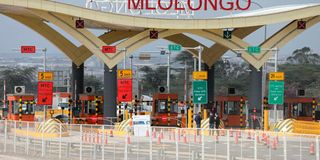
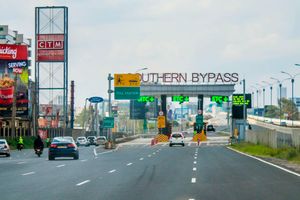
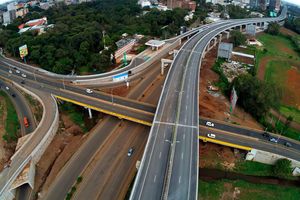
The highway could become Kenya’s third tolling highway after the 27-km Nairobi Expressway and the 233-km Nairobi-Nakuru-Mau summit, whose dualing will start before the end of this year.
Chinese investors financed the construction of the Nairobi Expressway, which has been critical in easing traffic snarl-ups between Mlolongo/ Jomo Kenyatta International Airport and Westlands since 2022.
They (Chinese investors) are also expected to bankroll dualing of the Nairobi-Nakuru-Mau Summit highway, a project that is expected to significantly ease movement from Nairobi to Western Kenya and onwards to Uganda.