Hello
Your subscription is almost coming to an end. Don’t miss out on the great content on Nation.Africa
Ready to continue your informative journey with us?
Hello
Your premium access has ended, but the best of Nation.Africa is still within reach. Renew now to unlock exclusive stories and in-depth features.
Reclaim your full access. Click below to renew.
Floods with a chance of diseases
Inside the health crisis unfolding on Lake Naivasha's shores
They call it good news. It is the name residents of Kihoto Village have given to the road that cuts through their homes, separating houses on the left from those on the right. The name comes from a nearby church.
But there is little about the road today that looks like "good news." Much of it has disappeared beneath the rising waters of Lake Naivasha. A sheet of invasive water hyacinth carpets some sections of the submerged road, the once-visible path now only discernible to residents who still use it to get home, take their children to school every morning, and undertake the same routine every evening.
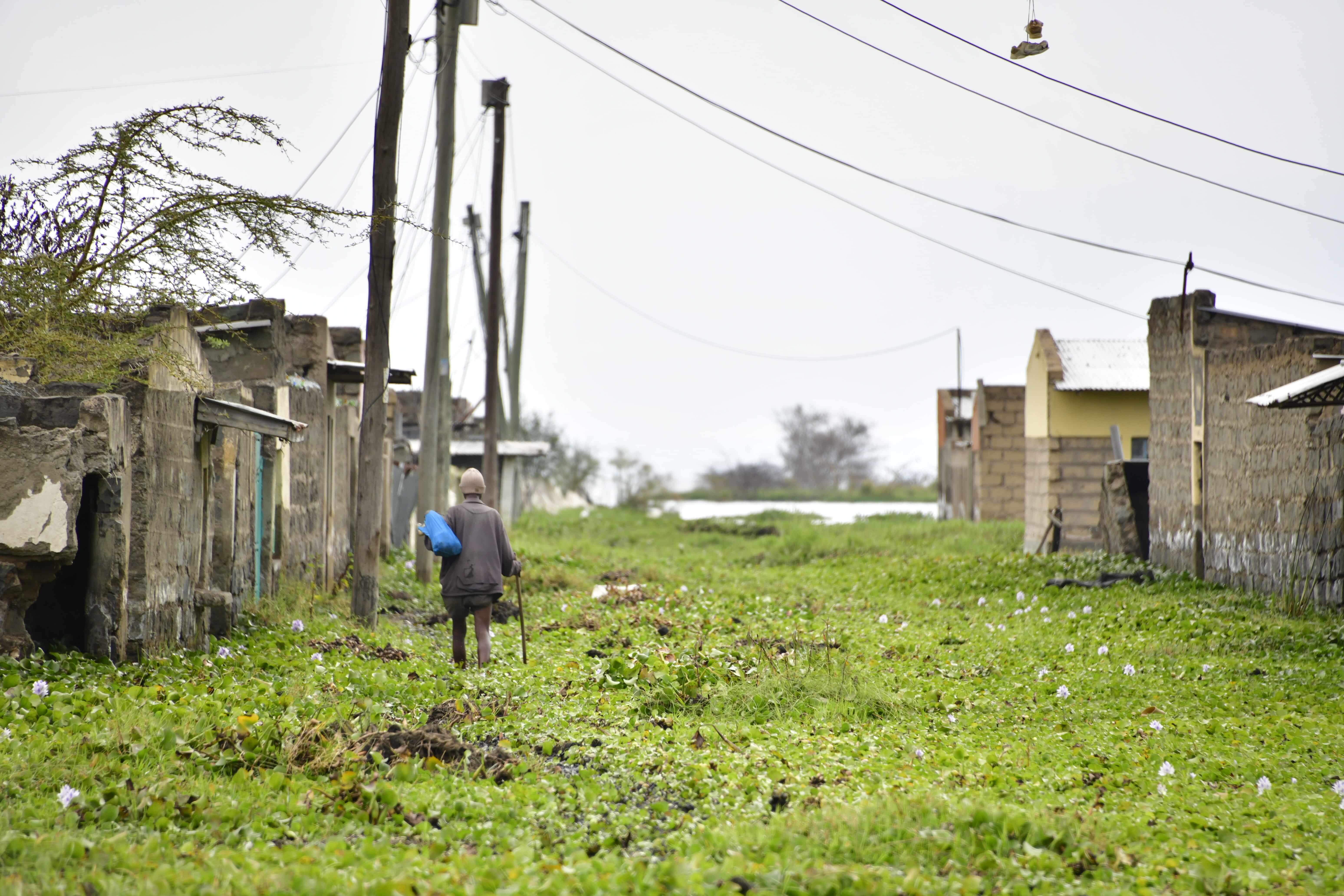
Standing here, the first thing that greets you is the smell. A thick, nauseating stench hangs over the water that is no longer clear but dark, sewage-like water. Inside our vehicle with the windows rolled down, mosquitoes buzz in and out.
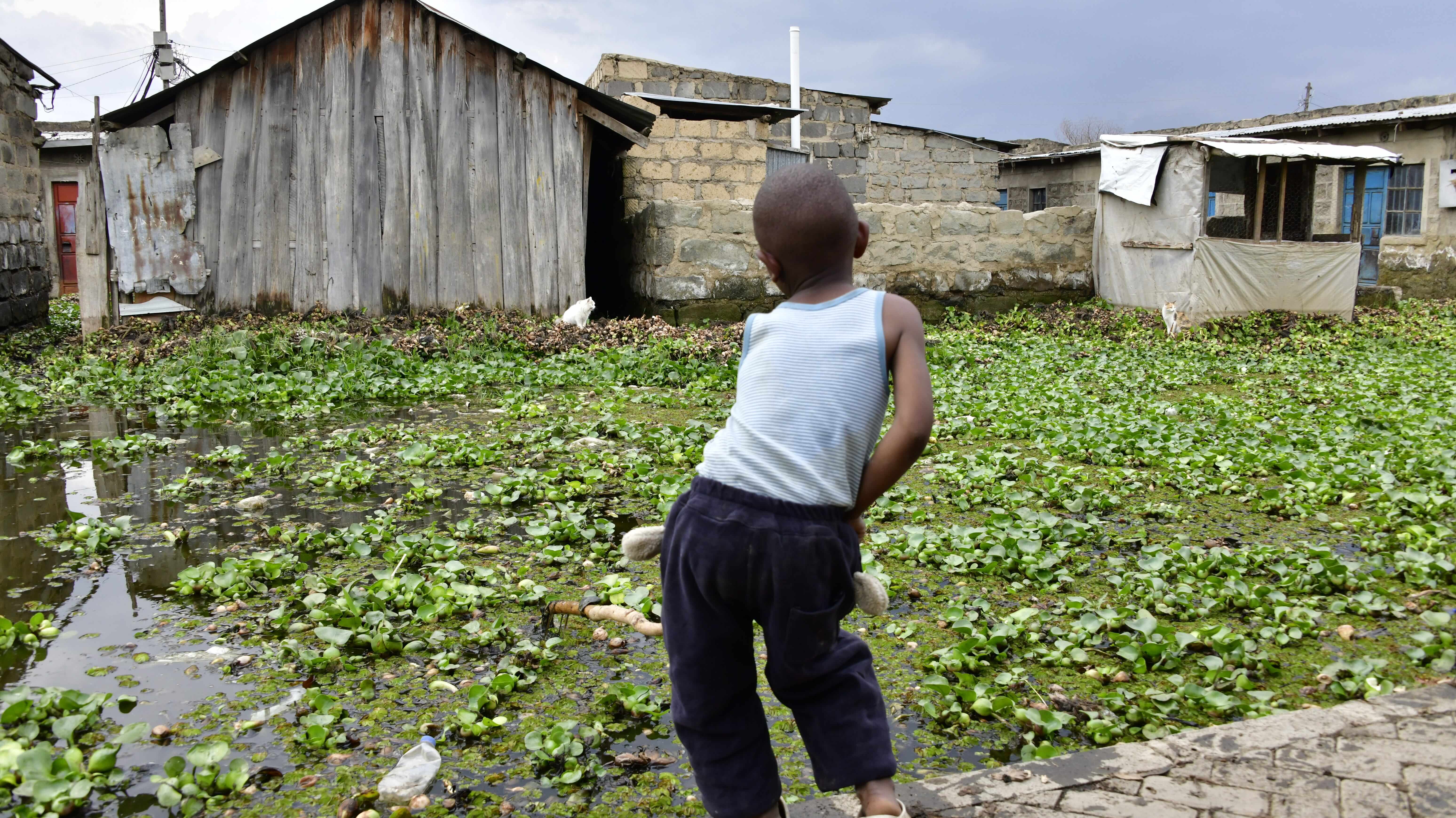
You look around and, for a moment, wonder how anyone could live here.
But dozens of families do. Among them are children who know, perhaps instinctively, that something is wrong with the water. And yet, they play beside it.
One child stands on what we later learn was once a toilet, now buried beneath stones and piles of cleared water hyacinth that the residents pull from the water from time to time. She picks two pods. One goes to her mouth. She holds the other beside her ear, then snaps it. Another child stands at the water's edge, using a stick to splash the water. Around the neighbourhood, what could be their playgrounds, especially now that they are on holiday, are submerged.
To an outsider, these scenes offer an unsettling introduction to the place. From the drone footage, you might think the village has been abandoned to the lake. But moving around, you discover the opposite. Life is everywhere.
Sinking Kihoto
Since 2010, the water at Lake Naivasha has climbed roughly seven metres high, about the height of a two-storey building, swallowing close to 40 per cent more land than it used to cover. Whole flower farms that once fed one of Kenya's biggest export industries are underwater now.
And it is not just Naivasha. Lake Baringo, Lake Nakuru, and Lake Turkana have all been creeping upward too, for about fifteen years now. What drives this phenomenon remains unclear, with scientists pointing to several factors, including increased rainfall, climate variability, and geological processes.
What is clear, however, is what it has cost.
Farms gone. Hotels half submerged. Families who have had to leave everything behind. Animals like hippos have lost their habitat to the rising waters, pushing them into places where they were rarely seen before and bringing them into increasingly frequent contact with people. And still, some people have sworn to remain.
David Njenga, a resident here, calls the children playing around the water by name. Then he steps into the dirty water, one foot after the other, without wearing any protective footwear. He moves carefully, with the instinct of someone who has learned the hidden contours of the submerged road. In his arms, held safely above the water, is a tiny kitten, Pinky.
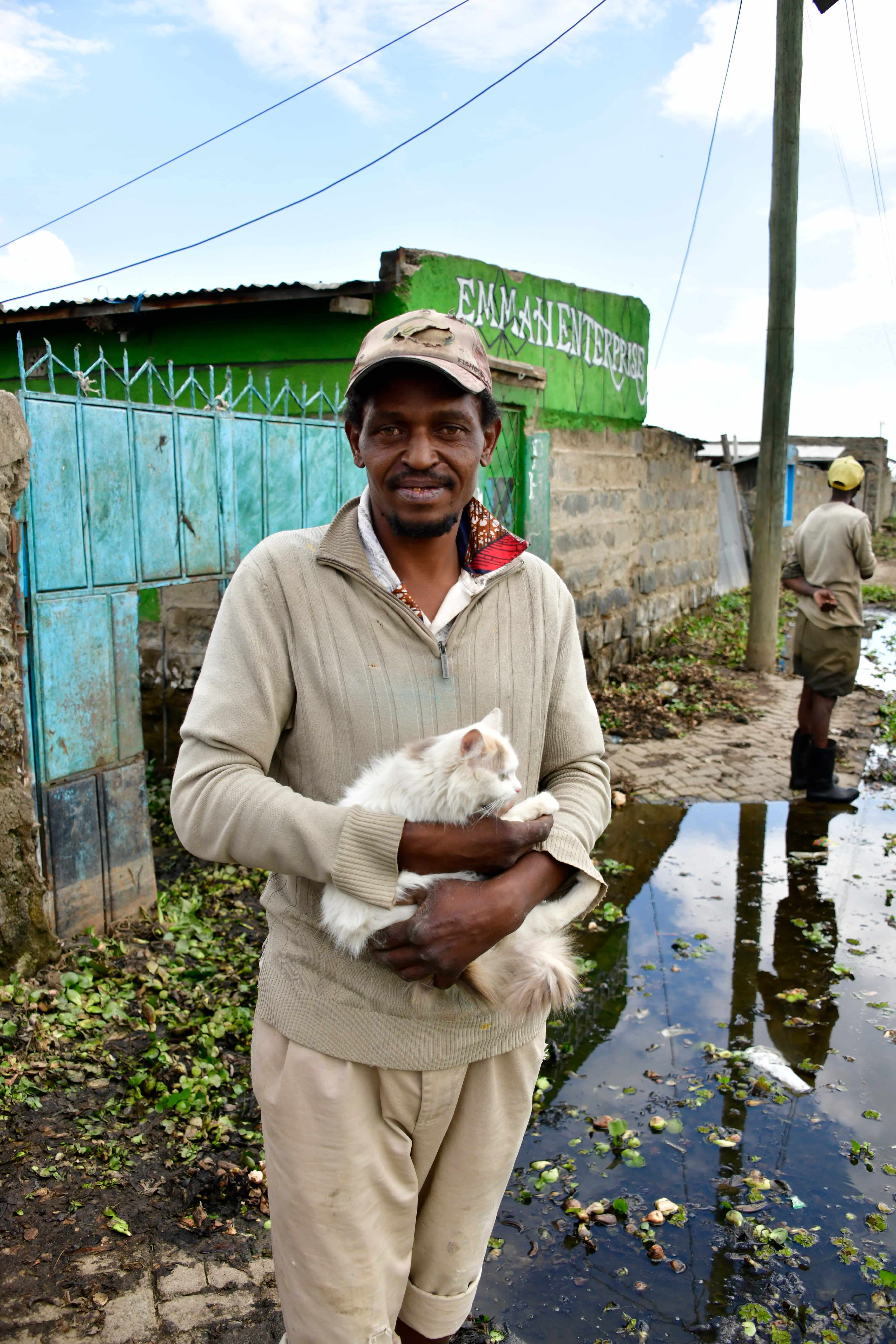
We follow Njenga's lead.
The path to his house is submerged too, swallowed by dark, dirty water and mats of green water hyacinth. Every step is a gamble, and one wrong move could make someone stumble or even hurt their legs.
Inside, the water has followed him.
The room is flooded. The air is heavy with moisture and carries the unmistakable stench of stagnant water. The walls are damp. Mould creeps across surfaces. Everything here feels wet.
"It was worse than this," he says, looking around. "The water was waist level. Now it is just my feet that are submerged." Since last year, Njenga says, he has not seen a dry day inside the house. "I am used to being here. I can't leave this place because this is my house, not a rental property."
The conditions are difficult to imagine as a place to live, let alone sleep. The damp air, stagnant water, mould, and perpetually wet clothes are the kind of conditions that would ordinarily send alarm bells ringing about health. Yet, in his telling, he has remained well. For him, the question is not whether the conditions are ideal; it is whether he can afford to leave the home he owns.
"I was worried about my child's health, so I made a makeshift room for them to live in an area that's not flooded yet and not very far from here. For me, I have to remain here. I have poured all my sweat into this house," he shares.
That decision was also influenced by his wife Monica Wangui's state of health. "We sleep at the makeshift house, which he comes to every morning. I left because my legs were hurting and my toes had become very itchy. I used to hawk melons around this area. I got so sick that I couldn't move around; I had to stay home and take medication until I got better. Even our baby got a cold. We just had to move, but we are still married," she offers.
Looking at the condition of Njenga's house and those of his neighbours, the answer seems obvious: leave. But for many households here, walking away from their homes is far more complicated.
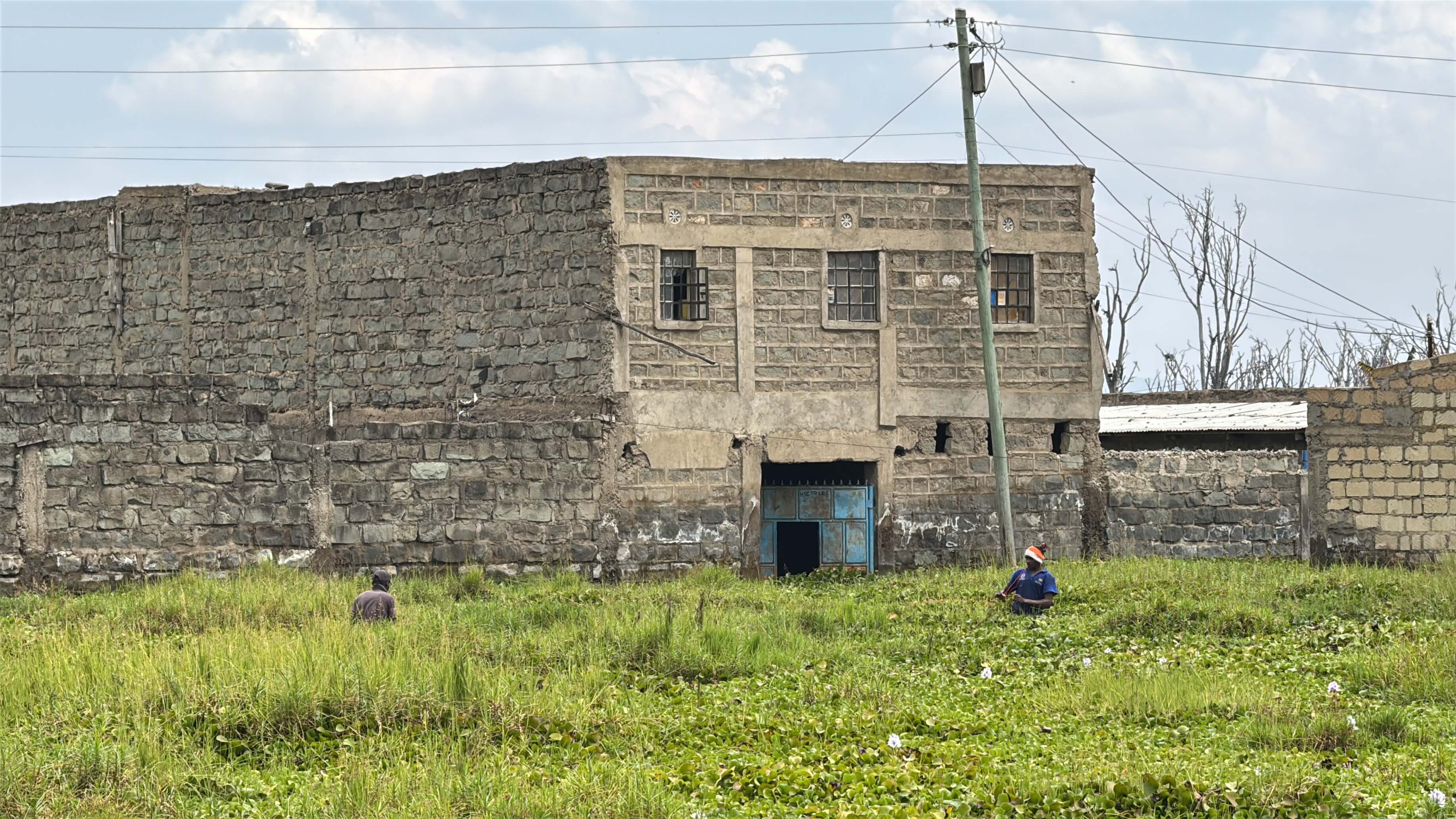
Joyce Wangari's house has been submerged, forcing her to rent elsewhere. "I was born here and I have brought up my children here. This is the only place I call home. Before moving out, I stayed with the water for about three months and was affected in a way that I was always feeling lethargic and like someone who has no energy left. That house is unlivable now, that's why I live in a rented house. But here, we will die of hunger because we have no jobs and nowhere to farm," laments Joyce, 62.
Joyce's situation is further complicated by uncertainty over the land she calls home. She does not have an individual title deed; instead, she has an agreement showing that the land was passed down to her by her parents. Joyce is a total orphan, and the ownership is a complex matter altogether.
Some residents also fear that once they abandon their homes, the houses could be vandalised or their property taken over. "If one is renting, it means they will have to pay for a house deposit and rent that totals to more than Sh10,000 sometimes. Seeing our condition, where do we get the funds to move out?" They ask.
The flooding has sparked a contentious question: Has Lake Naivasha encroached on Kihoto, or has Kihoto encroached on the lake? Some residents say the water has steadily advanced towards their homes. Others argue that construction and settlement have extended into the lake's former boundaries, and that the water is now reclaiming that land.
Fighting Mosquitoes
The situation at Kihoto village has forced families here to adapt, finding ways to live with the water inside their homes. Some have laid mats of water hyacinth across the flooded floors to create makeshift walkways, while others have raised their furniture on stones to keep it above the water. It is also where their two children sleep.
"It is like a bad game. We moved here because our previous homes got flooded. Now, the water is here and we have decided to stay until it recedes," offers Salome Kinyua, a mother of three.
As we walk from house to house, we swat mosquitoes away. This is what residents here deal with every day. "We keep buying mosquito repellents and placing them in different corners of the house. This is one of the booming businesses here because they are always in demand," she says.
According to Salome, she has been to the hospital many times after her children fell ill. "We didn't get the full details of the diagnosis, but every time we went, we were told that the dirty environment is the cause," she says in Swahili.
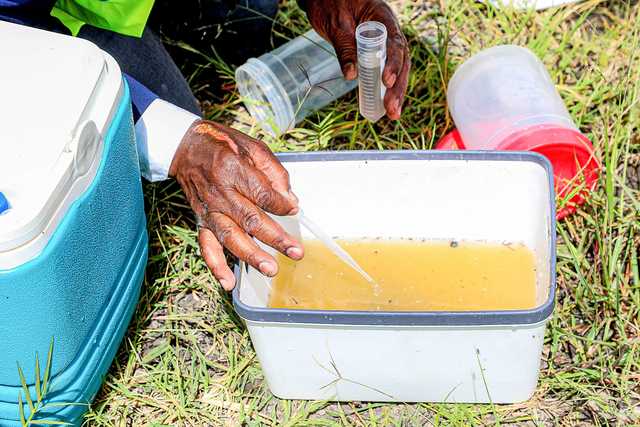
Although the region is not considered endemic to malaria-causing mosquitoes, Dr Eric Ochomo, an entomologist, says that the area has many Culex mosquitoes, which lay eggs on the surface of fresh or stagnant water. "There are lots of nuisance bites from these insects," he offers.
But even places once considered unsuitable for malaria transmission by female Anopheles mosquitoes could now be at risk, as climate change redraws the map of malaria. A new study, "The Past and Future Impact of Climate Change on Childhood Malaria in Africa," finds that climate change is increasing malaria risk among children in Southern and East Africa, especially in areas where communities are less equipped to tackle the disease.
"Climate change isn't just making malaria worse or better, it's moving it," says co-author Tamma Carleton, Faculty Head of Research for the Climate Impact Lab and an Assistant Professor at the University of California, Berkeley. "Whether a place sees elevated malaria risks or reduced burdens under climate change depends on how hot it is today. We see relief in the current hotspots and new risk nearly everywhere else."
In these areas, the report notes, climate change is slowly making temperatures more suitable for mosquitoes to spread malaria, increasing cases by 5 per cent in the Ethiopian highlands (Kenya, Burundi) and by similarly large increases in Angola, Zambia, and northeast South Africa. By 2100, the risk could increase by 20 per cent in regions like the Rift Valley and coastal southern Africa, creating new malaria challenges.
"As a physician, I see how devastating malaria can be for children and families. This reminds us that climate change is changing where we should expect the disease to occur, particularly in cooler parts of Kenya where health systems and communities may not have faced the same burden before. We must anticipate these changes by strengthening surveillance, investing in resilient health services, and ensuring every child has timely access to prevention, diagnosis, and treatment. Preparing for tomorrow's malaria burden starts with acting today.
Besides, climate mitigation also remains essential to limit future warming and reduce the health risks facing future generations," offers Dr Victor Mwaka Wauye, Internal Medicine Specialist and Consultant Physician at Longisa County Referral Hospital, Bomet, Kenya, and a member of the Kenya Medical Association.
As the residents struggle to cope, with no help coming from the government, meteorologists say there is an 85 per cent probability of a strong El Niño event during the October-November-December short rains season.
"What this means is that many parts of the country will experience above-average rainfall, which could result in flooding, landslides, and infrastructural damage," explains Hannah Kimani, assistant director of Public Weather Services at the Kenya Meteorological Services Authority.
For these families, the coming rains could turn an already difficult situation into a crisis. More water could mean more mosquitoes, greater exposure to waterborne diseases, more damage to their homes, and an even greater risk of being forced out. Yet as they wait for the rains, there is little sign of the protection they desperately need.