Recently, Kenya welcomed home four male mountain bongos from the Czech Republic. For many Kenyans, one question quickly followed: How did one of Kenya’s rarest wild animals end up in Europe in the first place and why does their return matter so much?
The answer stretches back more than 60 years and tells a remarkable story of conservation, survival and Kenya’s effort to rescue a species that almost disappeared forever.
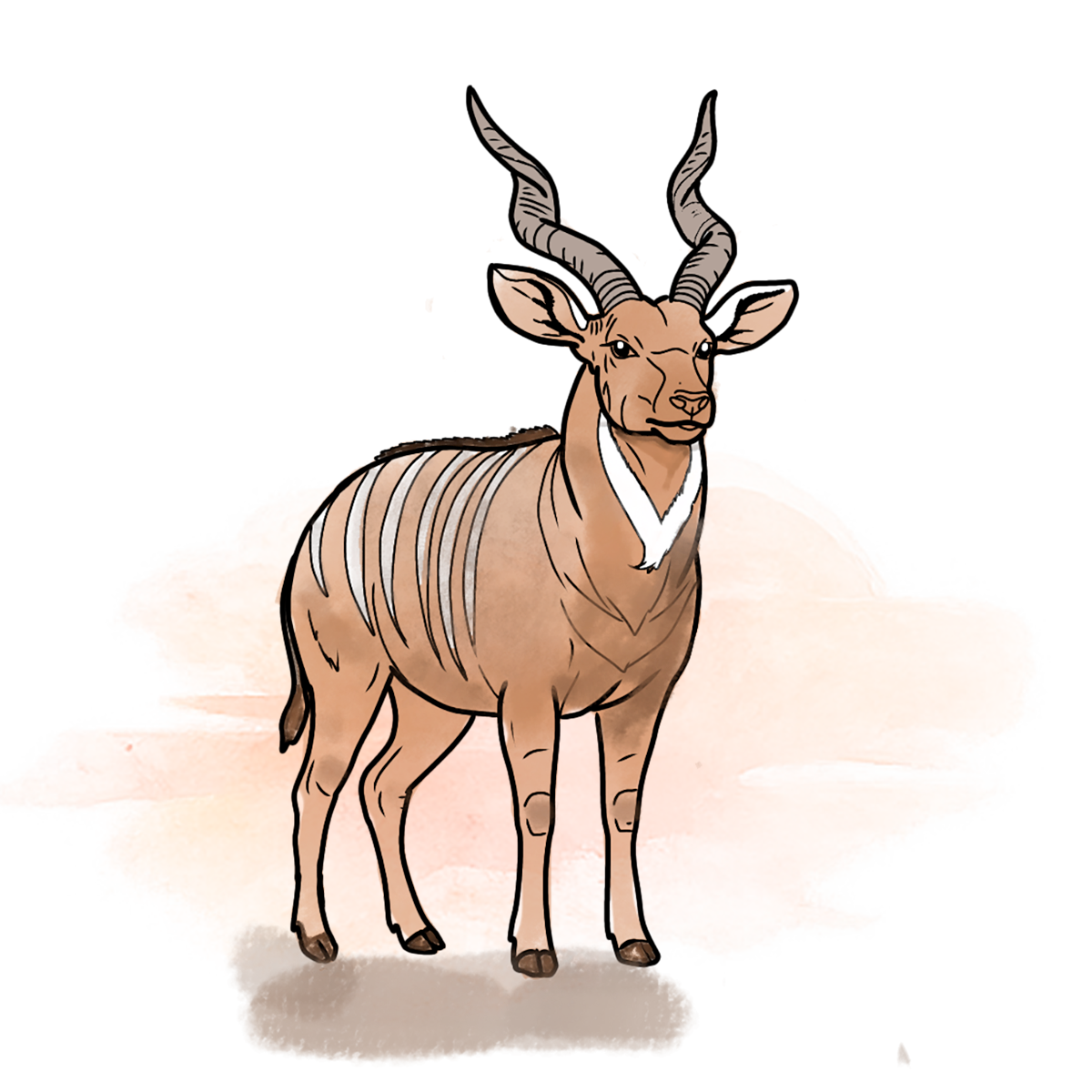
First what exactly is a mountain bongo?
The mountain bongo is one of the rarest antelopes in the world and is naturally found only in Kenya. Shy, elusive and rarely seen, the antelope lives deep inside dense montane forests such as Mount Kenya, the Aberdare Range, Mau Forest and Eburu Forest.

Communities living around these forests especially around Mount Kenya and the Aberdares commonly refer to the animal as “Ndogoro”, a name that has existed for generations among people who grew up alongside the forests where the antelope once roamed freely.
Unlike many antelope species that prefer open grasslands, mountain bongos survive inside cool, thick forests hidden beneath dense vegetation.
They are also among Africa’s most beautiful antelopes

Male mountain bongos are usually darker deep chestnut or almost blackish-brown with heavier bodies and large spiral horns.

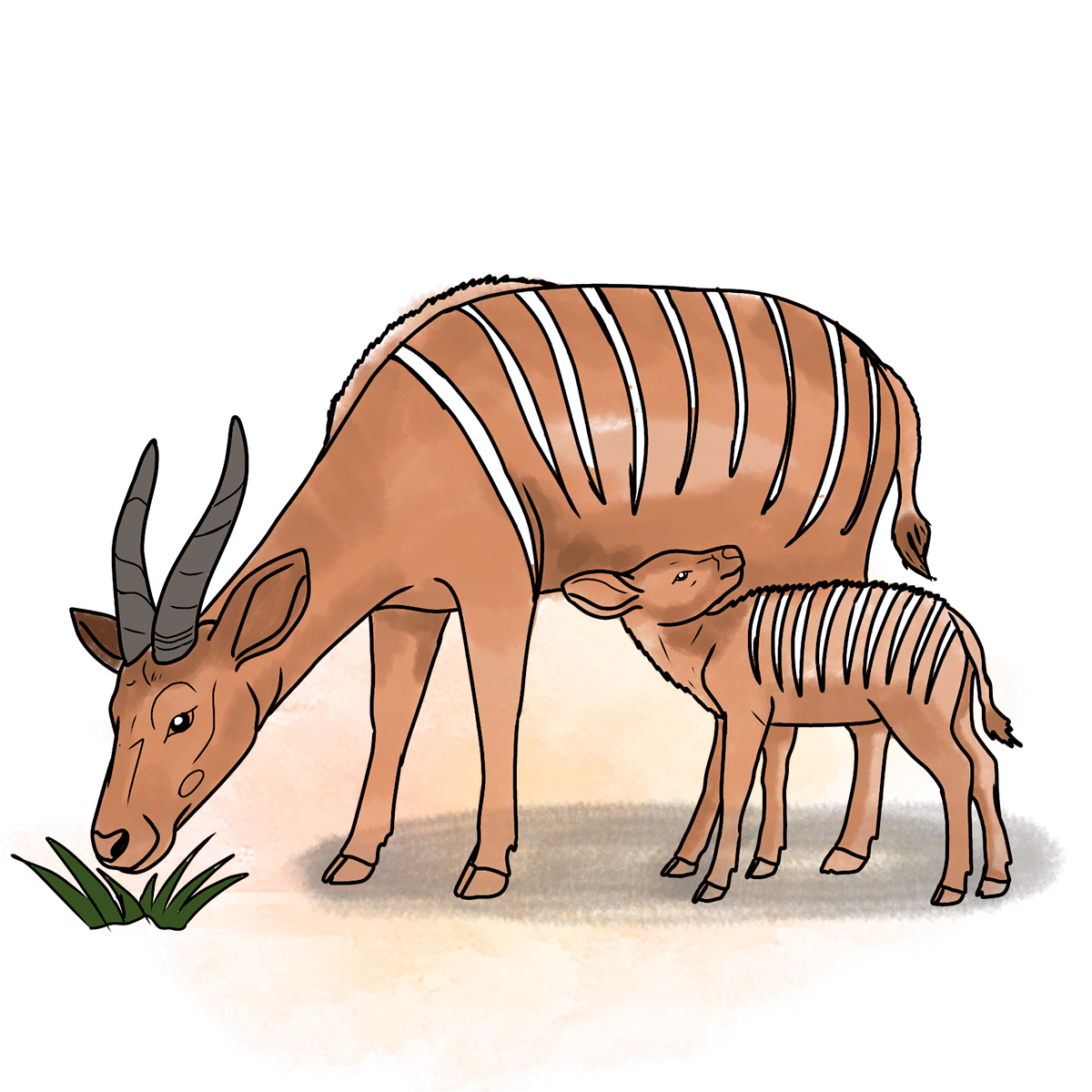
Females are lighter reddish-brown, smaller and more slender, with thinner horns.
Both males and females have striking white stripes running across their bodies and faces, helping them camouflage inside the forest.
But despite their beauty, mountain bongos are critically endangered.
The species was officially listed as Critically Endangered on the IUCN Red List in 2008 after its population dropped far below the threshold of 250 mature individuals.
Why were they taken abroad?
The story begins in 1964.
At the time, the Kenyan government had already started raising concern about declining mountain bongo numbers in the Mount Kenya and Aberdare forests.
Don Hunt, then Director of Mount Kenya Game Ranch and founder of the Mount Kenya Wildlife Conservancy, proposed an unusual but forward-looking conservation idea.
He suggested sending some mountain bongos to American zoos to create what conservationists called an “insurance population”.
The thinking was simple:
If the species ever collapsed in Kenya, the animals bred abroad could one day help restore the population back home.
The Kenyan government later approved the export of 36 mountain bongos to the United States.
The animals bred successfully and became the founder population for mountain bongos now found in conservation breeding programmes across North America.
During the 1960s and 1970s, additional mountain bongos were also transferred to Europe and other regions through wildlife exchange and conservation breeding programmes.
At the time, few people imagined the species would one day nearly vanish from Kenya’s forests.
Initial Decline
Rinderpest outbreaks swept through Kenya, decimating bongo populations for the first time. Yet vast herds still roamed the Aberdares.
~ 5,000 +Steady Decline
Poaching for hides, the live animal trade, and accelerating forest loss pushed numbers steadily downward.
~ 1,200 – 1,800Sharp Decline
Numbers crashed below 500 individuals. Habitat fragmentation and relentless hunting brought the species to the brink.
~ 400 – 600Major Crisis
Renewed rinderpest impacts and relentless poaching pushed the bongo into a severe conservation crisis — fewer than 100 remained.
~ 50 – 80As forests were cleared and human activity increased, the shy antelope lost much of its natural habitat. By 2019, conservationists estimated that fewer than 100 mountain bongos remained in the wild in Kenya.
Ironically, while the wild population in Kenya was collapsing, the bongos living abroad survived and multiplied inside protected breeding programmes.
Those overseas populations eventually became a genetic lifeline for the species preserving bloodlines that Kenya would later desperately need.
When did Kenya start bringing them back?
The first major repatriation happened in 2004.
Kenya received 18 mountain bongos flown in from zoos across North America. The animals became the foundation of a breeding and rewilding programme managed by the Mount Kenya Wildlife Conservancy.
That programme later became part of Kenya’s National Recovery and Action Plan for the critically endangered species.
In February 2025, Kenya received another historic batch of 17 mountain bongos from Florida in the United States. The group made up of 12 females and five males was moved to a sanctuary in Meru County to strengthen breeding efforts and diversify the gene pool.
Then in April 2026, Kenya welcomed four more male mountain bongos from European zoos through the European Association of Zoos and Aquaria. The animals were transferred to the Mount Kenya Wildlife Conservancy to further boost population recovery efforts.
What is the recovery plan?
Kenya’s National Recovery and Action Plan for the Mountain Bongo aims to establish a self-sustaining population of at least 750 bongos in the wild by 2050.
The programme is led by the Kenya Wildlife Service together with local and international conservation partners.
One of the key facilities is the Mawingu Mountain Bongo Sanctuary a 776-acre sanctuary within the Mount Kenya forest ecosystem.
The sanctuary is designed for breeding, rehabilitation and rewilding captive-born bongos before they are gradually released into protected forests.
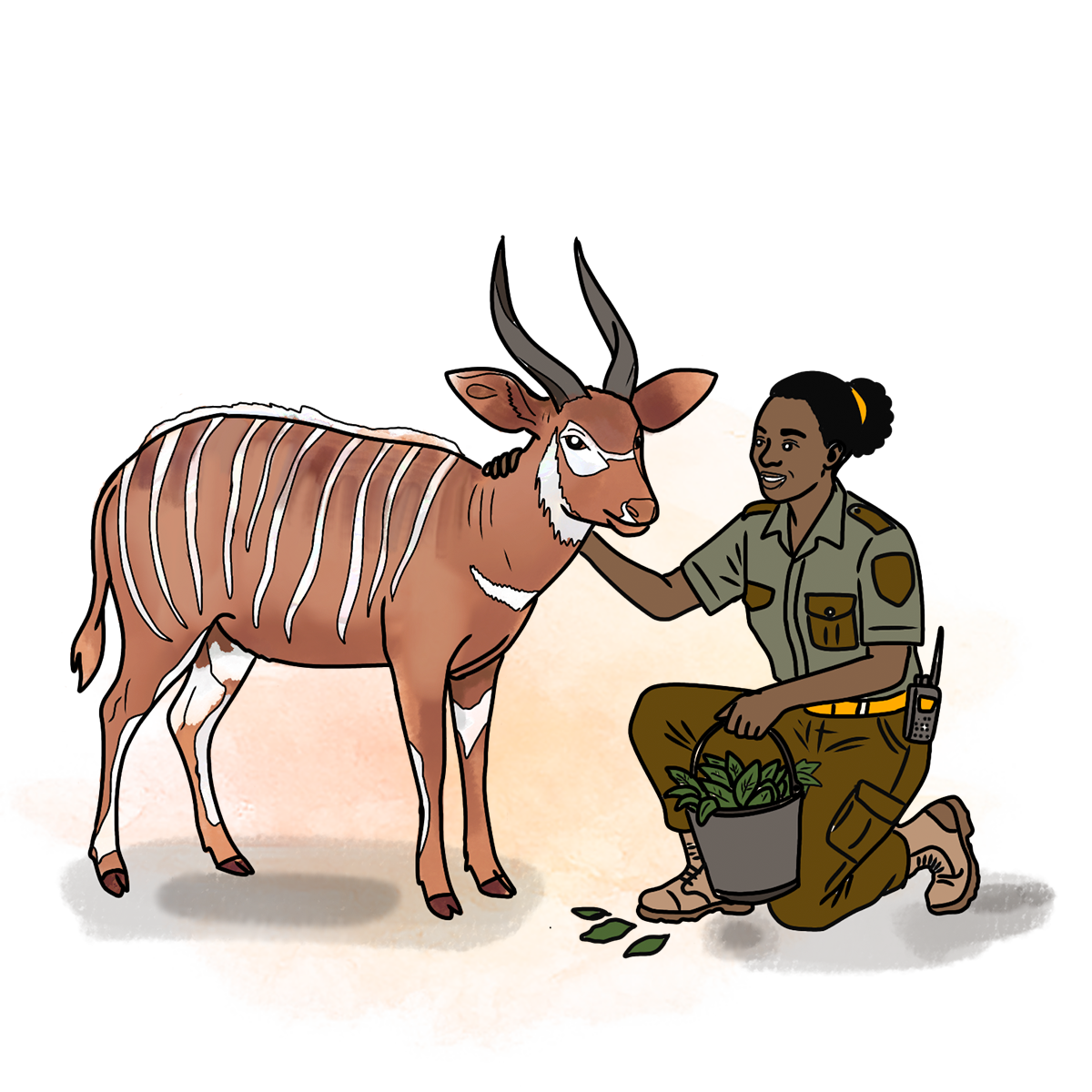
Currently, more than 100 mountain bongos are under managed conservation breeding at the Mount Kenya Wildlife Conservancy, while fewer than 100 are believed to remain in the wild.
Why should Kenyans care?
Mountain bongos are more than just rare antelopes.
They are silent guardians of Kenya’s forests.
Where bongos survive, forests are usually healthy and healthy forests protect Kenya’s critical water towers that millions of people depend on.
The species also supports ecotourism, conservation education and scientific research.
For conservationists, the return of mountain bongos is about far more than bringing animals back home. It is about restoring forests, protecting biodiversity and giving Kenya a second chance to save a species found nowhere else on Earth.
For decades, the mountain bongo disappeared quietly from Kenya’s forests.
Now, conservationists hope its return home marks the beginning of one of Kenya’s greatest wildlife comebacks.