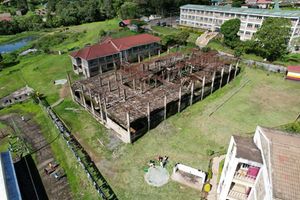
Contractors abandoning projects, delays and incapacity are some of top reasons why Sh9.1 billion county projects remain incomplete, a review of data shows.
According to the Controller of Budget report for the 2024/2025 financial year, 158 county projects across 18 devolved units have stalled yet counties have already spent Sh3.8 billion and still need another Sh5.3 billion to bring the projects to life.
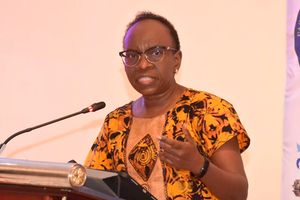
Controller of Budget Margaret Nyakang'o.
Photo credit: File | Nation
Data from the Controller of Budget shows that nearly half of the stalled projects have been derailed by contractor-related issues such as outright abandonment of projects to slow delivery and lack of capacity by contractors.
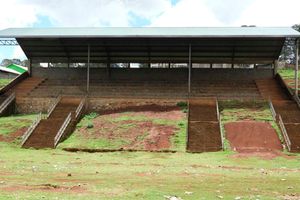
An analysis shows that at least 30 projects were deserted. Some were abandoned just after breaking ground and others halfway through, leaving communities stranded with half-built schools, dispensaries, and market sheds.
In another 15 cases, contractors simply declined to continue, often demanding revised terms or extra funds before resuming work.
Seven projects collapsed under contractor incapacity meaning the firms awarded the tenders lacked the financial or technical muscle to complete what they had signed up for.
Another seven were marred by endless delays, while eight contracts expired without any work having been started.
In seven more cases, the contracts were terminated altogether, after disputes arose between the county and the contractor or because of poor performance.
In total, contractor-related problems account for more than 80 stalled projects which is over half of all incomplete works across the country.
But this is not just about incompetence by contractors, but rather exposes the deeper cracks in county systems where weak procurement, poor supervision, and politicised contracting persist.
The Auditor-General’s reports have repeatedly sounded the alarm that counties are hiring unqualified firms, often linked to powerful individuals, who deliver substandard work or fail to deliver at all. When these contracts collapse, counties are forced into lengthy termination processes, wasting both time and taxpayers’ money.
In August, the Auditor-General reported that 33 counties had 248 stalled projects worth over Sh20 billion during the 2023/2024 financial year.
Machakos led in numbers with 54 projects worth Sh314 million, followed by Nyandarua’s 43 projects valued at Sh403.9 million.
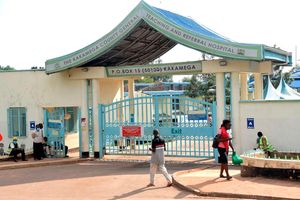
Kakamega County topped the list in total value, with stalled projects worth Sh8.1 billion, followed by Nairobi at Sh2.4 billion and Trans Nzoia with two projects totalling Sh2.1 billion.
Kakamega and Nairobi had eight and six stalled projects, respectively.
But as the reports note, these figures are likely an undercount as some counties failed to submit full data or provided none at all.
Auditor-General Nancy Gathungu.
Photo credit: File | Nation
Auditor-General Nancy Gathungu has warned that many stalled projects are now attracting penalties due to delayed payments. Counties owe contractors millions for completed works, while others are caught in legal tussles over failed contracts.
The Controller of Budget’s report singles out Baringo County as having the highest value of stalled projects at Sh1.3 billion. Only Sh131 million has been spent, leaving a Sh1.1 billion gap. Among the unfinished works are nine Early Childhood Development (ECD) classrooms worth Sh9 million that were abandoned after contractors declined to proceed.
In Machakos, where the problem is most visible, nearly all 54 stalled projects were derailed by contractor issues. Market buildings, some more than 80 percent complete, were abandoned midway. The county has already spent Sh314 million, but needs Sh817 million more to complete them.
Last year, the Senate Committee on Devolution and Intergovernmental Relations said that “contractors were the weak link in [the] devolution chain”. It noted that underqualified bidders who are often politically connected, win tenders only to fail to deliver.
But contractors are not the only ones to blame. In at least nine projects, contractors downed their tools after counties delayed or withheld payments.
Many counties blame the national government for delayed disbursements, which leave them unable to pay contractors on time. The result is a vicious cycle where counties stop paying, contractors stop working, and projects stall indefinitely.
Apart from contractor failures, funding shortages also feature prominently in the Controller of Budget report. Twenty eight projects stalled due to lack of money with 14 receiving low allocations, while another 14 were completely removed from county budgets.
In Kericho, the Kipkobob Water Project is one such casualty. Initially budgeted at Sh102 million, it remains 49 percent complete, with Sh52 million still required.
In Nyamira, three county projects – the County Assembly Speaker’s Residence, County Headquarters, and Assembly Office Block – have stalled for lack of budgetary provision. Together worth Sh784 million, the projects were already over 60 percent done, but require Sh268 million to complete.
While contractors may top the list, they are not alone in derailing county development.
The Controller of Budget cites other culprits: procurement hitches (3 projects), land disputes (5), court cases (5), and even insecurity (2).
The problem of stalled projects isn’t new. For years, audit reports have highlighted the wastage of taxpayer money on projects that are either abandoned, delayed, or so poorly executed that they become unusable.
Yet despite the repeated warnings, little action has been taken. Counties rarely blacklist defaulting contractors or recover lost funds.
In response to these issues, the Controller of Budget has issued a set of recommendations, including reforming procurement processes, enforcing strict contractor vetting, and ensuring timely disbursements could help. But for now, taxpayers continue to foot the bill for projects they won’t reap benefits from.