Hello

Your subscription is almost coming to an end. Don’t miss out on the great content on Nation.Africa

Ready to continue your informative journey with us?

Hello

Your premium access has ended, but the best of Nation.Africa is still within reach. Renew now to unlock exclusive stories and in-depth features.

Reclaim your full access. Click below to renew.

Pastoralists struggle to survive amid climatic changes

Isiolo attacks

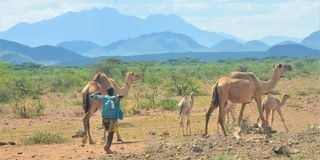
A herder watches over his camels at Tractor area in Ngaremara, Isiolo on July 22, 2021. Police in Isiolo are investigating claims that politicians are linked to violence that has rocked the area for the last three months.

Photo credit: Waweru Wairimu | Nation Media Group

Hawa Dekow, who resides on the outskirts of Garissa town, is among pastoralists battling to survive changes to the climate in the area.

Changing weather conditions have turned their lands into deserts, forcing them to adopt new patterns of travelling in search of pasture for their animals.
The 32-year-old says her morning routine is different from what it used to be when she was a child.

“Life was not so complicated before. Now a famine has hit us hard, affecting our livestock and our livelihoods,” she says.

Ms Dekow says that in the culture of pastoralists, owning many camels, goats and sheep symbolises great wealth.

“But our livestock are dying as days go by because of the drought.”

Meat and milk from their livestock, she says, used to sustain them but that is not the case now.

The mother of five says she took three of her children to school by selling some of her camels.

“A camel can sell for between Sh50,000 and Sh200,000, depending on the breed and age. You could sell them and the money can sustain you through other things, but the drought has changed all that. Camels are dying,” she says.

They live in a manyatta, huts built from grass. Because they are always on the move, they cannot build permanent homes.

The longest they can stay is a month before moving out to search for another grazing land, Ms Dekow says.

The number of camels, their main means of transport, has been declining over the years.

“If we get good land, then it favours us, because our livestock depend on good grazing lands and we depend on the livestock,” she says.

For people in the area who depended on farming, prolonged dry spells have led to the loss of livestock, forcing them to abandon their ancestral land and move to nearby towns in search of other sources of income.

“Most of our lands have turned into deserts, leaving us with no choice but to move,” says Dubow Ibrahim.

He describes water as a major cause of conflict between clans, saying pastoralists face a severe environmental crisis.

Speaking during the handover of the revitalised Kenya Meat Commission in May, President Uhuru Kenyatta announced new measures that would revive the livestock sector.

“We will partner with donors to resuscitate stalled water projects in drylands. This is to ensure livestock remain fed despite the weather patterns,” he said.


