When governors across the 47 counties mooted the idea of regional economic blocs at the advent of devolution in 2013, they touted them as the silver bullet that would change the fortunes of their regions.
They were billed as the engines that would spur economic growth across the country.
At the time, the optimism surrounding the idea was evident, as various counties came together to establish economic partnerships, promising residents a turnaround in their lives.
At the Coast, for instance, Jumuiya ya Kaunti za Pwani took off, mapping out the resources that would transform the fortunes of people in Kilifi, Mombasa, Tana River, Lamu, Kwale and Taita Taveta counties.
In the Western and Nyanza regions, 14 counties came together in 2018 to form the Lake Region Economic Bloc (LREB).
The bloc brings together Kisumu, Kakamega, Kericho, Busia, Nandi, Migori, Homa Bay, Siaya, Kisii, Nyamira, Bungoma, Trans Nzoia, Vihiga and Bomet counties.
In the Rift Valley, eight counties came together to form the North Rift Economic Bloc (Noreb), key to safeguarding their shared prosperity and unlocking their potential.
Soon after, the 10 counties in the Mount Kenya region formed the Central Region Economic Bloc (Cereb).
The bloc comprises Nyeri, Nyandarua, Kirinyaga, Meru, Tharaka Nithi, Laikipia, Murang'a, Nakuru, Kiambu and Embu counties.
Then there was the Frontier Counties Development Council that sought to bring together Garissa, Wajir, Mandera, Marsabit, Isiolo, Turkana, Samburu, West Pokot, Lamu and Tana River counties.
Then there was the South Eastern Kenya Economic Bloc, comprising the three Ukambani counties of Makueni, Machakos and Kitui.
This left Nairobi, Narok and Kajiado without any bloc.
However, Narok and Kajiado later formed the Narok-Kajiado Economic Bloc (Nakaeb).
The blocs, just like devolution itself, were intended to create the much-needed economic prosperity for Kenyans.
However, over time, the blocs have become mere talking shops as grandiose plans fell apart due to various reasons, including lack of funding, competition for influence and the realisation that without a legal framework, the unions were built on quicksand.
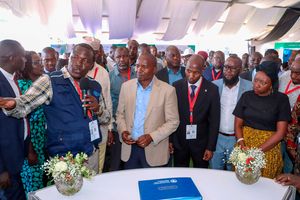
Then-Coast region governors from left Salim Mvurya (Kwale), Hassan Joho (Mombasa), Issa Timamy (Lamu), Hussein Dado (Tana River) Amason Kingi (Kilifi) and John Mrutu (Taita Taveta) attend a Jumuiya ya Kaunti za Pwani meeting in Lamu County in December 2015.
Photo credit: File | Nation
More than 13 years after devolution, little has been realised from the much-hyped entities.
While much appeared to have gone into shaping the structures of the economic blocs on paper, most have remained stagnant.
Most of the much-hyped regional economic blocs have, over the years, fizzled out.
Among the first to run into headwinds was the North Rift Economic Bloc, comprising Uasin Gishu, Nandi, Elgeyo Marakwet, West Pokot, Turkana, Baringo, Trans Nzoia and Samburu counties.
Even before the ink had dried on the agreement signed at a breakfast meeting by the governors, Nandi and Trans Nzoia counties walked away from the bloc and joined the Lake Region Economic Bloc, arguing the new bloc served their interests better.
Noreb had promised an end to persistent challenges ranging from deadly cattle rustling and border conflicts to underutilised agricultural potential.
The governors also agreed to introduce inter-county tariffs that would make it easier to partner in trade and investment.
LREB was equally ambitious, with its flagship proposal to establish a Sh2 billion development bank, an idea that ran into headwinds years after it was mooted.
The financial institution was intended to offer low-interest loans while supporting the growth of small and medium-sized enterprises across the region.
However, in August 2023, LREB dropped the plan after the Office of the Controller of Budget declined to approve it.
The dream also fizzled out because the bloc lacked the legislative backing required to allow member counties to contribute funds to the project.
The Controller of Budget warned LREB members against engaging in any financial transactions without a proper legal framework.
At the time, the bloc had contracted consultancy firm Deloitte to help identify an existing bank for acquisition.
Deloitte had begun negotiations with four banks to identify one in which LREB could acquire a controlling stake before the project was halted.
Although most of the blocs have established secretariats, complete with chief executive officers and staff to carry out their mandates, there is little to show for their existence.
New Content Item (1)
Photo credit: By Wachira Mwangi/ Nation Media Group.
Today, most of the joint multi-million-shilling projects proposed under the blocs have stalled, remain in limbo or have been suspended as they await legislation to legalise their activities.
Besides stalled projects, operations at the secretariats of most regional economic blocs have also been hampered by lack of funds.
The Nation has established that a cocktail of challenges has derailed the dreams of the seven regional economic blocs, leaving member counties grappling with financial and administrative challenges.
Inadequate funding, the absence of legislation, lack of commitment by some governors, changes in county leadership and competing development priorities are among the factors that have hindered the entities.
In some cases, personal differences and political interests have also undermined the plans.
According to Mr Kizito Osore Wangalwa, Director of Committees and Programmes at the Council of Governors (CoG), the absence of legislation remains the biggest obstacle facing the regional economic blocs.
"The Council of Governors has been pushing for a law to legalise the regional economic blocs and provide them with formal legitimacy to secure sustainable funding. Without a legal framework, the entities remain fragile, as development partners and financiers require assurance that their investments are anchored in law and supported by structures capable of surviving political transitions," Mr Wangalwa told the Nation.
"Anchoring regional economic blocs in national legislation is critical to transforming them from informal executive arrangements into legally binding, fiscally accountable and sustainable economic engines. It will unlock funding because international financiers and development partners require legal certainty before making long-term investments," he added.
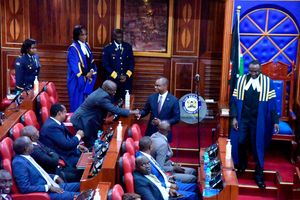
The Nation established that the Senate is yet to enact legislation to formally anchor and operationalise the regional economic blocs.
The County Resources Bill before the Senate, which seeks to legitimise the blocs and enable member counties to pool resources for development projects, has stalled.
Three years ago, the Senate launched inquiries into the activities of the regional economic blocs and promised legislation to formalise them.
This followed revelations that billions of shillings contributed by member counties and development partners had never been audited because the blocs are not anchored in law.
Further, some county assemblies are yet to ratify legal instruments to formally establish the blocs, slowing partnerships intended to drive regional growth.
Governance expert David Ngugi said delayed ratification of the legal framework has significantly hindered their operations.
"There is a need to entrench regional economic blocs in law to enhance their credibility and attract sustainable funding from development partners and financial institutions. The Senate should fast-track the legislation to enable the groupings to access more donor funding," Mr Ngugi said.
"Most regional economic blocs have ambitious plans involving multi-billion-shilling projects, but inadequate funding has constrained them since the advent of devolution. Once anchored in law, they will be better placed to secure financing for cross-border projects such as regional banks, agricultural processing facilities and maritime transport infrastructure. Currently, their operations remain largely informal and lack the legal backing required to guarantee long-term impact," he added.
Billboards welcoming President William Ruto erected in Homa Bay ahead of the devolution conference on August 12, 2025.
Photo credit: Alex Odhiambo | Nation
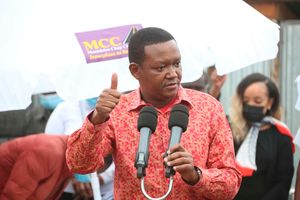
A few months ago, Nyandarua Governor Kiarie Badilisha, who is also the secretary of the Central Region Economic Bloc, called for legislation to legalise the entities.
"Formalising county economic blocs is long overdue. The move will enable counties to jointly attract investment in agriculture, value addition and industrialisation, which are key pillars in boosting local economies and creating employment," said Governor Badilisha.
Currently, the seven regional economic blocs operate under inter-county Memoranda of Understanding (MoUs).
The Nation also established that progress within the county economic blocs has been slowed by inadequate funding, delayed remittances from member counties and audit concerns.
"Most county assemblies have failed to pass laws to legally anchor regional economic blocs, making it difficult to officially allocate and spend public funds on them. Financial contributions made by counties have also attracted audit queries because the blocs lack explicit legal recognition for direct county budget support under the Intergovernmental Relations Act," said governance expert Dr Peter Mbae.
"Most counties therefore cannot implement ideas contained in policy documents developed by members of the regional blocs," he added.
A few months ago, Tana River Governor Dhado Godana, chairman of the Jumuiya ya Kaunti za Pwani economic bloc, said the entity was grappling with funding challenges as some members had failed to remit their annual contributions.
He said delayed payments of Sh2.5 million from each county annually, amounting to Sh15 million, were affecting service delivery.
"Lack of funding is threatening the dream of achieving collective development goals for the counties. There is no proper legal framework allowing counties to channel funds to JKP. I call upon county assemblies to pass laws supporting these contributions," the governor said.
The regional economic bloc, which received Sh3 billion from donors in 2022, has been pursuing several multi-billion-shilling projects, including the establishment of a mango processing plant in Tana River.
A frustrated governor who is a member of LREB revealed this week that their hands are tied, with several viable projects targeted for implementation before 2026 unable to take off.
"We were told to wait until legislation is enacted to formalise county engagements in the blocs, including the transfer of funds to their accounts. But it is yet to happen. The promise remains a pipe dream. Interestingly, talk of enacting the law has been there since 2013," said the governor, who spoke in confidence.
Despite repeated promises by successive governments to support regional economic blocs and county integration efforts through an enabling legal framework, almost 14 years after devolution little has changed.
Governance experts say that if properly managed and anchored in law, the regional economic blocs could unlock development in agriculture, tourism, manufacturing, trade and industrialisation.