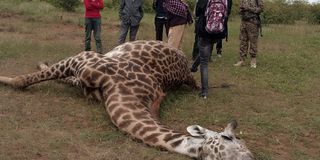
The Kenya Wildlife Service (KWS) in partnership with private conservators in Kajiado County has rescued at least 50 giraffes that had been trapped inside privately fenced properties for more than two years.
The freed Maasai giraffes had been cut off from their herds after landowners fenced off parcels of land, leaving some of the animals stranded for long periods.
Wild animals from Amboseli National Park and dozens of private wildlife sanctuaries that form the Amboseli wildlife circuit typically roam freely across private rangelands in search of food and water.
But for the “caged” giraffes, survival became a daily struggle, especially during drought seasons when food and water are scarce.
Isolated from their social groups, the giraffes faced increased risks of starvation, injury and in some cases went months without access to water.
According to KWS records, at least 30 giraffes have died since 2023 after being entangled in fences in the region.
Poachers have also been using the barriers to trap giraffes for their tails and meat. Last week, a giant male Maasai giraffe died after being trapped in a fence on a ranch in the Matapato area.
The seven-day rescue operation carried out by KWS officers in collaboration with Ramat Wildlife Society—an umbrella body for 14 community conservancies in the Matapato rangelands of Kajiado Central—saw teams remove fences, free the animals and guide them back to open rangelands.
In some cases, groups of same-sex giraffes were found trapped together for over a year, disrupting natural breeding patterns.
“Our primary goal is the survival of the Maasai giraffe in this landscape. Isolating them inside fences diminishes their security, health, and ability to breed. The numbers of Maasai giraffes continue to decline. We are calling for concerted efforts to protect this endangered species,” said KWS Assistant Director Francis Mbaka.
Local conservators have also raised the alarm over shrinking rangelands that limit the free movement of wildlife, especially giraffes.
“A lot of wildlife is stuck inside fences but giraffes face the greatest danger because of their size and nature,” said Mayian Lemayian, Programs Officer at Ramat Wildlife Society.
“Freeing them reconnects them to the larger landscape, allows them to breed, and ensures their survival in the face of modern pressures.”
The exercise aims to restore safe movement corridors for giraffes and protect one of Kenya’s most iconic species from mounting threats.
Conservationists are now pushing for the full implementation of the county spatial plan which provides for the protection of rangelands and wildlife migration corridors from human encroachment.
The Maasai giraffe—also known as the Kilimanjaro giraffe—is predominant in Kajiado Central and South sub-counties as well as neighbouring Tanzania.
Recognisable by its jagged, irregular leaf-shaped blotches stretching from hooves to head, the giraffe can grow up to 18 feet tall.
The Maasai giraffe population in Amboseli has experienced a remarkable resurgence, climbing from an estimated 2,000 in the 1990s to more than 6,000 today.