Tensions are rising in Kisumu County, where members of the Korando and Kogony clans are threatening to prevent the implementation of a Sh128 billion real estate project. They accuse the developers and government officials of seizing ancestral land without consulting the community.
The project is being led by GulfCap Real Estate and has attracted further controversy following the publicised donation of five acres by former prime minister Raila Odinga to support the government's affordable housing programme.
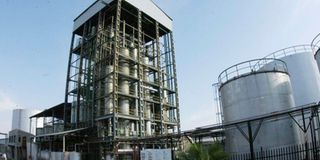
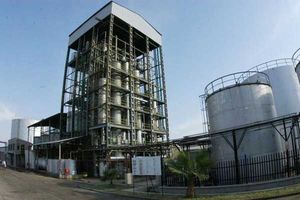
At the centre of the storm is a 285-acre plot of land, where the defunct Kisumu Molasses Plant stands, which is now earmarked for a major housing development called LV Marina.
While Mr Odinga defends the donation on the basis that it will help to meet local housing needs and will include schools and hospitals, the gesture has sparked outrage among residents who view it as irregular and unlawful.
Last week, Mr Odinga announced that he had donated the land during a tour by President William Ruto.
President William Ruto and former prime minister Raila Odinga at an affordable housing project in Kisumu on May 29, 2025.
Photo credit: Alex Odhiambo | Nation
“What the former prime minister did was illegal. We want our land returned as it was taken from our community in 1979 for the molasses plant. When that project failed, it should have been given back to us,” said George Weda, the secretary-general of the Kisumu Welfare Association.
According to community elders and documents cited by the Association, the land was originally acquired in 1976 by the then Minister for Foreign Affairs, Dr Robert Ouko, on behalf of the Kenya Chemical and Food Corporation, under the Land Trust Act (Cap. 288). It was to be held in trust for the benefit of the Kogony and Korando people.
The Kisumu Molasses Plant, inaugurated in 1977, was envisioned as an industrial hub that would provide jobs and infrastructure to the region. However, residents claim that these promises were never realised, and the facility stalled in the 1980s, remaining dormant for years.
Controversy deepened in the 1990s when the Odinga family reportedly acquired the plant's assets in a public auction through the now defunct Kisumu Development Trust. Residents argue, however, that the auction included only the plant’s machinery and not the land it occupied.
“Only the plant was auctioned. The land remained with the community,” Mr Weda maintained.
He added that the Kisumu Welfare Association had formally written to the developers on February 3, 2025 to request public engagement and clarification on the project, but had received no response.
“We need to understand how this development will affect our lives and livelihoods. It’s our land and we have a right to be consulted,” the letter stated.
The group has issued four key demands, including the completion of a comprehensive environmental impact assessment, community participation, fair compensation for affected farmers, and a transparent land ownership audit.
They argue that the project area is ecologically sensitive and critical to the health of Lake Victoria.
“This is a vulnerable region and mishandling waste could poison water sources, endanger public health, and devastate biodiversity,” warned Prof Enos Okolo, the chairperson of the association.
Prof Okolo also questioned whether the proposed housing units would truly be affordable for Kisumu’s low-income majority, given their current cost.
Farmers have already started to feel the effects of the disputed land transfer. In an interview with the Nation, Samuel Onyango, 33, said that his family had cultivated two acres of the land for over 20 years.
“I paid my school fees from our maize harvest. Then one morning, bulldozers came and flattened everything. No warning, no compensation,” he said. He estimated that 2.5 acres of crops were destroyed.
“We don’t even know if we’ll be allowed to harvest what’s left,” he added.
The LV Marina project was launched on January 18, 2025. Mr Odinga described it as the most viable use of the site following the failure of the molasses venture.
“I spoke to my brother Shahbal, and we agreed this was the ideal solution for the region,” said Mr Odinga at the event referring to businessman Suleiman Shahbal, a key partner in the development.
He traced the origins of the Molasses Plant back to the 1970s, when the Kenyan government was seeking to reduce its dependence on expensive oil imports amid the global energy crisis. The plant was designed to convert sugar by-products into ethanol to be blended with petrol “to reduce our dependence on costly oil imports”.
However, the project soon encountered difficulties as oil prices stabilised and major multinational oil companies reportedly lobbied against ethanol blending, making the plant uneconomical.
“The oil companies opposed the blending initiative. They preferred importing crude oil, where profits could be made on the high seas. They sabotaged the plant,” he claimed.
Mr Odinga said that his family had lawfully acquired the dormant facility in the 1990s after placing the highest bid at a government auction.
“We emerged the highest bidder when the government put the plant up for auction. But complications arose as officials said only the assets were for sale and not the land. We questioned the logic of what use were buildings without the ground they stood on,” he said.
Although a deposit had been paid, legal disputes ensued and an initial court decision ruled against the Odinga family. Eventually, however, the process was reopened and the land was included in a new sale, which the family claims to have paid for separately.
Operations resumed briefly through a joint venture with a South African company, but the venture soon collapsed due to a shortage of molasses. By then, other sugar companies, such as Mumias and Muhoroni, had built their own ethanol plants, reducing the supply.
“We brought in molasses from Sony, Chemelil, West Kenya even as far as Uganda and the Coast. But the cost became unsustainable. Eventually, we had to shut it down,” Mr Odinga said.
Given Kisumu’s rapid urbanisation, he argued that it no longer made sense to have a chemical plant in the city and that the area would be better suited to housing development. He maintained that the affordable housing plan reflects a national trend and vision.
“When I served as Minister for Roads, Public Works and Housing, I introduced amendments to the Housing Act. Rural-to-urban migration is irreversible. Unfortunately, successive governments failed to plan for it; that’s how informal settlements have proliferated,” Mr Odinga said.
Despite these explanations, some residents and civil society groups remain unconvinced.
“This is our land and we were never consulted. Our rights have been trampled. If need be, we’ll pursue justice through the courts,” said civil rights activist Shem Kosse.
The standoff now threatens to derail the multi-billion-shilling urban transformation agenda in the lakeside city, raising serious questions about land rights, development priorities, and public accountability.