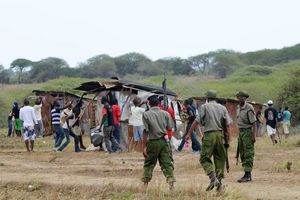
Were it not for photographs taken in 2009 and 2013 during routine land surveys, more than 3,000 families in Mombasa might have successfully claimed ownership of over 100 acres of land through adverse possession.
The families told the court they had occupied the land located in Kiembeni area of Kisauni sub-county since the 1970s. Some testified that they were born on the land while others claimed to have settled there as early as the 1970s.
They aimed to dispossess Zumzum Investment Limited by convincing the court that they had called the property home for over five decades.
However, photographs presented by the company during the trial proved decisive and dashed their hopes of claiming ownership of the property.
The images taken during land surveys showed a vast stretch of bare, unoccupied land, undermining the families' claims in a courtroom battle that ultimately ended decades of hope.
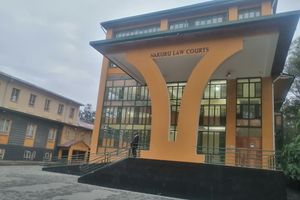
Despite years of building lives and erecting permanent homes, the Court of Appeal sealed their fate, paving the way for mass evictions in a case marked by heartbreak and finality.
“The company adduced evidence through valuation reports and photographs taken at the time, which showed that the suit property was vacant and unoccupied in 2009 and 2013 when the property was surveyed and valued for purposes of a bank charge,” Justices Agnes Murgor, Kibaya Laibuta and Ngenye-Macharia stated in their July 5 ruling.
The judges noted that although the squatters challenged the authenticity of the photographs, they did not provide any evidence to counter what the company presented.
The court further observed that there was no proof the squatters had been in continuous and uninterrupted possession of the land for at least 12 years, as required under the doctrine of adverse possession.
“It is clear that the squatters utterly failed to prove their claim of adverse possession to the required standards. On this basis, we are satisfied that the trial judge rightly allowed the firm’s claim and dismissed the squatters’ counterclaims,” the judges ruled.
The appellate court also pointed out that there was no clear evidence regarding the actual dates of occupation, leading the Environment and Land Court—which initially heard the case—to rightly disbelieve the squatters’ claims.
The legal battle began at the Environment and Land Court, where the company sought to be declared the rightful owner and to obtain eviction orders.
In response, the squatters sought ownership through adverse possession, claiming long-standing and uninterrupted occupation.
However, the court ruled in favor of the company having produced proof of legal ownership. Dissatisfied with the verdict, the squatters moved to the Court of Appeal.
Zumzum Investment Limited argued that it owned the land and had charged it to Habib Bank Limited in 2010 to secure a Sh100 million loan. At the time, the land was undeveloped and unoccupied according to inspection records.
The company stated that the land was only later trespassed and illegally occupied, with both temporary and permanent structures being built thereafter.
Mr Abdulkarim Swaleh, who testified on behalf of the company, said he bought the land in 1998 and received the title deed in 1999.
“The squatters invaded the land in 2014. This is not ancestral land. They are trespassers,” he told the court.
Richard Kiambi, a valuer, testified that the land was vacant and undeveloped when he carried out inspections in 2009 and 2013. He provided valuation reports and photographs confirming that the land was empty at the time.
Despite this, the squatters maintained that they had lived on the property long enough to be declared legal owners, claiming to have occupied at least 100 acres.
Mr Charo Masha testified that around 3,000 families—represented in court by 15 individuals—occupied the land.
“I have lived here with my family for 40 years. I built my house in 1979, only to later discover the land had been charged,” he said.
“I was born here in 1971. This has been our home ever since,” he testified.
Ngala Kassim similarly claimed his family moved onto the land in 1970 and added that in 2013, they were arrested and ordered to vacate.
But both the trial court and the appellate court found that the squatters failed to provide sufficient evidence to support their claims or to challenge the photographic evidence showing the land was vacant in 2009 and 2013.
The judges also noted that there was no documentation indicating when each of the approximately 818 appellants had come into possession of the land, nor specifying which portions each individual occupied.