For over a decade of devolution, the governorship of Nairobi, the country's capital and economic hub, has proven to be more of a poisoned chalice than a seat of power.
The narrative that has unfolded from Dr Evans Kidero's embattled term from 2013 to 2017, through Mr Mike Sonko's dramatic downfall, to the mounting pressure currently facing Governor Johnson Sakaja paints a bleak picture of an apparently cursed office.
Analysts say that the sheer amount of money that City Hall collects in revenue and in direct disbursements from the National Treasury, in billions of shillings, makes the office holder the envy of many, attracting all kinds of missiles in the process. The stakes and interests are always high.
Mr Kidero, a former chief executive in the corporate world, took office in 2013 as the first Governor of Nairobi under the new devolved system. His tenure was marred by constant friction with cartels deeply entrenched within the city’s systems, ranging from garbage collection and land grabbing to revenue collection and transportation.
Dr Kidero’s administration often cited these cartels as the shadowy forces undermining service delivery and reforms. Despite his corporate acumen, Dr Kidero seemed perpetually bogged down by corruption scandals, inefficient service delivery and political inertia. In the 2017 elections, he was voted out, having achieved little in terms of transformative leadership, and having left behind a tarnished image marred by allegations of mismanagement.
Dr Kidero arrived with a track record as the former CEO of Mumias Sugar Company. Yet his administration was besieged, finally culminating in his arrest in 2018 on charges of abuse of office, money laundering and bribery. Residents frequently spoke of entrenched cartels within garbage collection, land issues and revenue systems.
Mike Sonko, known for his flamboyance and grassroots appeal, swept into power with a populist mandate in 2017, defeating Kidero. However, the same charisma that won him the seat soon descended into chaos.
Mr Sonko's time in office was characterised by erratic leadership, viral social media rants and public disputes with officials from both the county and national governments. The flamboyant governor often claimed that he was being sabotaged by the 'deep state' and refused to appoint a deputy governor for most of his term, effectively running the county alone.
City Hall.
Photo credit: Bonface Bogita | Nation
His deputy, Polycarp Igathe, had resigned in January 2018 after just five months in office, citing "regrets for failing to earn the trust of the governor, which would have enabled me to drive the administration and management of the county".
“Without fear, favour or ill will, I step down to avoid abusing or betraying my oath of office to Kenyans, Nairobians and my family. Thank you for the encouraging support given to me so far,” Mr Igathe stated in a tweet announcing his exit from City Hall.
In a bizarre twist, Sonko transferred key county functions, including health, transport and planning, to the national government in 2020, claiming he had been coerced.
This paved the way for the establishment of the Nairobi Metropolitan Services (NMS), led by the military officer Major-General Mohamed Badi, which effectively reduced Sonko to a figurehead.
By December 2020, Sonko had been impeached by the County Assembly for gross misconduct and abuse of office, a decision that was confirmed by the Senate, making him the first Nairobi governor to be forcibly removed from office. His exit was dramatic, in true Sonko fashion, but it also symbolised deeper troubles within City Hall.
Opponents accused Mr Sonko of undermining the NMS, while he labelled it a 'fraud scheme'. On December 17, 2020, the Senate upheld the decision after 88 MCAs, over the two-thirds threshold, voted for his removal.
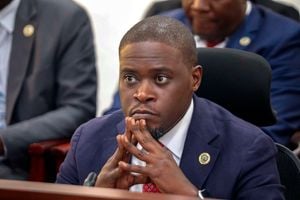
Enter Johnson Sakaja: a polished, youthful politician who promised a new era of dignity and delivery. Elected in 2022 under the ruling Kenya Kwanza coalition, Mr Sakaja inherited a capital city battered by years of dysfunction, political battles, broken systems, and cartels with a stranglehold on City Hall, much like his predecessors.
His 'Let's Make Nairobi Work' agenda focused on order, infrastructure upgrades and streamlining revenue collection. However, less than three years into his term, Sakaja finds himself under siege—not only from shadowy cartels, but also from Members of the County Assembly (MCAs) and sections of the public. He’s staring at possible impeachment.
Critics accuse Mr Sakaja of poor financial management, mounting county debt and an aloof leadership style that has alienated MCAs and some residents. Recent reports of delayed salaries, ghost projects and unanswered questions over pending bills have added fuel to the fire.
MCAs have threatened to impeach the governor, citing poor service delivery and a lack of consultation. Others allege that the governor has created his own clique of 'cartels' within the county, thus reversing the narrative that plagued his predecessors.
Sakaja has remained defiant, often accusing unnamed political figures of orchestrating chaos at City Hall. However, history may not be on his side.
According to governance expert Joyce Kimani, there is a trend in Nairobi's gubernatorial history. "Every governor starts with big promises, battles shadowy forces—real or perceived—falls out with key political allies, and eventually gets consumed by internal turmoil," she says.
According to Kimani, Nairobi’s highest office, once viewed as the pinnacle of power, has repeatedly turned into a political quagmire. From the structural battles that marred Dr Kidero’s tenure, through Mr Sonko’s spectacular downfall, to the mounting pressure on the incumbent governor, Johnson Sakaja, the city's gubernatorial seat reads like a recurring curse.
US-based political and governance expert Dr Isaac Gichuki agrees. “From Kidero’s silent battles to Sonko’s dramatic downfall, and now Sakaja’s simmering revolt, the office of the Nairobi governor has become a cautionary tale in Kenyan politics. Whether the position is jinxed or simply plagued by systemic corruption remains up for debate. But what is certain is this: unless radical reforms are implemented within the county and at the oversight level, Nairobi’s top job may remain a political death trap, no matter who occupies it.”