How death of a fisherman is haunting KWS in Nakuru
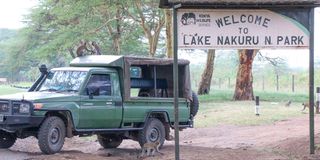
Monkeys sit on top of a Kenya Wildlife Service vehicle that was used to block the gates to Lake Nakuru National Park on September 27, 2025, during World Tourism Day.


As Kenyans across the country thronged national parks, reserves, and sanctuaries following the Ministry of Tourism’s announcement of free entry, Nakuru residents were left out.
The Kenya Wildlife Service (KWS) on Friday evening removed the region from the list of beneficiaries at Lake Nakuru National Park.
According to KWS corporate communications, only visitors with prepaid e-Citizen tickets were allowed access to the park.


“The public is hereby notified that there shall be no free entry to Lake Nakuru National Park on Saturday, September 27, 2025,” read the statement.
Lake Nakuru National Park Assistant Director Emmanuel Koech explained that a security operation was underway inside the park.
“The date of free entry to Lake Nakuru National Park will be communicated by the Ministry at a later date,” he added.
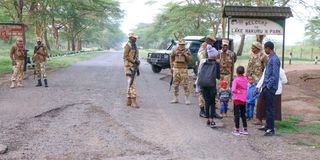
Local tourists are denied access to Lake Nakuru National Park on September 27, 2025 during World Tourism Day.
The abrupt change has sparked suspicion after Alvy Aoko, wife of missing fisherman Brian Odhiambo, had announced via social media post that she has plans to use the free entry day to search for her husband inside the park. Odhiambo disappeared in January after his arrest by KWS officers.
Meanwhile, former Kenya Wildlife Service (KWS) Director-General Julius Kipng’etich believes the country is sitting on an even bigger treasure that goes far beyond visits by foreign tourists.

A portrait of Nakuru fisherman Brian Odhiambo who disappeared on January 18, 2025 after being arrested by KWS officers at Lake Nakuru National Park.
Dr Kipng’etich—now chairman of the Northern Rangelands Trust (NRT)—said it is time Kenya stopped depending solely on tourism and began building a broader wildlife economy.
“The key missing link,” he said, “is the absence of a wildlife regulator. Just like we have the Communications Authority of Kenya in telecoms, we need an independent regulator to ensure fairness and allow wildlife to thrive as an economy.”
Dr Kipng’etich stressed that local communities must be at the centre of this shift.
Kenya has about 45 community conservancies, but only 14 are financially stable. The rest, he said, struggle to sustain themselves.
“If conservancies and private ranches cannot make enough money, they will look for alternatives like selling land to real estate developers. That would displace wildlife, the way it is happening in Laikipia,” he warned. He argued that Kenya’s conservation laws, which give the State sole custodianship of wildlife, need reform.
“Why can’t communities own wildlife the way they own cows? If you allow them to own antelopes, they will farm them and sell them to high-end hotels instead of viewing them as pests. Wildlife would then become a source of income, just like tea or dairy.” For decades, wildlife benefits have been pegged almost entirely on tourism.

Kenya Wildlife Service officers man the gates to Lake Nakuru National Park on September 27, 2025 during World Tourism Day.
But Dr Kipng’etich said this model is outdated, especially for people living next to parks.
“What do you expect a hungry person living beside a park to do when they see an antelope? They will kill it for food. Ironically, KWS arrests them, and taxpayers feed them in jail. We need to expand benefits beyond tourism so that people see wildlife as an asset, not a burden.”
He rejected calls to reintroduce sport hunting, saying the reasons Mzee Jomo Kenyatta banned it in the 1970s still stand.
Instead, he urged the country to think creatively—from pricing park entry fees more strategically, to introducing payment for ecosystem services.
“For instance, Nairobi gets 80 per cent of its water from the Aberdares. Why shouldn’t city residents pay a small surcharge on water and electricity bills to reward Nyandarua, Nyeri, and Kiambu communities for protecting that water tower?” he asked.
Citing Rwanda’s premium pricing for gorilla tourism, Dr Kipng’etich said Kenya should treat the Maasai Mara as the world’s prime wildlife real estate.
“Scarcity must be understood. Maasai Mara is unique, and price is the best allocator of resources. If we charge appropriately, both the government and communities can benefit.”
Another promising frontier, he said, is carbon credits. NRT, which manages dozens of conservancies, has already earned Sh3.3 billion ($26 million) over the last two years for preserving rangelands.
“The challenge is pricing. Kenya currently earns about $10 per kilo of carbon, while other countries fetch as high as $70. That is why we need stronger laws and institutions to ensure fairness.”
With Kenya’s population projected to hit 160 million by 2100, pressure on land is intensifying.
Dr Kipng’etich said the country must protect animal corridors and invest in research to balance development and conservation.
“We must learn from Israel, which thrives on research. If we increase funding in wildlife science, the returns will be seen in GDP growth,” he said.
Above all, he insisted, the wildlife economy will only flourish if institutions are corruption-free, led by talented people, and inclusive of the communities that share their land with wild animals.
“When farmers in Mt. Kenya grow tea and coffee, they make money and are happy. The same should happen to communities living with wildlife. If they benefit, the government and KWS will not have the headaches they face today.
”Dr Kipng’etich said, “My message is simple: wildlife is more than a tourist attraction—it can be a thriving economy if Kenya dares to expand the pie.”
[email protected]@ke.nationmedia.com


