Hello

Your subscription is almost coming to an end. Don’t miss out on the great content on Nation.Africa

Ready to continue your informative journey with us?

Hello

Your premium access has ended, but the best of Nation.Africa is still within reach. Renew now to unlock exclusive stories and in-depth features.

Reclaim your full access. Click below to renew.

Inside the thriving illegal fishing trade in Lake Nakuru

Lake Nakuru illegal fishing

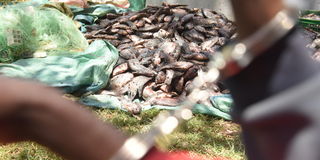
 An arrested suspect found conducting illegal fishing in Lake Nakuru and the 269 kilograms of fish they were caught with.

Photo credit: Boniface Mwangi|Nation

What you need to know:

  • Despite the dangers, illegal fishing remains lucrative for many like Mark, with daily earnings sometimes exceeding Sh2,000.
  • A recent study by Kenya Marine and Fisheries Research Institute established the presence of arsenic compounds in fish and the Lake Nakuru National Park, a protected wetland and the United Nations Educational, Scientific and Cultural Organisation (UNESCO) World Heritage Site.


When Lake Nakuru's water levels surged four years ago, swallowing homes and farmlands, it inadvertently opened up new opportunities for some residents in the form of illegal fishing.
Some locals found themselves transitioning into the unexpected source of livelihood in areas like Barut and Mwariki within Nakuru Town West Constituency, as the once-dry ground had now become submerged under the lake's continuing overflow.
As the waters continued to rise, residents found themselves casting nets where they once grew crops with wet farms, turning to fertile fishing grounds, attracting locals eager to capitalise on this newfound resource.
What started with a few individuals casting lines soon grew into a full-fledged industry, with makeshift structures emerging along the lake's edge.

Read: Beware! Lake Nakuru fish is poisonous, declares CS Salim Mvurya
With time, these structures served as fresh fish kiosks, where the day's catch is cleaned, cooked and sold to residents and tourists alike.
Interestingly, the surge in fishing activities didn't go unnoticed, especially by fishermen from neighbouring Lake Naivasha, who saw an opportunity in the rising waters of Lake Nakuru.
By August 2020, over 50 wooden fishing boats were illegally operating on Lake Nakuru, manned by fishermen seeking to capitalise on the abundance of fish in the newly formed water bodies.
Despite facing numerous challenges, including encounters with wildlife and law enforcement officers, the fishing community persevered as fishing operations became more organised and efficient.