Families affected by the 2018 Solai Dam tragedy have won the first round of a vicious court battle, in which nine people have been charged with causing the deaths of 48 people.
On Thursday, the families of the 48 walked home with hopes of getting justice, after a Naivasha court ruled that the nine have a case to answer.
Naivasha Chief Magistrate Nathan Lutta ruled that Perry Mansukhlal, the owner of Patel Farm in Solai, Nakuru County, where the dam was located, general manager Vinoj Jaya Kumar and seven others have a case to answer.
The private dam located inside Patel Farm in Solai, Nakuru County, burst its banks on the night of May 8, 2018, sweeping over the surrounding villages of Energy, Nyakinyua, Endao, Milmet and Arutani.
The floor waters and tumbling debris hit Energy village at high speed, washing away homes, cars and huge rocks, and then progressing towards the other villages downstream, in pitch darkness.
Forty eight people died in the incident while at least 5,000 were left homeless.
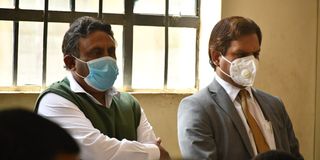
In the courtroom on Thursday, Mr Mansukhlal, dressed in a grey suit, white shirt and gold polka dot tie, sat pensively on the bench, with Mr Kumar next to him in a green cardigan and long sleeved white shirts.
Donning face masks, they only engaged with friends briefly before they were finally ushered into the dock for the ruling.
Magistrate Lutta walked into a packed courtroom minutes past midday, with the air of apprehension inside the dock palpable.
“I have keenly looked at documents presented before court including witness statements. The court has established that the nine accused persons have a case to answer and have been put on their own defence,” he said.
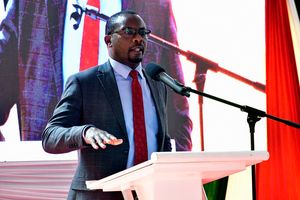
The victims’ lawyer, Kelly Malenya, said they would file an application for an expanded victims’ participation in the court proceedings.
“Initially, the victims only participated at the point of submissions but, presently, we want to be able to cross-examine the witnesses brought to court now that the accused have been put on their defence,” he said.
Mr Malenya noted that the victims have waited more than five years for justice, so they should be at the center of the court proceedings.
Assistant Director of Public Prosecutions, Alexander Muteti, told the court that they will ask to be provided with either the designations or the names of the defence witnesses.
The court will, on May 11, virtually assess conformations by parties before the court as well as the application touching on the victims.
In February 2020, in a ruling that shocked prosecutors, lawyers for the victims, human rights groups and politicians, the then Naivasha Chief Magistrate Kennedy Bidali set all the nine suspects free, saying prosecutors had failed to show a willingness to prosecute the matter.
Mr Bidali also dismissed a petition by the Kenya Human Rights Commission (KHRC), which was seeking to join the case.
The ruling was met with uproar from various institutions, forcing Director of Public Prosecutions Noordin Haji to appeal the acquittal of the nine suspects.
The nine who were first charged in court on July 9, 2018, were each released on a Sh5 million, with a surety of the same amount, or Sh2.5 million cash bail.
The ruling was a victory to survivors of the tragedy and vcitims' families as they have been awaiting justice for five years. Questions still linger on whether the incident was an act of God or the result of human error.
Although the Solai villages that experienced the tragedy are slowly rebuilding, the sight of gullies, bare earth, and desolation left after the dam broke its banks is still a reminder of the dark night on May 8, 2018.
Among villages that were most affected were those in the farmlands of Nyakinyuam where hundreds of people were displaced.
In 2019, the Kenya Red Cross and a local church constructed 37 permanent and semi-permanent houses for survivors, who included landlords, who either rented or occupied their houses, tenants, and business people whose premises were partially or completely destroyed.
The houses, built at a cost Sh40 million, were completed and handed over months after the tragedy.
Red Cross partnered with Nakuru County to help survivors rebuild their lives while Safaricom helped reconstruct a school in the area, which was most affected by the tragedy, and is also actively involved in the restoration process.
Kenya Power and other organisations have also intervened over the years, to restore water and electricity supply in the area.