The battle between two investors over the Yala Swamp in Alego Usonga, Siaya County, is intensifying, with the latest incident seeing youths burn 19 acres of sugarcane.
In one of the most recent flare-ups, a group attacked community members who were preparing to hold a demonstration demanding the exit of the current investor.
Yala Swamp, Kenya’s largest freshwater wetland, covers 6,900 hectares of highly fertile land in Siaya County. The swamp has long attracted investors, but recurrent disputes have stalled its full potential.
The current investor, Lake Agro Limited — owned by the Rai family — holds a 66-year lease. However, the return of former investor Dominion Farms Limited, led by American businessman Calvin Burgess, a month ago, has emboldened sections of the community to demand Lake Agro’s removal.
Last week, while attending mass at St Peter’s Cathedral in Siaya, President William Ruto acknowledged the dispute and promised a solution that would balance both community and investor interests.
“Whatever is going on at Yala Swamp currently is suboptimal. That area has high potential and can give much to the community,” he said, signalling dissatisfaction with the current arrangement.
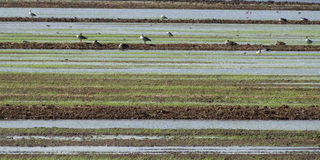
Lake Kanyaboli which is in the Yala swamp. The community around the swamp is worried that a new investor might get into land portions that some of them have been cultivating.
Photo credit: File | Nation Media Group
According to former Alego Usonga MP Sammy Weya, the swamp’s fertility makes it a jewel that any serious agricultural investor would scramble for.
“Over the years, the swamp has been receiving topsoil deposits from the Nandi Hills and surrounding areas where the river originates, making it extremely fertile,” he told the Nation.
He added that if fully cultivated, the swamp could feed thousands of people, with rice and other crops thriving. Beyond crops, he said, the swamp is ideal for fish farming.
“For a long time, the former investor was the leading producer of fingerlings for catfish and tilapia in the country. The swamp has the potential of producing the best fingerlings as well as rearing fish,” Mr Weya said.
His sentiments were echoed by Rodgers Ochieng of Support Community in Democracy Alliance (SCODA), a Siaya-based organisation, who described the swamp as a resource investors would go to great lengths to control.
“The swamp has a ready supply of water that can sustain agriculture without rainfall for a long time. Its strategic location next to Lake Kanyaboli and River Yala provides reliable irrigation water, even during prolonged dry spells,” Mr Ochieng said.
He further noted that the swamp’s natural bacteria support organic decomposition, making it organically fertile without the need for fertiliser.
Mr Ochieng argued that loopholes in land management had made it easy for investors to acquire the swamp at a throwaway price. Since the land is not registered as community property, he said, it has been vulnerable to exploitation.
“We are calling on the governor and other leaders to push for the swamp to be registered as community land before any investors are allowed in,” he added.
Mr Burgess first came to Kenya in 2002 and reclaimed part of the swamp, establishing one of the country’s largest rice farms. For 17 years, he grew rice, fish, dairy, and fruits. He left in 2018 before the expiry of his lease, citing political intimidation and threats to his life.
In 2020, Lake Agro Limited acquired the lease and began sugarcane farming on some parcels. The transaction came three years after Mr Burgess claimed his multibillion-shilling investment had been sabotaged by politicians, including ODM leader Raila Odinga, whom he accused of seizing rice without payment.
Mr Odinga never publicly addressed the allegations, though his allies repeatedly denied them.