The United States has indicted a Kenyan in connection with a large-scale corruption scheme involving more than $650 million (Sh84 billion) in US government-funded medical supplies.
The supplies were intended for Kenya’s public health system.
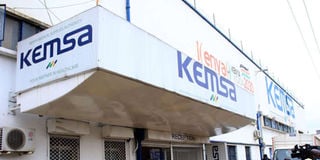
The accused, named in a federal indictment unsealed last week as Eric Ndung'u Mwangi, is alleged to have fraudulently diverted HIV test kits and other critical supplies distributed through the Kenya Medical Supplies Authority (Kemsa), which receives substantial support from the US Agency for International Development (Usaid).
Filed in the US District Court of South Carolina, the indictment accuses Ndung'u and his company, Linear Diagnostics, of systematically stealing HIV test kits and other Usaid-funded medical commodities.
“This was an incredibly complicated investigation, spanning years and an ocean,” said US Attorney Bryan Stirling for the District of South Carolina.
“These defendants jeopardised a vital public health mission and caused a significant loss to American taxpayers.”
According to US investigators, Ndung'u conspired with foreign nationals to reroute the stolen supplies to black market buyers abroad, including in Guyana.
The case represents one of the most significant US-led corruption prosecutions involving foreign aid in East Africa. It raises renewed concerns about accountability and oversight in donor-funded health programmes across the region, while intensifying scrutiny of Kemsa—an agency already under pressure following years of mismanagement allegations and ongoing reforms.
The indictment states that, between 2015 and 2019, Ndung'u allegedly diverted medical supplies and sold them to Davendra Rampersaud, a Guyanese businessman and owner of Caribbean Medical Supplies, for more than $177,000.
Rampersaud reportedly secured a sole-source contract with the Guyana Ministry of Health, further boosting his profits.
Ndung'u’s legal troubles extend beyond the United States. In February 2021, he was arrested by Kenyan authorities on charges related to theft and fraud. He is currently awaiting trial in Kenya.
The recent unsealing of the previously confidential US indictment—kept secret to protect the integrity of the ongoing investigation—opens a new legal front for the embattled businessman.
His alleged accomplice, Rampersaud, has already faced trial. US authorities arrested him in January 2023 during a layover in Miami while en route to Guyana. He was extradited to Charleston, South Carolina, where he pleaded guilty to conspiracy and theft of Usaid-funded health commodities.
US District Judge Richard Gergel sentenced Rampersaud to time served, followed by three years of supervised release, and ordered him to pay an $84,000 fine.
In 2021, Usaid severed ties with Kemsa, replacing it with the US-based firm Chemonics to manage the distribution of donated medical supplies. The move sparked public outrage in Kenya and led to logistical delays that left HIV medication stranded at Mombasa port, causing critical shortages for patients.
Kemsa has also been embroiled in domestic scandals, including allegations of misappropriating pandemic response funds, a damning 2020 audit citing “possible fraud”, and the cancellation of a Global Fund tender for mosquito nets.
In response, President William Ruto dissolved the Kemsa board, suspended its CEO, and pledged to fully overhaul the agency.
The Usaid-funded programme was designed to ensure that HIV/Aids patients in Kenya had reliable access to essential care and treatment commodities.
The scandal also unfolds against the backdrop of US President Donald Trump’s broader policy shift away from medical aid towards trade-based engagement.
Trump has repeatedly argued that Africa should develop self-sustaining systems rather than rely on foreign aid. This stance has accelerated Usaid’s withdrawal from directly funding African health supply chains.
In turn, African nations are adjusting their strategies. Kenya has increased its domestic public health budget, South Africa is advancing national insurance reforms, and Nigeria is promoting local pharmaceutical production initiatives.