'This is not juju': The science of sunlight that freed a doctor from her medications

An African woman basks in the morning sun.

What you need to know:
- A Nairobi-trained doctor, who once topped her medical class, found herself hospitalised with severe postpartum depression after years of miscarriages, chronic pain and autoimmune illness. Her experience exposed the limits of conventional medicine in treating trauma-linked conditions affecting women.
- After discovering functional medicine, the physician achieved recovery through lifestyle interventions, sleep science and root-cause treatment rather than long-term pharmaceuticals. She now runs Sophia Clinic, a women-centred practice designed to counter medical dismissal and misdiagnosis.
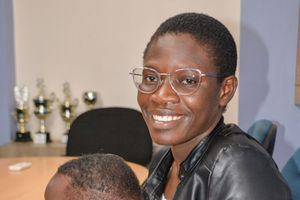
Dr Angela Hunja graduated at the top of her medical class. She trained at the University of Nairobi under some of Kenya's finest medical minds. She went on to practise medicine with the confidence of a physician who believed she understood how the body works.
None of it prepared her for what was coming. Two years ago, this Nairobi-trained doctor found herself in a psychiatric ward, so overwhelmed by the most severe episode of postpartum depression she had ever experienced that she could barely function.
“I just wanted to sleep,” she recalls. “The psychiatrist took one look at me and told my family that I needed to be admitted immediately. After admission, I slept most of the time.”
It was the lowest point of a 12-year journey through physical and mental collapse that conventional medicine—the very system she had devoted her career to—could not fix. Today, Dr Hunja is transforming that darkness into a beacon of hope for Kenyan women, armed with a radically different approach to healing.
Her descent began when she made the difficult decision to pause her medical career for 12 years to raise her children. The years that followed were punctuated by silent battles. She endured four miscarriages. She suffered severe postpartum depression with each of her three children. Like countless women before her, she pushed through.
Her body, however, was keeping score. “I was not aware of the intricate connection between trauma and physical illness,” she explains. “If you do not process emotional experiences, that trauma remains stored in the body and manifests as physical symptoms.”
The manifestation was brutal. She developed debilitating autoimmune symptoms, eventually diagnosed as fibromyalgia and antiphospholipid syndrome. The pain became so agonising she was unable to leave her bed.
She sought help from the nation's top specialists, many of whom had been her professors at the University of Nairobi. Her condition only worsened. She found herself trapped in a cycle of steroids, anti-inflammatories, antidepressants, and heart medications—drugs that managed symptoms but never delivered healing.
Then came the birth of her last son, and with it, the breaking point that landed her in the psychiatric ward.
It was during her recovery that Dr Hunja had her revelation. The conventional medical framework, she realised, was failing patients with chronic, trauma-linked illnesses. This led her to functional medicine—a biology-based approach that focuses on identifying and addressing the root cause of disease rather than merely suppressing symptoms.
Under the care of a functional practitioner, she encountered questions her medical training had never prioritised. She was asked about her childhood, her teenage years, her life in her twenties. About her relationship stressors. About her exposure to light. About her sleep hygiene.
The results were transformative. Using nutraceuticals, botanical supplements, and radical lifestyle changes—including exposure to morning UVA rays to reset her circadian rhythm—Dr Hunja achieved what years of pharmaceuticals could not. “In 18 months, I was drug-free and symptom-free,” she says. “My pain went away, so I did not need to use any drugs. I had energy to go to the gym. I felt light and happy.”
Science of sleep
Central to her recovery was understanding the science of sleep, a subject she now teaches her patients with missionary zeal. “Many patients struggle with insomnia because they attempt to address it only at night,” she explains. “However, the sleep switch is actually flipped in the morning.”
The science, she says, is straightforward. Between sunrise and 9am, the sun emits specific UVA rays. When these rays hit the retina, they send a signal to the brain to begin synthesising melatonin. “Melatonin begins to be produced in the morning so that by the time you are going to sleep at 9pm or 10pm, you have the levels required for a night of sleep,” she explains.
The problem, Dr Hunja notes, is that modern life has inverted the body's natural hormonal rhythms. Cortisol, the alertness hormone, should peak in the morning to help a person spring out of bed, while melatonin should peak at night. But chronic stress and blue light exposure from phones and televisions keep cortisol levels elevated late into the evening, creating what she describes as a “tired but wired” state—physical exhaustion coupled with a brain convinced it is still daytime.
Her prescription for resetting these hormones is now a strict regimen she teaches every patient: direct eye exposure to outdoor light before 9am; elimination of blue light from phones and computers after 8pm; and waking at the same time every day to anchor the biological clock.
“This is not juju,” she says firmly. “We are talking about actual science—how light goes through the eye, reaches a part of your brain, and triggers hormone production.”
Dr Hunja has channelled her hard-won expertise into Sophia Clinic, a space designed specifically for women to be heard without being dismissed. She speaks with palpable frustration about the gaslighting many women face in medical offices, where symptoms of menopause or chronic pain are brushed off as normal or simply attributed to stress.
“I get very angry about women being dismissed, especially by male doctors who do not understand the female experience,” she says. “Sophia Clinic is a curated space to be fully honest and fully vulnerable.”
As she prepares to graduate this April, Dr Hunja reflects on her 12-year gap and her subsequent mid-career pivot with the clarity of someone who has emerged from fire. “I felt confident to stop being a doctor for 12 years. My medical degree waited for me. I am not even 50. I have so much time,” she says. “Do not underestimate what a woman can do when her body recovers.”
She is not merely returning to medicine. She is leading a movement to ensure that for the next generation of Kenyan women, a psychiatric ward becomes a place of beginning rather than an end. The question of whether functional medicine succeeds where conventional medicine fails is one of the defining debates in modern healthcare. Dr Albert Ruturi, a Nairobi-based surgeon, suggests the two approaches are best understood not as rivals but as complementary tools designed for different challenges.
“While conventional medicine asks, 'What drug matches this disease?', functional medicine asks, 'Why do you have this imbalance, and how do we restore function?'” he explains.
The differences, Dr Ruturi notes, begin with focus. Conventional medicine centres on diagnosis and symptom suppression. Functional medicine prioritises identifying the underlying root cause to facilitate system restoration.
The patient-doctor relationship also varies significantly. Conventional care typically involves shorter, acute-focused visits designed to address immediate concerns. Functional medicine is characterised by longer, more intensive consultations that involve taking a detailed history of the patient's life and environment.
“Ultimately, while the goal of conventional medicine is the effective management of disease, functional medicine strives for a higher standard: the achievement of optimal health and the long-term prevention of future illness,” Dr Ruturi adds.
The approach is not without limitations. Because many consultations and specialised tests are not covered by insurance, functional medicine can be expensive and less accessible. Critics point out that while the field is grounded in physiology, some specific protocols lack the large-scale clinical trials considered the gold standard in conventional medicine. There are also risks of over-testing or over-supplementation, and the quality of care can vary depending on a practitioner's training.
Dr Ruturi advocates a partnership model.
“Use conventional medicine for acute care, emergencies, diagnosis of serious conditions, and surgical needs,” he advises. “Consider functional medicine for complex, chronic conditions where root causes are elusive, for preventive health optimisation, and when you are ready to make deep lifestyle changes.”
He adds, “It is a partnership model that empowers patients to understand their bodies and become active participants in their healing journey. If you are considering it, do your research, ask about a practitioner's philosophy and training, and be prepared to invest time and resources.”