World less prepared for the next pandemic, warns UN health leader
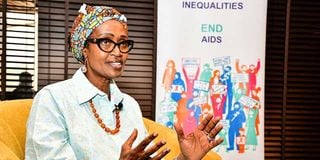
UNAids Executive Director Winnie Byanyima during a past interview in Nairobi.

What you need to know:
- Countries with higher income inequality experienced higher death rates from Covid-19, Aids and other diseases.
When the world was brought to its knees by Covid-19, many hoped the devastation would yield one lasting gain: that humanity would be better prepared for the next pandemic.
But a new report warns this might not be the case. According to the report by the Global Council on Inequality, AIDS and Pandemics, convened by UNAids, the world may, in fact, be even less ready today than it was before 2020.
Released on November 3 ahead of the G20 meetings in Johannesburg, the report, ‘Breaking the Inequality–Pandemic Cycle: Building True Health Security in a Global Age’, delivers a clear message: inequality is not only deepening but also making the world more vulnerable to deadlier and longer lasting pandemics. In turn, pandemics worsen inequality, creating a vicious cycle that traps millions in poverty and ill health.
“This report shows why leaders urgently need to tackle the inequalities that drive pandemics, and it shows them how,” said Winnie Byanyima, executive director of UNAids, in an exclusive interview with Healthy Nation. “Reducing inequalities within and between countries will enable a better, fairer and safer life for everyone.”
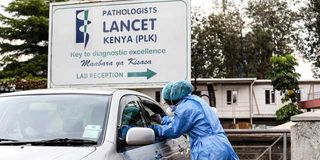
A health worker at Lancet Kenya collects samples for testing Covid-19 from a motorist on April 22, 2020.
Byanyima, a long-time advocate for gender equality and global justice, explained that the Council’s findings resulted from two years of research and global consultations, involving over 1,500 studies and leading experts.
The report, co-chaired by Nobel laureate Joseph Stiglitz, Namibia’s former First Lady Monica Geingos, and Prof Michael Marmot, argues that the greatest threats to global health are not only pathogens but the social and economic inequalities that enable them to spread.
Countries with higher income inequality experienced higher death rates from Covid-19, Aids and other diseases. Disparities in access to financing, medicines, and vaccines make pandemics last longer and become more destructive, according to the report.
Byanyima noted that countries that are more equal are also more resilient to pandemics. “Pandemics like Covid-19, Aids and Ebola show us that inequality is not only a moral issue but a security threat.”
The authors warn that pandemics are becoming more frequent, a trend supported by science. The Lancet Commission estimates a more than 20 per cent chance of another pandemic as severe as Covid-19 occurring within the next decade. “We are living in a world where pandemics are coming more often, and yet we are less prepared now than when the pandemic hit,” Byanyima said, pointing to the ongoing burden of Aids, tuberculosis, and new outbreaks—a state she called ‘living pandemics on top of pandemics'.
Despite the grim diagnosis, the report identifies clear, evidence-based steps that can help break the inequality–pandemic cycle.
These include removing financial barriers by addressing unsustainable debt, investing in the social foundations of health such as housing and education, expanding regional production of medicines, and building multi-sectoral, community-led pandemic responses.
Byanyima explained that these are not just abstract recommendations. “We can do this. We know what drives it, and we know how to disrupt it,” she asserted, emphasising that many low-income countries are trapped by unsustainable debt and declining foreign aid as European countries cut aid budgets to increase defence spending and the US makes its own drastic cuts.
“A lot of what we should be spending on health is going to pay interest on loans. Finding a solution to the debt crisis is essential. It’s about justice, not charity.”
She added that developing countries must move quickly toward self-financing. “Our people’s health should be funded by our own resources, but we must manage the transition carefully to avoid losing lives.”
The report calls for an urgent debt repayment standstill for highly indebted countries up to 2030, giving them fiscal space to invest in health. It also proposes establishing standby financing mechanisms such as the automatic issuance of IMF Special Drawing Rights, when a pandemic is declared.
Byanyima also underscored that the pandemic response must be a whole-of-government approach, not confined to the Health ministry. “Pandemics don’t spread in hospitals; they spread in slums, in poor housing, among people who don’t have enough to eat or can’t access healthcare,” she said. “We must tackle these social inequalities if we want to prevent the next pandemic.”
Her words reflect the report’s central argument: that social protection is as important as vaccines and hospitals. Research showed that during Covid-19, people in overcrowded housing and those without basic education were more likely to die. Countries that had invested in equitable public services fared better.
She further highlighted that addressing inequality also means confronting the gender dimensions of health. “Gender inequality is at the heart of vulnerability to pandemics,” she said. “Women are often the carers, nurses, midwives, and community health workers, yet they are the least paid, least protected, and underrepresented in decision-making roles. It affects how health systems are designed and whose needs they serve.”
She added that globally, women make up nearly 80 per cent of the global health workforce but hold less than 40 per cent of leadership roles. “We need to see more women at the decision-making tables, shaping health policy and designing programmes that reflect the realities of communities,” Byanyima said.
She pointed to the HIV crisis where young women in Africa remain at exceptionally high risk. “Among young people aged 15 to 24, three out of four new HIV infections are among girls or young women. That is a crisis.”
Technology alone
She cited new tools like the long-acting HIV prevention drug Lenacapavir as breakthroughs but stressed that technology alone is insufficient without addressing access and equity. “An injection or pill will not end the vulnerability of girls without addressing poverty, gender-based violence, and lack of education,” she said.
Cultural norms, she noted, often reinforce inequalities that make pandemics deadlier. “Traditions that tolerate early marriage or silence around sexual health must change. We must engage leaders of culture and religion to promote health and equality. It’s not just about medicine; it’s about mindset.”
The report also called for a global rethink of how health technologies are shared. During the pandemic, high-income countries spent four times more than low-income ones to address the crisis and secured most of the vaccines first. Byanyima supported the Council’s recommendation for automatic waivers on intellectual property rules during pandemics and the creation of regional manufacturing hubs. “We have to build local capacity to produce medicines and vaccines,” she said. “When pandemics strike, every region should be able to make what it needs.”
Her remarks echo a growing sentiment that health security cannot be achieved through charity, but through equity. “Pandemics don’t respect borders. When a virus spreads in one part of the world, it spreads everywhere. That’s why inequality anywhere is a threat to everyone.”
Her message to the G20 and global leaders was one of urgent, actionable optimism: “We know what drives pandemics. We know how to stop them. Now, we must do it. If we fail, the next crisis will not only take more lives, it will deepen the divides that already threaten our shared humanity."