118 days without care: Marsabit's health crisis deepens as strike paralyses hospitals

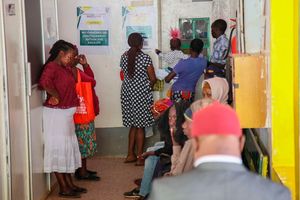
Marsabit County Referral Hospital.

What you need to know:
- Clinical officers, the entry point to the hospital, have been absent from their posts, triggering a domino effect that has crippled the entire healthcare chain.
- Pharmaceutical technologists, nutritionists and dieticians, nurses and midwives, public health practitioners, and medical laboratory officers are now unable to perform their duties effectively in the absence of this critical first link.
For 118 days, the heartbeat of Marsabit County’s healthcare system has been silenced by a labour standoff that has escalated into a full-blown humanitarian crisis. What began as a push for administrative accountability has devolved into a daily struggle for survival for clinical officers and the thousands of patients who depend on them.
At the center of this storm stands Halima*, a clinical officer who has witnessed the systematic dismantling of her profession from within.
Data released by the Health Union Caucus (HUC) as of February 26 paints a grim picture of collapsing essential services. Clinical officers, the entry point to the hospital, have been absent from their posts, triggering a domino effect that has crippled the entire healthcare chain. Pharmaceutical technologists, nutritionists and dieticians, nurses and midwives, public health practitioners, and medical laboratory officers are now unable to perform their duties effectively in the absence of this critical first link.
As of February 25, HUC, which brings together all the affected cadres, reported that the strike has effectively "denied access to essential healthcare services" to residents. The data released by the union paints a grim picture of a region where medical care has become a luxury few can find.
At the Marsabit County Referral Hospital, outpatient services have plummeted by 94.4 per cent, dropping from 9,000 patients per month to just 500. Inpatient admissions have fallen by 83 per cent; from 60 to just 10 patients, while theater cases have dropped from 104 to 60.
According to Halima, the neonatal mortality rate at the facility, which stood at zero before the strike, has now spiked to 21 per cent.
The situation is mirrored across the county’s sub-facilities. At Moyale Sub-County Referral Hospital, inpatient admissions have declined by 87.4 per cent (from 87 to 11 patients), outpatient services have reduced by 93 per cent (from 3,500 to 250 patients monthly), and theater cases have dropped by 87.5 per cent (from 80 to 10).
"With theater cases dropping by 87.5 per cent, the facility now relies on a single nurse anesthetist who is stretched to the breaking point, attending only to extreme emergencies. Elective surgeries, many of which offer life-changing outcomes, have been abandoned entirely, forcing patients to seek care in private facilities," says Halima.
At Kalacha Sub-County Referral Hospital, surgical services have ground to a complete halt due to the total absence of clinical officer anesthetists. The situation is similar in Laisamis Sub-County, where overall service delivery has dropped by more than 84 per cent.
Across these four major facilities, the union estimates that over 15,000 patients are being turned away every month. For those in Kalacha, the nearest surgical care now lies 132 kilometers away, a treacherous journey across unforgiving terrain to reach Marsabit County Referral Hospital.
For Halima and other clinical officers in the county, the crisis is personal. She and her colleagues have faced what they describe as a campaign of psychological warfare from the county administration. The union alleges that the Marsabit County Government has chosen intimidation and contempt of court over meaningful dialogue. Despite court directives outlining worker protections and proper disciplinary procedures, the union claims the county has ignored these orders, proceeding with unlawful victimisation and arbitrary disciplinary actions.
"Salaries for December were withheld by banks under explicit instructions from the county’s Human Resources department. By January, in a bid to fracture the strike, the county attempted to forcibly redeploy 19 specialist clinical officers to remote, low-capacity dispensaries. When the staff refused this illogical move, they were met with immediate disciplinary threats," she explains.
"By February, all of us had been removed from the digital payroll entirely, with our online accounts showing no records of our employment. This effectively means the last salary we received was in November 2025. Many of us are struggling to feed ourselves and our children. We've had to resort to loans just to send our children to school at the start of the year," she adds.
Beyond the immediate lack of pay, Halima highlights the county's alleged refusal to remit statutory deductions. For 23 months, Halima says workers have watched their paychecks reduced for pensions, insurance premiums, and loan repayments, yet those funds never reached the intended institutions.
"They are eating our future while we try to save the present. It is not just about the monthly salary; it is about the stolen security of every healthcare worker in this county," Halima says.
The grievances extend far beyond the paycheck. The medics say they lack comprehensive medical coverage, leaving them unable to afford treatment for themselves or their loved ones. Meanwhile, long-promised promotions have stalled, trapping many officers in the same job group for years despite their increased experience and growing responsibilities.
Despite multiple Return-to-Work agreements signed in the past, the union maintains that the county has failed to honour its word, leading to the current deadlock that continues to paralyse the region's healthcare system. In a recent statement, the Health Caucus described the situation as a "full-blown humanitarian crisis."
"Healthcare workers are not asking for favours; they are demanding what is rightfully theirs and what has been affirmed by courts of law. No worker should be expected to provide services without pay, under deplorable conditions, or while facing intimidation for exercising their constitutional rights. When county governments defy court orders, they don't just violate workers' rights, they assault the very foundation of our democracy and the rule of law. When they refuse to pay healthcare workers, they don't just harm individuals, they condemn entire communities to suffering and death," said George Gibore, secretary-general and CEO of the Kenya Union of Clinical Officers.
The standoff has now reached a tipping point, with the Health Union Caucus issuing a 72-hour ultimatum.
"We demand that the Senate and Council of Governors intervene within 72 hours to ensure these counties honour their legal and moral obligations to workers. Should these strikes not be resolved immediately, the combined unions will officially commence a National Signature Collection Drive to petition for the reversal of the health function from Marsabit County to the National Government under Article 187 of the Constitution," said Gibore.
"If these counties cannot manage the health of their citizens, they must hand back the function to the national government. We will not be intimidated. We will not be silenced. We will not surrender our dignity while our patients die."