A double burden: The poor bear heaviest cost as cancer rages

Josephine Wandi points to the shared pit latrine she uses in Peleleza, Taita Taveta County. She is battling esophageal cancer.

What you need to know:
- According to GLOBOCAN estimates in 2022, the annual incidence of cancer was 44,726, and the Kenya National Cancer Control Strategy (2023–2027) reports that cancer is the third leading cause of death in the country after infectious diseases and cardiovascular diseases.
- While there is a Nairobi Cancer Registry (Kemri) that collects incidence data, it does not necessarily capture socioeconomic stratification down to ‘slum’ vs ‘non-slum’ in all cases. Experts agree that those living in informal settlements carry the biggest brunt.
It is a sweltering afternoon in Kayole, a densely packed informal settlement on Nairobi’s eastern edge. The narrow corridor leading to Scholastica Muteva’s home winds inward so tightly that the soot-darkened walls almost brush the skin. The air feels thick, a heavy, humid embrace, coloured by the rank smell of paraffin, damp clothes and sweat.
Halfway down, a crude stairway of jagged concrete steps forces you to watch every movement. At the top, a landing opens into a narrow corridor, where water jerry cans, basins and shoes rest in disarray.
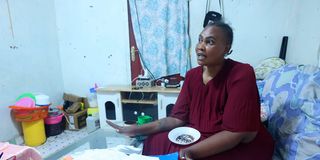
Sarah Wangui, who has breast cancer, during the interview at her house in Dandora, Nairobi.
This corridor leads us to Mutave’s small room. She lies frail and still. Once, she worked in Saudi Arabia, building hope for her young son. Now 40, she has returned to Kenya, carrying not savings, but a cancer diagnosis. Her hair is nearly gone, thin tufts remaining, a testament to the months of harsh treatment she has endured.
Her little room has become both refuge and prison. One wall is lined with water jerrycans, the water rationed. A single-burner gas stove sits silently, barely used. She shares the cramped space with her own memories, with a battered suitcase containing her clothes. The bed frame swallows the floor, and above it, a rag tied to the ceiling supports her right arm, now numb from swollen lymph nodes and chemotherapy’s toll.
Personal hygiene has also become complex. The shared toilet is far from her door. “I cannot use it without help,” she says. “Sometimes, I relieve myself in a basin, keep it under my bed, and a neighbour comes in the morning to help clean.”
Mutave’s story is harrowing, but it also reflects a deeper, often hidden crisis of the systemic burden of cancer in Kenya, especially in the slums. Beyond the pain and side effects of treatment and the overwhelming cost of care, she must also endure the harsh realities of informal settlements, including shared and insufficient sanitation facilities, polluted air from overcrowding, and limited access to nutritious food.
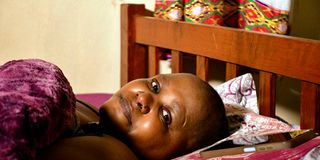
Scholasticah Mutiso, who has breast cancer, during the interview at her home in Kayole, Nairobi.
According to GLOBOCAN estimates in 2022, the annual incidence of cancer was 44,726, and the Kenya National Cancer Control Strategy (2023–2027) reports that cancer is the third leading cause of death in the country after infectious diseases and cardiovascular diseases. While there is a Nairobi Cancer Registry (Kemri) that collects incidence data, it does not necessarily capture socioeconomic stratification down to ‘slum’ vs ‘non-slum’ in all cases. Experts agree that those living in informal settlements carry the biggest brunt.
“For many of those living in the slums, these numbers understate a harsher reality as screening and diagnostic services remain scarce,” explains Dr Catherine Nyongesa, a clinical oncologist in Nairobi.
Mutave’s cancer journey began quietly in mid-2023 when a sharp pain in her right breast unsettled her. She sought help in Saudi Arabia, where she was working, but with no medical insurance, doctors prescribed only antibiotics and painkillers. For three months, she swallowed pills that masked the pain but never treated the cause.
When tests came back ‘normal’, more alarming diagnoses were delayed. A mammogram eventually revealed a suspicious mass, but still, she couldn’t access a biopsy. By October 2023, her breast had hardened, and by December, she was hospitalised for a month, but still no biopsy was done. Finally, on January 17, 2024, seven months after her first complaint, doctors confirmed Stage 2 breast cancer.
She began chemotherapy in Saudi Arabia, but costs overwhelmed her. Weakened and afraid, she flew home on an emergency ticket in April, only to find Kenya’s public hospitals paralysed by a doctors’ strike. She turned to private hospitals, where even scans demanded steep payments. Her family scraped together Sh15,000 for a biopsy. Later, after five cycles of chemotherapy, she went a full month without treatment because her Social Health Authority (SHA) cover came with an additional bill, where she had to pay Sh6,500 for a PET scan.
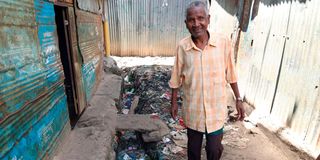
Joseph Ngiri, who has prostate cancer, during the interview in Kiambiu, Nairobi.
When the Needy Cancer Initiative, a local nonprofit, covered that cost, she could finally access the scan. But by then, she had sold her only piece of land to afford treatment. Doctors prescribed oral chemotherapy afterwards, but she couldn’t access the original drug, and the only generic version available made her so sick she could hardly sleep.
By March 2025, a mastectomy on the affected breast followed along with a reduction on the other, but weeks later, her lymph nodes began swelling under her armpits and on her neck. Her chemotherapy was halted.
A BRCA genetic test was recommended, but it costs Sh138,000, an amount she does not have. She now lives on morphine, taken four times a day.
Neighbours have become her lifeline. One helps her bathe, another makes sure she gets a daily meal, while others clean the shared basin under her bed when she cannot make it to the common toilet.
Mutave is not alone. In Dandora Phase Three, a few kilometres from the towering Dandora dumpsite where smoke rises day and night, 45-year-old Sarah Wangui sits on her sofa draped in a faded floral sheet, the same place she sleeps each night.
TikTok harambee
Beside her bed sits an oxygen cylinder she now relies on. She bought it three months ago through a harambee she ran on TikTok.
“I often have episodes where I struggle to breathe, and when that happens, this oxygen machine keeps me going until I can get to the hospital,” she says.
As we begin our conversation, she sips a cup of cold black tea she brewed earlier on her charcoal stove, washing down her medication. She coughs between sentences, forcing us to pause, the wheeze in her chest thickening with every breath.
Her life began to change in 2015. That year, after returning from South Sudan, where she once ran a small nightclub, she joined a weight-loss competition. What alarmed the organisers was how fast the weight was falling off. A hospital visit later would reveal that she had Stage 3 breast cancer.
“I had my whole left breast removed,” she says. This was followed by chemotherapy and later radiotherapy. In 2024, however, the cancer returned, this time in the lungs, where doctors confirmed it was stage 3B lung cancer. Soon after, breathing became difficult, and the pain in her chest intensified.
“So far, my treatment has included Palbociclib and Fulvestrant as part of my chemotherapy regimen.”
Her family and church have since become her strongest support system, but like most cancer patients in Kenya’s slums, Wangui lives with routine treatment interruptions.
Lack of money forces her to miss appointments, and when her insurance coverage reaches its limit, treatment halts entirely. On the other hand, consultation fees strain her finances, and lab tests and blood work often require money she doesn’t have.
“I depend on SHA,” she explains. “But sometimes you’re told you’ve reached the limit. If your cover is finished, you must wait a whole year before treatment resumes.”
But an even greater challenge, one that makes her experience with cancer even more unbearable, is her living environment. In her tiny one-room home, for which she pays Sh2,000 a month, often with difficulty, Wangui must share a single toilet (which happened to be blocked during our visit), one bathroom, and one sink with nine other households.
“After taking medication, I sometimes get a running stomach or have to vomit,” she says. “But when you go to the toilet, you have to queue, and most times, there’s no water. I’ve had confrontations with neighbours over this.”
She says that when the toilet is blocked, she chooses to use a basin instead and later empties it into the toilet once it’s possible. Mornings are difficult, especially when she has doctor's appointments. “Specialist appointments are early, and so to prepare, you must line up for the bathroom. Sometimes it’s impossible,” she says.
Wangui cooks on a charcoal stove while paraffin fumes make her breathing even more difficult. But with houses packed tightly together, avoiding the smoke and fumes is nearly impossible.
In Kiambiu, one of Nairobi’s most crowded informal settlements, we meet Joseph Ngiri, 72, who was diagnosed with prostate cancer two years ago.
Frail and barely able to walk, with a colostomy bag tied beneath his shirt, he leads us slowly from the chief’s camp, guiding us through a narrow corridor squeezed between rusted iron-sheet houses. Beneath our feet, shallow trenches carry raw sewage, weaving through the settlement, while piles of garbage sit on the edges of the footpaths, the smell mingling with the heat of the midday sun.
Ngiri’s home is a small shanty built from iron sheets, the roof so low one must bend to enter. Inside, the walls are lined with old lesos and nets, pinned up to soften the sun’s heat and hold back the wind. The earth floor is covered with scraps of plastic carpet, the only barrier between the soil and the space he calls home.
Before the interview, he proudly shows us the small toilet he managed to build, just a few steps away from the room where his bed is. “At least I don’t have to share it with tens of people, like my neighbours,” he says.
As he guides us, we can’t help but notice two buckets of water, one filled with dirty water containing scraps of leftover food (where he washes his utensils), and the other, also fairly dirty, where he rinses them.
He pulls a metal chair outside and settles carefully, his movements slow as he begins to tell us what cancer has taken from him.
Ngiri shares this tiny room with his son, who is in Grade 7. Ngiri cooks for himself, though the fruits and traditional vegetables his doctors recommend are a luxury he cannot afford. Like most of his neighbours, he has no running water, meaning every drop must be fetched several hundred metres away.
Without water, this means that personal hygiene, cleaning, and even drinking water become serious challenges. Simple practices such as handwashing and wound care are difficult, especially for someone like him who relies on a colostomy.
“For instance, after the endoscopy surgery where I began using the colostomy, the incision site had to remain closed to allow the wound to heal. However, there is a specific discharge that builds up and requires frequent cleaning. Without enough water, managing this becomes a major problem. I also need to clean the colostomy area regularly to prevent infection.”
Discomfort
Ngiri was diagnosed with stage one prostate cancer in 2023 after months of discomfort, difficulty urinating, and the constant need to rush back to the toilet minutes after going.
Once he started seeking treatment, the struggle began immediately. He was scheduled for 30 sessions of radiotherapy, but before he could complete them, an ulcer developed on his bowel.
“I started feeling excruciating pain. Tests showed I had developed an ulcer,” he says.” Doctors recommended surgery, a procedure that left him with a direct colostomy. But the treatment plan came with a cost of Sh200,000. SHA would cover half, leaving Ngiri to raise Sh100,000, money he did not have.
Unable to proceed, his children pleaded with the private hospital to refer him to Kenyatta National Hospital. “Despite the queue and waits associated with public health facilities, eventually, I was operated on.”
The surgery brought relief, but not an end to his challenges. Ngiri needs an endoscopy, but even the cheapest hospital charges Sh30,000, far beyond his reach. Medications, follow-up visits, and routine tests remain his responsibility, and he must pay for them alone.
Meanwhile, he lost his job as a cobbler in June. “I missed too many days due to hospital visits. My employer had to let me go,” he explains quietly. And so, without work and with mostly unemployed children, Ngiri faces his illness with little financial support. And beyond the physical and financial burden, he carries the weight of stigma.
“As we speak, there is a family meeting scheduled to take place back home in Kirinyaga about my condition,” he says. “Some people in my clan believe I must have done something wrong to deserve this illness.”
The burden of cancer in Kenya reaches far beyond Nairobi’s slums, affecting informal settlements across the entire country. In Peleleza, Mwatate, 49-year-old Josephine Wandi lives in a one-room mud house she shares with her mother and two children.
Like many residents in informal settlements, she shares basic hygiene facilities, including a pit latrine 300 meters away that is used by numerous neighbours.
“It is especially challenging at night. After taking my medication, I often have to rush to the toilet due to a sudden need to relieve myself, a running stomach, or episodes of vomiting. Sometimes it becomes overwhelming.”
With no running water at home, every drop her household uses must be purchased. “It’s difficult because this illness comes with many hygiene needs, like spitting on the sheets, frequent diarrhoea, and vomiting, especially after taking medication. I have to keep myself clean, and my clothes and bedding need to be washed almost daily. With the water shortage, that becomes nearly impossible,” she adds.
According to Dr Mariana Omenda, a medical officer at Health Education Africa Resource Team (HEART), which supports cancer patients in informal settlements, poverty, overcrowding, and the lack of basic services makes the journey for these patients from the first symptoms to actual treatment painfully slow.
“By the time we reach most patients, they are already in advanced stages of the disease. For many, even getting to a clinic requires money they do not have, and the fear of costs keeps them at home long after symptoms begin,” adds Dr Omenda.
Wandi’s cancer journey began in 2024 with a persistent cough, initially dismissed as pneumonia. She was later diagnosed with oesophageal cancer, and her treatment is mostly conducted in Nairobi. Each month, she must travel long distances by public transport, accompanied by one of her children, and stay in the hospital for three to four days. She is currently waiting for her sixth chemotherapy session, with the date yet to be set. “I’m just waiting for the doctor to call and schedule my appointment, because that’s how it usually happens,” she explains.
Wandi is fortunate that HEART covers her transport, treatment, food, and even her daughter’s education. But even with this support, she still faces the same daily struggles endured by many cancer patients in the slums of battling a ruthless illness in a resource-scarce environment.
“Many homes in the slums are cramped, poorly ventilated, and lack basic hygiene facilities. These conditions make it difficult for patients to maintain cleanliness after surgery or during chemotherapy, increasing the risk of infections,” explains Dr Victor Oria, chief scientist at the Integrated Cancer Research Foundation of Kenya.
What makes things even worse for cancer patients in these environments, Dr Nyongesa says, is the inability to access healthcare.
“Specialised cancer services, including oncologists, chemotherapy, and radiotherapy, are concentrated in a few urban hospitals, which are often expensive and difficult to reach for slum residents.”
The Ministry of Health’s report titled Cancer Services in Kenya (2023) indicates that only 26 per cent of facilities in Kenya had cancer screening services. As a result, the doctor explains, patients from low-income areas often face long waiting times, delayed staging, and slow treatment planning.
This trickles down to the diagnosis. The Cancer Services in Kenya report by MoH (2023) indicates that in Kenya, 70-80 per cent of cancer cases are diagnosed in late stages.
Ministry of Health’s National Cancer Communication Strategy (2023–2027), published in 2023 with support from the WHO Regional Office for Africa, highlights that late-stage diagnosis remains widespread in the country, contributing to poor treatment outcomes and low survival rates despite significant investments in cancer control.
“When cancers are identified at Stage 3 or 4, options are narrow as many of these cancers have already metastasised. At that point, treatment focuses on slowing progression, not curing,” explains Dr Oria.
The burden is aggravated by financial toxicity, where even with insurance (such as SHA), many patients still fall short. According to The World Bank report (2020), cancer treatment costs push many patients and families into poverty.
High death rates follow, with studies indicating that Kenya’s cancer mortality burden is substantially above the continental baseline. According to GLOBOCAN 2022, the country recorded 29,317 cancer deaths that year, with age-standardised mortality rate standing at 104.0 per 100,000, which is notably higher than the Africa regional average of 88.9 per 100,000.
Basic screening
Against this backdrop, experts insist that there is a need to strengthen local health centres in informal settlements so they can offer basic screening, diagnosis, and supportive care.
Dr Nyongesa stresses the importance of investing in a citywide community cancer navigation and early-detection programme. “This would involve training community health workers to offer screenings, education, and follow-up directly within informal settlements, while also establishing fast-track pathways to ensure that suspected cancer cases reach diagnostic centres quickly.”
She also believes that every cancer patient should be automatically linked to financial counselling, social support, and palliative care. “Additionally, assigning each patient a dedicated navigator to guide them from diagnosis through treatment could greatly reduce late presentations and treatment abandonment,” she says.
She also believes that every cancer patient should automatically be connected to financial counselling, social support, and palliative care. “Also, providing each patient with a dedicated navigator to guide them from diagnosis through treatment could significantly reduce late presentations and treatment abandonment.”
On the other hand, Dr Oria emphasises the need for targeted research to better understand cancer patterns, barriers to care, and treatment outcomes in these vulnerable communities.
He explains that this shows the need to encourage greater participation of African populations in clinical trials, ensuring that new therapies are effective within the local genetic and environmental context.
“Africa contributes only 1.1 per cent to global clinical trials, which means our populations are severely underrepresented. As a result, many medicines used here have not been adequately tested on Africans,” Dr Oria notes.
What Kenya needs, Dr Oria notes, is investment in research, especially in cancers prevalent among low-income communities.
In the meantime, last Thursday, President William Ruto in his State of the Nation Address announced that SHA will enhance the cancer care benefits package from Sh550,000 to Sh800,000, effective December 1, arguing that the increment would “enhance the provision of quality healthcare services” for thousands of Kenyans battling cancer.
Earlier in March, the Ministry of Health had raised the cancer benefits package from Sh400,000 to Sh550,000, but cancer patients advocacy groups argued that those reforms barely scratched the surface.
According to the Kenyan Network of Cancer Organisations (Kenco), a cancer patient advocacy coalition, though the increase to Sh 800,000 represents a hard-won victory for patient advocates who have spent years calling for better financial protection under public insurance, the raised cap is still ‘insufficient’ when measured against the realities patients face.
“Patients undergoing comprehensive cancer treatment often incur costs far exceeding Sh800,000. This forces families into impossible choices between basic needs and life-saving care,” says Phoebe Ongadi, executive director at Kenco.
The organisation estimates that Sh1.2 million is the minimum amount required to adequately cover the full cost of treatment for the majority of cancer patients in Kenya.