A ward where sick children smile: Homa Bay's colourful path to healing
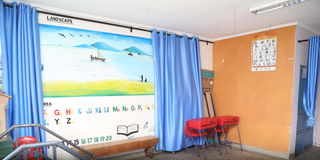
A playroom at Homa Bay County Teaching and Referral Hospital on June 25, 2026. The space is stocked with toys that young patients use during daily play sessions, an activity that health workers say speeds up recovery.

What you need to know:
- As children play, health workers track developmental milestones—behavioural, physical, and cognitive skills like smiling, crawling, and talking.
- These benchmarks help monitor healthy growth.
The paediatric ward at Homa Bay County Teaching and Referral Hospital looks different. At first glance, empty beds and personal belongings suggest no patients are present.
In reality, the children have stepped out for an exercise that is part of their healing.
Every day, after injections and other procedures, young patients leave their beds for a playroom opposite the ward. Their parents join them and sometimes learn better childcare practices. Different age groups have different sessions.
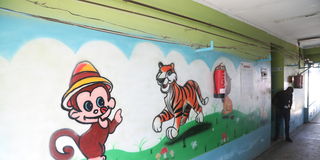
Colourful cartoon murals adorn the paediatric ward at Homa Bay County Teaching and Referral Hospital on June 25, 2026. The playful artwork is designed to ease anxiety and create a welcoming atmosphere for young patients.
Health workers use play to evaluate recovery. The ward admits children from one month to 12 years, with specific toys for each developmental stage.
Experts say play reduces stress, making hospital care less traumatic and helping children communicate more freely.
Paediatric nurse Josiah Orwa says play sessions build bonds between health workers and patients. Children are often uneasy in unfamiliar surroundings, he notes, but games alongside health workers build confidence and receptiveness to treatment.
The sessions make patients feel at home, Orwa says. For school-going children, the materials are educational, helping them keep up with lessons.
"Children fear injections because of the pain," Orwa says. "We regularly engage them in play to make it easier to administer drugs. They trust us, and treatment becomes easier."
He notes that children who do not play while sick tend to recover more slowly.
As children play, health workers track developmental milestones—behavioural, physical, and cognitive skills like smiling, crawling, and talking. These benchmarks help monitor healthy growth.
"The brain develops rapidly within the first 1,000 days," Orwa explains. "When children interact with us during play, they develop confidence because they engage with people they did not know earlier."
Parents learn to make toys from locally available materials—balls and dolls from used cloth and polythene—helping families with limited resources continue play at home.
Nursing Director Caroline Adongo says play is therapeutic. Beyond the playroom, the ward features bright colours and pictures of animals and cartoons that stimulate the brain, encourage cognitive growth, and foster creativity.
"They transform spaces into engaging learning environments, making children feel safe, happy, and eager to explore," Adongo says. "Sometimes we see very sick children smiling at the walls, which is good therapy. Some may not play physically, but the pictures bring healing warmth."
Most admitted children have malaria, pneumonia, or diarrhoeal diseases. Most take about a week before discharge, Adongo says.
"The ward was designed for 35 children, but we sometimes exceed that to more than 70. We once had 96 admitted at the same time," she says. "A new paediatric ward under construction will accommodate 70 patients."
The child-friendly environment is part of the nurturing care for early childhood development campaign, supported by KMET, a non-governmental organisation. The campaign—a WHO and UNICEF framework—provides supportive care from pregnancy onward, built on five pillars: good health, adequate nutrition, safety and security, responsive caregiving, and early learning opportunities.
The approach is taught in medical training colleges, and interns at the facility sometimes play with children as part of their training.
KMET collaborates with 19 health facilities—17 in Homa Bay, and one each in Kakamega and Vihiga. It has supported child-friendly branding at Pala Masogo, Got Kojowi, Homa Bay County Hospital, Rachuonyo East Sub-County Hospital, Emusire Sub-County Hospital (Vihiga), and Mumias Level 4 Hospital (Kakamega). The branding reduces anxiety, supports healing, encourages service uptake, and promotes positive development.
KMET Project Officer Emmaculate Otieno says child-friendly spaces should extend beyond hospitals. "Children should survive and thrive in environments that are friendly to them," she says.
In hospitals, she adds, children's beds should differ from adult ones, and child-sized chairs should be available. Most public facilities have yet to adopt these measures. At Homa Bay, children use adult toilets, and hand-washing points are too high for some minors.
"We have been to some facilities where meals are the same for everyone," Otieno says. "Some children cannot eat what adults eat. Diet should be child-friendly in a paediatric ward."
A healthy child plays and stays active, she explains. "The reason we focus on the first 1,000 days is because of the window of opportunity when the brain develops rapidly. This is the time when any meaningful investment for a child's future should be made."
Everything around children can be a play item, she notes, helping them develop language, social, and emotional skills.
Challenges remain. At Homa Bay, there are too few nurses, and no staff member is designated specifically to play with children. "Most of the time we engage parents to be with their children during play," Adongo says.
Child development indicators in the region are also concerning. According to the 2022 Kenya Demographic Health Survey, 13 per cent of children under five in Homa Bay are stunted (too short for their age), versus the national average of 18 per cent. Two per cent are wasted (too thin for their height) against five per cent nationally, while six per cent are underweight against 10 per cent nationally.
Otieno says slow development affects children's brains, later impacting their performance as they grow.