Abandoned to die: Desperate patients left to their own devices
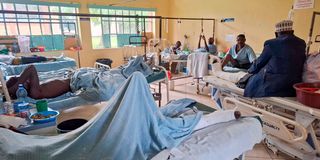
Patients at Ward 10 at the Nakuru County Referral and Teaching Hospital on September 8, 2026. Nurses who work at the facility are still on strike.

For Bernard Ochieng, reaching a public hospital after being attacked by goons in Homa Bay during the Linda Mwanchi rally on August 16 was supposed to be the beginning of his rescue. Instead, he was turned away without admission because nurses were on strike, leaving him severely injured and fearing he could die without treatment.
Mr Ochieng is among hundreds of patients across the country whose access to public healthcare has been disrupted by the nationwide nurses’ strike, with 22 maternal deaths, 44 neonatal deaths and 130 perinatal deaths reported in one week.
The Kenya National Nurses Association (NNAK) says Kisumu, Nakuru, Kakamega and Kajiado are among the counties hardest hit by the industrial action, which has now lasted more than two weeks.
The strike has left patients facing delayed treatment, cancelled procedures and long waits, while some have been forced to seek expensive care in private and mission hospitals.
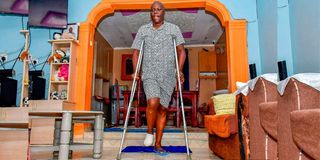
Bernard Ochieng walks on crutches at his home in Nyakach, Kisumu County, on September 4, 2026, following injuries sustained during an attack on the Linda Mwananchi campaign team in Homa Bay.
In Homa Bay, Mr Ochieng recalled how he was attacked by assailants who left him severely injured and robbed of his belongings. A boda boda rider helped him reach Homa Bay County Referral Hospital, but he was unable to secure admission because nurses were on strike and was advised to seek treatment elsewhere.
He eventually received care at a private hospital, but he believes the delay could have cost him his life.

Bernard Ochieng during an interview at his home in Nyakach, Kisumu County, on September 4, 2026. He was attacked while travelling with the Linda Mwananchi campaign team in Homa Bay.
“At Homa Bay County Referral Hospital, we were advised to go to St Paul’s Hospital. The boda boda rider stopped several times to ask residents for directions as he navigated the roadblocks on the way to the private hospital. If the boda boda rider had not helped me reach the hospital, I would have died because I had lost a lot of blood,” said Mr Ochieng.
Mr John Otieno experienced a similar ordeal after a road accident on July 29. He waited for treatment before an intern attended to him and advised him to seek care at a private facility, where he was eventually admitted.
The experiences of the two men highlight the increasing risks to patients posed by the ongoing industrial dispute between nurses and county governments.
NNAK Nakuru Chapter Chairperson Rose Masita said there was little hope of an immediate resolution.
“The strike is escalating and will not end any time soon because we have not had conclusive discussions,” she said.
A spot check at Nakuru Teaching and Referral Hospital earlier this week showed a sharp decline in patient numbers. The usually busy facility appeared quiet, with fewer patients seeking services.
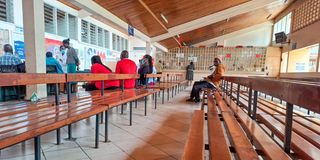
An Outpatient Department at the Nakuru County Referral and Teaching Hospital on September 8, 2026. Nurses who work at the facility are still on strike.
Some services were being offered by medical students and clinical officers who recently signed a back-to-work agreement with the county government. However, patient numbers remained low as nurses stayed away.
Although not at the level previously offered by qualified nurses, patients in various wards said they were receiving treatment. Across the country, similar scenes are playing out as patients struggle to access care in public facilities.
At Mutuini Sub-County Hospital in Nairobi, Peter Karanja was carrying his three-year-old grandson who had been diagnosed with meningitis and needed urgent admission. The family had already been turned away from two public hospitals.
“We tried to get him admitted to two hospitals, but it was not possible. We tried Mbagathi. We were told that they are not accepting admissions. Kenyatta Hospital told us the same. Now we're trying a third hospital,” said Mr Karanja.
He said ordinary Kenyans were paying the price for the prolonged dispute.
“My heart goes to hundreds of thousands of Kenyans out there who are suffering because nurses are on strike.”
Patients at Mutuini Hospital reported long waiting times as the few healthcare workers struggled to cope with the rising demand for health services.

Mutuini Hospital Chief Executive Officer Dr Martin Wafula at the facility on September 8, 2026.
Hospital Chief Executive Officer Dr Martin Wafula said the facility was dealing with the effects of a nationwide strike by nurses and clinical officers just weeks after recovering from an earlier doctors’ strike.
According to Dr Wafula, the hospital relies on more than 30 nurses but is now depending largely on locum staff and management personnel to maintain services.

Nurses during a joint procession in Kisumu CBD on August 27, 2026, in solidarity with the ongoing nurses’ strike, while (right) passengers leave Kisumu International Airport after airport strikers went on strike.
He said surgical services had been among the hardest hit because nurse anaesthetists and clinical officer anaesthetists are both affected by the industrial action.
The hospital has also experienced an increase in emergency referrals, many arriving through the government’s emergency ambulance system.
Despite the challenges, Dr Wafula said the facility had continued admitting emergency cases and had not recorded maternal or child deaths during the strike.
He warned that a doctors’ strike would place even greater pressure on an already overstretched system and could force hospitals to scale back services to emergency cases only.
In Lamu County, Milka Kimani said she had stopped seeking services at Mpeketoni Sub-County Hospital after failing to get treatment after repeated visits.
The expectant mother now relies on private healthcare facilities despite the extra cost.
At King Fahd County Referral Hospital, management said operations had continued through temporary staffing arrangements.
Medical Superintendent Dr Said Mohamed said the hospital had hired temporary nurses to ensure critical services remained available as the strike continued.
Further north in Lamu East, patients at Faza Sub-County Hospital reported that services were still available, although with reduced staffing levels.
Elsewhere along the Coast, public health facilities remained largely deserted.
At Coast General Teaching and Referral Hospital in Mombasa, maternity, ear, nose and throat, dental and several other clinics were not operating normally as nurses stayed away from work.
Some families chose to withdraw relatives from the facility and seek treatment elsewhere, fearing prolonged delays would worsen their conditions.
Mombasa County has, meanwhile, moved to recruit 286 Registered Nurse III officers as part of the first phase of a planned recruitment of 573 nurses announced by Governor Abdulswamad Nassir.
The county says the exercise is intended to maintain the provision of essential services during the strike.
In neighbouring Taita-Taveta County, healthcare services were further complicated by the suspension of inpatient services. This has been worsened by water shortages linked to outstanding bills owed to the Coast Water Works Development Agency.
In Uasin Gishu, the strike has left many patients waiting for services that would ordinarily be available at county facilities.
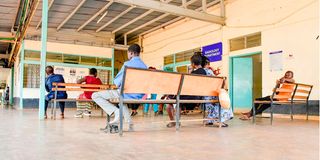
Sections of Siaya County Referral Hospital remain largely quiet with little activity and few emergency patients on September 8, 2026, as the nurses’ strike continues.
At Mama Rachael Maternity Hospital, empty beds and unmanned nurses’ stations underscored the extent of the disruption, while patients at Huruma Sub-County Hospital experienced long queues and delays at casualty and outpatient departments.
The impact has spilled over to Moi Teaching and Referral Hospital, where increasing numbers of patients are seeking care.
A senior nurse at the referral hospital said the facility was overwhelmed by cases that would normally be handled elsewhere.
On Tuesday, striking medics led by union official Klein Mutai took to the streets in Uasin Gishu, accusing county authorities of compromising healthcare by relying on medical students to fill staffing gaps left by the strike.
The union warned that allowing trainees to undertake sensitive medical responsibilities could place patients at risk and highlighted the continued closure or reduced operation of theatres and specialised wards.
In Garissa County, however, public hospitals have largely continued to operate.
Kenya National Union of Nurses (KNUN) Secretary-General Ismael Dirire said local nurses had chosen not to join the current nationwide action.
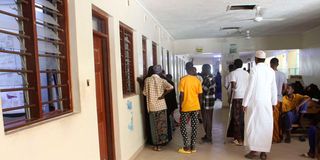
Patients at Garissa Teaching and Referral Hospital on September 8, 2026. Nurses at the facility reported to work and continued attending to patients despite the ongoing nationwide nurses’ strike.
A spot check at Garissa Teaching and Referral Hospital found patients receiving services normally, making the county one of the few areas largely spared the disruption affecting most parts of the country.
In Kericho, the county government has hired 150 nurses on contract as a temporary measure to cushion patients from the effects of a strike that has lasted about two months.
Governor Erick Mutai said the recruitment was intended to ease pressure at the county referral hospital and several sub-county facilities. However, many patients continue to seek treatment in private hospitals, while others report being referred elsewhere for drugs and specialised services.
At Kapkatet Sub-County Hospital, patients said they struggled to access treatment, and some had resorted to private facilities despite the high cost and limited Social Health Authority coverage.
In Bomet County, nurses have reportedly continued reporting to their duty stations but are not attending to patients, while in neighbouring Narok County inpatient services have been severely affected by the absence of nursing staff.
In Meru and Tharaka-Nithi counties, patients requiring inpatient care have increasingly sought treatment in mission and private hospitals.
Nurses in the two counties downed their tools on July 29. While nurses in Tharaka-Nithi resumed work in late August following court orders, their counterparts in Meru remained on strike.
KNUN Meru branch chairman Bakari Munoru said members would not return to work until their demands were addressed.
Public hospitals in Meru discharged patients ahead of the strike and suspended admissions, forcing many residents to look elsewhere for treatment.
Laikipia residents say the strike has left those unable to afford private healthcare particularly vulnerable.
Expectant mothers, patients with chronic illnesses and those requiring routine nursing care have been among the most affected. Many families have been forced to spend more money seeking treatment at mission and private facilities after public hospitals became difficult to access.
The crisis is now threatening to deepen as doctors prepare to join the industrial action.
Doctors announced they had issued the government with a seven-day ultimatum on September 7 to resolve the nurses’ strike, warning that they would withdraw their services if the impasse persisted.
The Council of Governors has urged doctors to reconsider their stance, warning that another strike would further cripple healthcare services across the country.
Governor Nassir, who chairs the Council of Governors Health Committee, said the Kenya Medical Practitioners, Pharmacists and Dentists Union had not formally issued a strike notice to county governments.
He said negotiations with nurses were continuing and expressed optimism that an agreement could eventually be reached.
According to Governor Nassir, the dispute centres on implementation of the 2017 Collective Bargaining Agreement, including risk and uniform allowances and the absorption of Universal Health Coverage workers into permanent and pensionable employment.
“It is not that counties refused to pay salaries. Maybe some have been delayed, but the issue was about risk and uniform allowances and UHC staff who are currently being absorbed by all counties on a permanent and pensionable basis,” he said.
The governor said county governments were already addressing some of the concerns raised by health workers and urged doctors not to join the strike.
However, negotiations between union officials and the Council of Governors have borne no fruit.
Previous talks between KNUN Secretary-General Seth Panyako and Governor Nassir failed to resolve the standoff, leaving nurses off duty and public hospitals under increasing pressure.
As the strike drags on, healthcare workers warn that women and children continue to bear the heaviest burden.
Routine immunisation services have been disrupted in several areas, raising concerns about possible outbreaks of vaccine-preventable diseases. Maternity services, surgical procedures and inpatient care have also been affected as facilities struggle with reduced staffing levels.
For patients such as Mr Ochieng and Mr Otieno, the consequences of the dispute are no longer about delayed services or long queues.
They are about whether help will arrive before it is too late.
With 22 maternal deaths, 44 neonatal deaths and 130 perinatal deaths reported within a week, health workers warn that the crisis could deepen further if the dispute remains unresolved and doctors make good on their threat to down their tools.
Follow our WhatsApp channel for breaking news updates and more stories like this.
By Mercy Chelangat, Leleti Jassor, Kalume Kazungu, Winnie Atieno, Boniface Mwangi, Titus Ominde, Domnic Ombok, Vitalis Kimutai, Manase Otsialo, Gitonga Marete, Mercy Mwende and David Muchui


