Africa’s climate crisis is a health crisis: Why urgent action can’t wait
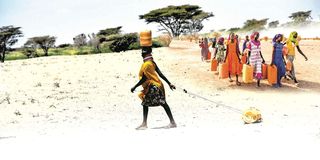
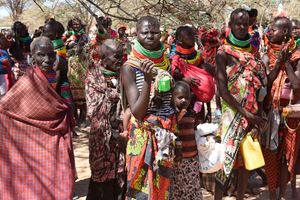
A woman pulls a jerrican of water in Kanamkuny village,Turkana County, on October 11, 2022. As climate change intensifies, women face higher rates of violence, displacement, and poverty.

What you need to know:
- Deadly floods, rising malaria, and fragile health systems expose Africa’s urgent need for climate-resilient healthcare financing.
- Africa suffers the world’s highest climate-related health toll, yet receives little funding to strengthen systems and save lives.
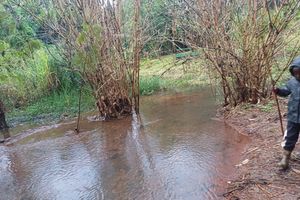
Africa remains among the most climate-vulnerable regions. Flash-flooding in Kenya in 2024 killed more than 300 people and injured at least 188 others. More than 293,000 people were displaced from their homes.
While the statistics paint a picture of the immediate health impacts, the knock-on effects triggered by the floods are less obvious. People fleeing their homes typically experience insecurity, with their livelihoods gone, and access to food uncertain.
Displaced women and girls faced heightened risks of sexual assault and other forms of violence. The 2024 floods further crippled the health system, cutting off access to clinics for people on essential treatment. Many were unable to collect their medication or see healthcare providers, leading to widespread interruptions in care.
In Malawi and Kenya, flooding wiped out paper-based health records, erasing entire medical histories in some clinics. With no way to replace them, patients now face serious setbacks in receiving consistent and informed care. These cases are a microcosm of the healthcare impacts of climate change, which are both immediate and long-term. Across Africa, floods have further strained fragile health systems already battling with HIV, TB, and malaria, and still reeling from the impact of Covid-19.
Reversing progress
In many parts of Africa, vector-borne diseases, in particular malaria and dengue fever, are spiking, impacting child health, with climate change a major factor. The geographic range of malaria is predicted to expand into higher elevations and temperate regions by mid-century, increasing transmission in East Africa and other areas with low public awareness. These trends are undermining efforts across the continent to eradicate the disease.
For instance, Botswana has recorded more than 2,000 cases of malaria in the first six months of 2025 and 11 deaths, compared to 218 cases and no deaths in the same period in 2024. In Zimbabwe, there have been 111,998 cases and 310 deaths, a huge surge since the same period in 2024, which saw 29,031 cases with 49 deaths.
Worldwide, around 95 per cent of deaths from malaria are in Africa. The risks of such diseases are particularly high for pregnant women and children, triggering miscarriage, stillbirth, preterm birth, low birth weight and congenital anomalies among other risks.
African countries are already losing an average of up to five per cent of their GDP a year, with many of them forced to allocate nine per cent of their budgets to deal with climate extremes. But accessing international funding has proved to be a difficult task for Africa, with the continent receiving less than five per cent of global climate finance. Adaptation costs for sub-Saharan Africa alone have been estimated at between $30–50 billion annually over the next decade.
The region accounts for 71 per cent of health cases caused by climate change, and nearly half of all projected deaths, costing its economies around 2.6–3.7 per cent of GDP. But it has typically received a small proportion of adaptation finance for health projects – an analysis of 50 multi-lateral funded projects found just 10 targeting health globally, two of which were for projects in sub-Saharan Africa.
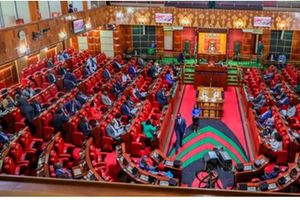
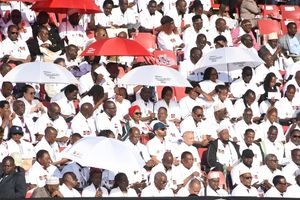
As leaders gather for the second African Climate Summit, with this year’s theme “Accelerating Global Climate Solutions: Financing for Africa’s Resilient and Green Development,” it signals Africa’s resolve to reframe the climate narratives and seize the opportunity to build resilience into healthcare systems. Health and healthcare systems must be key considerations in any climate change adaptation strategy.
Governments should seek to champion homegrown approaches whilst advancing Africa’s role as a driving force in global climate action. While some finance could come from reprioritising domestic budgets to deal with the emerging challenges from climate change, Africa additionally needs significant resources to integrate climate-adaptive and resilient policy and action.
The people of Africa have contributed least to the greenhouse gases driving climate change, producing just four per cent of greenhouse gas emissions between 2010 and 2018. But they suffer the most.
Africa is warming faster than the rest of the world and suffering daily from drought, floods and extreme heat stress, causing severe health impacts. The health costs of inaction are high. By 2030, up to 118 million people living on less than $1.90 per day will be exposed to extreme weather, leading to further health adversities.
Health solidarity
This year’s negotiations at the Africa Climate Summit must prioritise the health agenda within the climate response and climate and adaptation financing. Now more than ever, when geopolitics and shifts in aid have left African leaders feeling abandoned, we should not allow the health of our populations and healthcare systems to be further eroded.
We must urge policymakers to take immediate action to invest in climate and health strategies, and allocate health as a priority within adaptation finance. This is one of the best things that African leaders can do to make sure that we are not caught off guard.
The writer is a global health policy and advocacy expert with over two decades of experience in Africa. She currently serves as the executive director of Waci Health.