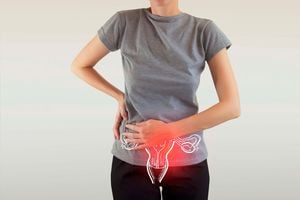
Bleeding for 25 days a month: One woman's courageous battle against Endo

Esther Kimemia, a teen and menstrual cycle coach, and endometriosis warrior.

What you need to know:
- It took months of therapies to psychologically prepare for a hysterectomy - the surgical procedure to remove the womb.
"My name is Ess Kimemia. I am an author, menstrual cycle coach, and teens coach with a background in psychology. My journey with endometriosis began in my early teens. I started my period at the age of nine. It then disappeared and returned at the age of 11.
Everything seemed normal until I turned 13. My period became unbearably painful, with heavier and lumpy flow. From what I heard around me, I believed the pain was the price of being a girl.
At 15, a hike up Mount Kenya triggered a hemorrhage so severe I could barely move. I remember calling home and being told to take Panadol, but it never worked.
The pain radiated as heat, and I often had to lie on cold floors for relief. I had other symptoms such as chronic constipation, migraines before and during the period and severe fatigue.
I also experienced recurrent urinary tract infection, yeast infections, and pelvic infections.
I frequently went to hospital for pain relief, scans, and tests. Back then, endometriosis wasn’t well understood, which meant years of being misdiagnosed.
I’m deeply grateful to a university clinician who referred me to a urologist - a doctor who has special training in diagnosing and treating diseases of the urinary organs.
My first surgery was a cystoscopy, which revealed chronic cystitis. This is a long-term inflammation and pain in the bladder that can be persistent or intermittent. Even after rounds of antibiotics, the pain returned.
The clinician later referred me to a gynecologist, who suspected I had endometriosis. I had never heard of this condition before. A laparoscopic surgery confirmed that I had the condition, and my left ovary had attached to my large intestine. This explained the pain during ovulation and bowel movements.
Getting a diagnosis brought immense relief. After years of being dismissed, I finally felt seen. I had often been made to believe the pain was psychological, but it was real. At one point due to recurrent ovarian cysts, we even had to test for cancer markers.
Induced menopause
At 19, I was placed on Lupride, synthetic hormone used for the management of endometriosis, which induced menopause. I didn’t realise then how much it would affect my weight and mood. I gained five kilogrammes that only came off five years later. I also experienced depressive episodes.
But in between the chaos, I decided to turn my pain into purpose.
To raise awareness about the condition, I started Yellow Endo Flower, focusing on telling the endometriosis story. At the time, the average diagnosis took over seven years, and endometriosis symptoms varied widely. We now have a support group for women at the Coast, from Malindi to Diani, called Coral Bloom.
After giving birth to my first daughter, I ventured into writing and published ‘Bloom, a One-Year Period Diary’ to help young girls understand their menstrual cycles and track important aspects of their health.
Later, I developed the Furaha Program, a 10-session curriculum for girls aged between nine and 12 to help them understand puberty, anatomy and inappropriate touch, hormonal, physical, and emotional changes, understanding menstruation and hygiene, body care, self-esteem and decision-making, friendships and relationships and safe use of social media.
In 2022, I trained as a menstrual cycle coach to empower girls and women to live in harmony with their cycles. It was an enlightening and transformative experience.
In 2023, my symptoms returned with a vengeance. The bleeding became uncontrollable. Oral hormonal pills didn’t help. Lupride and Zoladex — intended to induce menopause — didn’t stop the bleeding.
I tried the Mirena coil, but still bled 17 to 25 days a month. Simultaneously, I was battling Premenstrual Dysphoric Disorder, extreme mood swings, suicidal thoughts and low energy. I felt an internal switch every time I transitioned from the luteal to menstrual phase. I would get bedridden for days.
Two minor procedures - a hysteroscopy and a D&C (dilation and curettage) aimed at reducing the endometrial thickness - also failed to bring relief. Hysteroscopy allows visualisation of the uterine cavity, while D&C involves scraping the uterine lining. The procedures were done in preparation for the removal of my womb.
It took months of therapies to psychologically prepare for a hysterectomy - the surgical procedure to remove the womb.
In October 2024, I underwent a total hysterectomy (removal of uterus and cervix). It was the best choice seeing that my quality of life had been severely affected.
Despite having three children, the idea of no longer having a womb was emotionally heavy. I grieved the loss of my cycle, something I had come to understand and embrace. But I later made peace with the transition and came to believe that womanhood is not defined by the presence or absence of a uterus.
Post-surgery recovery was challenging, especially with fluid discharge from the wound. It took weeks for the stitches to heal. But overall, I have recovered well. I am now thrilled to live without periods. I have gained a newfound confidence and freedom.
This journey has not been without mental health struggles. I experienced many depressive episodes during my teens. In 2023, I was diagnosed with Bipolar II Disorder, a condition my late father had battled. I now receive care through a multidisciplinary treatment plan and I am currently under in-patient care.
According to Dr Yamal Patel, a gynecologist and endometriosis specialist at 3rd Park Hospital, endometriosis is a disease where the tissue that lines the walls of the uterus grows outside the uterus.
“I call it a chronic disease, a complex disease, a disease that is poorly understood, often misdiagnosed, a condition that is very debilitating and life-altering, a condition that is very fibrotic, hormone dependent, and inflammatory, hence it causes a lot of pain. It’s complicated to treat.”
The figures
According to the World Health Organization, endometriosis affects roughly 190 million of reproductive age women and girls globally. The disease, says WHO, is chronic and is associated with “severe, life-impacting pain during periods, sexual intercourse, bowel movements and/or urination, chronic pelvic pain, abdominal bloating, nausea, fatigue, and sometimes depression, anxiety, and infertility.”
The disease affects many women from the onset of their first period through menopause, regardless of ethnic origin or social status.
Currently, the disease has no known cure, and treatment is aimed at controlling symptoms. However, access to early diagnosis and effective treatment is important.
“Many different factors are thought to contribute to its development. At present, endometriosis is thought to arise due to retrograde menstruation, when menstrual blood containing endometrial cells flows back through the fallopian tubes into the pelvic instead of exiting the body. Retrograde menstruation can result in endometrial-like cells being deposited outside the uterus, where they can implant and grow,” Says WHO.
It adds: “Stem cells can give rise to the disease, which then spreads through the body via blood and lymphatic vessels.
Other factors may also contribute to the growth or persistence of ectopic endometrial tissue. For example, endometriosis is known to be dependent on estrogen, which increases the inflammation, growth and pain associated with the disease. However, the relationship between estrogen and endometriosis is complex since the absence of estrogen does not always mean the absence of endometriosis.”
Achieving relief from pain and improving pregnancy outcomes through surgery for this condition is often tied to how widespread it is. Furthermore, the problem can come back even after surgery, and tight pelvic muscles can also cause pain.
Endometriosis is often misdiagnosed or dismissed as "just bad cramps," leading to delays in treatment. Many women suffer for years before getting answers.