Child survival is backsliding: What Gates report means for Kenya
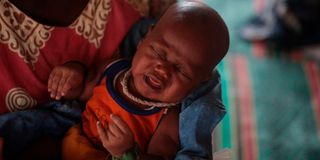
An infant baby. A global catastrophe is unfolding in real time, one that would reverse decades of progress in child survival.

What you need to know:
- After losing her official job, Josephine Barasa, a “mother mentor,” continues to support young mothers and children in her community, offering health education, gender-based violence support, and basic care.
- Her dedication highlights the human face behind the Gates Foundation’s 2025 warning that child deaths are increasing globally for the first time this century.
- Their work shows that progress is possible when commitment meets innovation—even amid crises in malaria, HIV, TB, and maternal health.
Josephine Barasa had just finished her afternoon rounds when the email arrived. It was 2pm on a January day in 2025, and the message was brief: "We are sorry. We no longer need your services."
For four days, she did not speak. She did not leave her bed. She could not.
"I froze. And then I went silent," Josephine recalls. "For someone whose life had been built on being able to speak, to guide, to help, I felt that I had lost my voice."
They called her a "mother mentor."
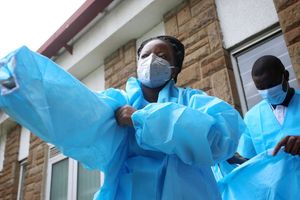
That was her official job title. But to the young mothers and girls in her Kenyan community, she was something more—a health worker and gender-based violence champion who walked with women through pregnancy and early motherhood. Through the fear, the confusion, the questions no one else would answer.
She taught them how to keep their babies healthy: when to vaccinate, what to eat, how to breastfeed, how to stay clean, when to visit the health clinic. Many of these women were barely children themselves. Some had not chosen motherhood. Many had experienced violence. Josephine knew what it meant to carry wounds you did not ask for, because she had experienced violence too. When she looked at these girls, she saw more than pain—she saw herself.
What Josephine did not know was that her personal crisis mirrored a global catastrophe unfolding in real time, one that would reverse decades of progress in child survival. Her testimony now features in the Gates Foundation's 2025 Goalkeepers Report, where her experience serves as a stark reminder of the human cost behind the statistics.
A century's progress, undone
Over four million children from across the world might die before reaching their fifth birthday in 2025. The report projects that 4.8 million children will die this year, an increase of approximately 200,000 from 2024. This marks the first time child deaths have increased this century.
"This is the clearest warning sign we've seen in decades that global child survival is backsliding," the report states.
For two decades, the world made steady progress as under-five mortality fell year after year, reaching 36 deaths per 1,000 live births in 2024. But that improvement has stalled since 2021, and for the first time in a generation, the numbers are heading in the wrong direction.
The report, titled We can't stop at almost, attributes this reversal to declining development assistance for health. What is at stake is even more alarming. If current reductions in health funding persist, a 20 per cent cut could result in 12 million additional child deaths by 2045. A 30 per cent cut could push that number to 16 million. However, restored funding combined with innovation could save 13 million lives.
Disease by disease, the gains unravel
Malaria, historically one of Africa's biggest child killers, is projected to worsen, with cases rising from 32 to 33 per 1,000 people by 2030. Yet next-generation tools, including dual-insecticide bed nets, could save 5.7 million children by 2045. These new nets have already prevented over 13 million malaria cases across 17 African countries, demonstrating their enormous potential.
HIV incidence, currently 0.25 per 1,000, is also projected to climb slightly after years of decline, driven by programme slowdowns and funding disruptions. This is despite the arrival of breakthrough tools such as lenacapavir, a twice-yearly injection that could cut new infections by 20 per cent in high-incidence regions if it reached as little as four per cent of the population.
Tuberculosis remains far off track as well, with current rates at 111 cases per 100,000 people, and only marginal improvements expected by 2030.
Maternal and new-born health indicators reflect similar stagnation. Maternal mortality stands at 188 deaths per 100,000 live births, nearly unchanged since 2016, and is projected to fall only to 174 by 2030—far from the global target of 70. Achieving that goal would demand a 15 per cent annual reduction, a pace without historical precedent. Neonatal mortality, stuck at 16 deaths per 1,000 live births since 2018, is unlikely to reach the target of 12 by 2030.
Africa bears the heaviest burden
Sub-Saharan Africa continues to shoulder the heaviest burden of this crisis, accounting for 94 per cent of global malaria cases, more than 400,000 malaria deaths among children under five, and nearly half of the world's stunted children.
Yet despite these immense challenges, this is also the region where investment has yielded some of the world's most impressive health gains.
Nigeria's Gombe State rebuilt its primary health system by renovating 114 health centres, removing 500 ghost workers to save ₦2.8 billion, and enrolling over 300,000 people into health insurance. Senegal has virtually eliminated measles outbreaks, cutting cases from 24,000 in 2000 to only a few hundred annually.
In Kenya, the progress has been equally remarkable. Child mortality dropped from 41.1 per 1,000 live births in 2022 to 39.9 in 2023, and infant mortality fell to 29.7 per 1,000 in 2024. Malaria cases decreased from 62 to 59 per 1,000 between 2022 and 2023. In 2022, the country recorded 3.42 million malaria cases but only 219 deaths—evidence that treatment systems were working. Nationally, over 50 per cent of Kenyans sleep under insecticide-treated nets, with coverage reaching 75 per cent among young children and pregnant women in high-risk regions.
Kenya's thread of progress
But this progress hangs by a thread. Kenya remains among countries with high malaria burden, with approximately 70 per cent of the population at risk.
In its latest global malaria report, the World Health Organisation shows that Kenya recorded 4,186,000 cases in 2024, up from 3,294,000 in 2023—an additional 892,000 cases that propelled Kenya from 23rd to 21st position globally, and from 21st to 20th within Africa.
The disease remains endemic in fourteen counties in the lake and coastal regions, including Kisumu, Siaya, Homa Bay, Migori, Busia, Vihiga, Bungoma, Kakamega, Lamu, Taita Taveta, Kilifi, Tana River, Mombasa, and Kwale. Busia County leads with the highest malaria burden, at about 39 per cent prevalence against a national average of six per cent.
Beyond malaria, Kenya ranks among the top 30 countries with high tuberculosis burden globally. With a TB prevalence of 558 per 100,000, only 46 per cent of TB cases are diagnosed and treated, leaving 54 per cent undiagnosed and at risk of spreading the disease.
Nairobi County faces the highest TB burden, accounting for approximately 15 per cent of all reported TB cases nationally. The disease particularly affects reproductive-age adults between 15 and 44 years, with men more affected than women. In 2024, Nairobi neighbourhoods maintained persistently high TB prevalence, with many cases experiencing diagnostic delays due to healthcare access disparities and socioeconomic inequities.
The HIV picture
The HIV situation adds another layer of complexity. Data from the National Syndemic Disease Control Council (NSDCC) shows that Kenya's HIV prevalence stands at three per cent in 2024, with approximately 1.33 million people living with HIV.
In 2024, the country recorded nearly 20,000 new infections, with Nairobi leading at 3,045 new cases, followed by Migori (1,572), Kisumu (1,341), Homa Bay (1,180), and Busia (868).
Aids-related deaths increased by three per cent to 21,009 in 2024. Approximately half of all deaths were concentrated in just ten counties, with Nakuru (1,283) reporting the highest number, followed by Kisumu (1,116), Homa Bay (913), and Nairobi (690).
The 2024 El Niño rains triggered spikes in malaria transmission, while mother-to-child HIV transmission rates increased to 9.3 per cent, missing the global target of less than five per cent.
Bright spots amid the crisis
Yet amid this crisis, there are bright spots demonstrating what is possible when innovation meets adequate funding.
In 2024, Turkana County launched Kenya's first Seasonal Malaria Chemoprevention (SMC) pilot project. Led by Duke Global Health Institute and Moi University, community health promoters went door-to-door offering preventive doses of antimalarial drugs to children under five between June and October, when malaria transmission peaks.
According to Dr Gilchrist Lokoel, chief officer for medical services, the intervention has been proven to prevent approximately 70 to 75 per cent of severe malaria cases among children under five. "The prevalence of malaria in the county is 39 per cent and SMC has proven to reduce the disease up to 75 per cent," said Lokoel.
In Busia County, indoor residual spraying achieved over 95 per cent coverage in 2024, and malaria incidence dropped by 50 per cent, from 746 cases per 1,000 people in 2023 to 358 per 1,000 in 2024. The intervention protected nearly two million people.
Globally, next-generation tools offer even more promise. Dual-insecticide bed nets could save 5.7 million children by 2045. New RSV (Respiratory Syncytial Virus, also called human respiratory syncytial virus and human orthopneumovirus) and pneumonia immunisation tools, including maternal vaccines that protect babies before they are even born, hold the potential to save 3.4 million more children.
Kenya is preparing for the RSV maternal vaccine rollout, with the Ministry of Health, JHPIEGO, the Kenya Paediatric Association, and the Kenya Obstetrical and Gynaecological Society already developing vaccine preparedness assessment tools.
For tuberculosis, Kenya has rolled out TIBU, a digital TB surveillance system that promotes data use for decision-making at all levels. In Nairobi, innovative approaches including the Tibu and I Monitor platforms have achieved a 72 per cent cure rate, an 88 per cent treatment rate, and just five per cent loss to follow-up.
These gains underscore that when resources, technology, and committed frontline workers come together, progress is not only possible but measurable.
"They couldn't take me away from my women"
Five days after receiving that devastating email, Josephine and her team were brought in for a debrief. Talking together amid the wreckage, she found the words slowly coming back. And she realised something.
"They could take away the money, but they couldn't take me away from my women."
So, in February, Josephine went back—unofficially, unpaid, and on her own. She still shows up every day. She still screens women for gender-based violence. She still offers health education and basic care to their children. She still listens.
"The support systems may have disappeared, but the need has not. And neither have I," she says.
She and her colleagues have gone to churches, mosques, and community centres, explaining what they are doing, asking for small donations, a place to meet—anything that can help them keep going. Sometimes they get a little support. Sometimes they are just told to come back later. But they keep trying.
The Kenyan government has stepped in where it can, communicating more clearly and responding to some immediate gaps in maternal health services.
"It's a start," Josephine notes.
Through it all, she carries hope.
"I've seen what happens when a woman is supported—how she transforms not only her own life but also her child's, and her community's life too. If we women don't do what we are supposed to do, our communities may never grow, may never change. But I believe they can. I believe they will. And every day that I show up, I'm choosing that future—for myself, for my children, and for the girls still learning how to become mothers."