Confusion as SHA system stops some hospitals from admitting patients

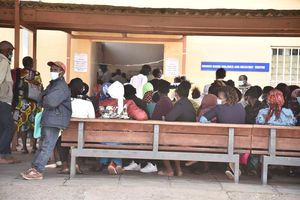
Medics from Mwai Kibaki Hospital attend to patients during a one-day free medical camp at Othaya Stadium in Nyeri County.

What you need to know:
- Hospital owners and officials forced to turn away patients despite having available beds and qualified staff ready to provide care.
- Digital Health Agency CEO Anthony Lenaiyara said SHA updates hospitals' information based on data provided by the regulator, KMPDC.
Some hospitals across the country have been unable to admit patients after their bed capacity data in the Social Health Authority portal was changed to zero occupancy, an indication that they cannot have inpatients.
The recent move has affected Level Three and Four facilities that serve as the primary healthcare entry points for the majority of Kenyans seeking medical treatment.
Hospital owners and officials who spoke to the Daily Nation described widespread chaos and frustration as they are forced to turn away patients despite having available beds and qualified staff ready to provide care.
A hospital owner along Nairobi’s Lang’ata Road, who paid Sh30,000 for her facility licence, discovered that despite having a registered bed capacity of 45 as indicated in her licence, the SHA system now shows zero slots available for patient admissions.
Chaotic situation
"I don't understand it. I went to the Kenya Medical Practitioners and Dentists Council (KMPDC) in regards to the matter since, for the last one-and-a-half weeks, I have been unable to admit patients, more so women in need of maternity services, but I was told that the officer to attend to me was on leave,” said the hospital owner, who spoke in confidence to allow the matter to be resolved.
"Before this, I would admit patients and even claim SHA refunds, but it is no longer possible. This is creating administrative gaps and operational paralysis. Why didn’t they communicate to us,” she said, adding that the situation is chaotic.
Another hospital owner indicated that the SHA portal has zero beds capacity for his facility and after a lot of follow-ups from the Council, they were told their 2025 licence is missing in the register.
“Why would the portal read zero, yet in my licence it says a bed capacity of 47. There has been no communication from the council, yet I paid for the licence of a Level Four facility. Having zero beds means the hospital does not have the capacity. Who decides this? Where was this communication sent?” said the hospital owner, who also spoke on condition of anonymity for fear of backlash.
“The patients are on our neck," he said, describing how patients who cannot access promised services are directing their frustration at healthcare providers.
However, according to Dr Brian Lishenga, chairman of the Rural Urban Private Hospitals Association, these facilities were licensed by the Kenya Medical Practitioners and Dentists Council (KMPDC) specifically to provide inpatient services.
“From the council records, hospitals were originally licensed to admit patients, with specific bed capacities indicated in their operating licences. However, now, there are claims that Level Three and Four hospitals should not have beds at all. What happens to patients who frequent these hospitals?” he asked.
“These hospitals face the peculiar situation of having physical beds available but being unable to admit patients digitally, while simultaneously being denied reimbursement for previous claims already submitted to SHA,” he added.
Dr Lishenga told the Nation that SHA has introduced a sophisticated new dashboard designed to monitor hospital admissions in real-time, representing a significant shift towards centralised control over healthcare facility operations. The system requires hospitals to notify SHA immediately when they admit new patients, creating a checkpoint that can instantly block further admissions.
“It tracks bed occupancy against registered capacity in the system. Once all beds are digitally occupied, according to SHA's records, the system automatically locks, preventing hospitals from admitting additional patients. Any unauthorised admissions, those processed outside the digital framework, will not qualify for reimbursement,” he said
He alleged that the crisis has emerged as SHA grapples with a severe financial mismatch, with hospital claims totalling Sh10 billion in May alone.
This significantly exceeds the Sh6.5 billion in monthly collections, prompting the authority to implement strict digital controls that are preventing hospitals from admitting patients and accessing reimbursements for previous claims.
According to Digital Health Agency CEO Anthony Lenaiyara, SHA is just a consumer and updates hospitals' information based on data provided by the regulator, KMPDC.
"Before one week ago, hospitals were admitting patients without any limitation because we did not have data, nor were we consuming the council data on authorized bed capacity. It was not showing in the SHA portal. It was not a rule, and what SHA was doing then was to check whether the admissions were correct or wrong or whether the admissions were done accordingly," said the CEO of the government agency.
However, the bed capacity rule in the system was enforced a week ago when SHA started extracting data from the KMPDC system, including bed capacity information, which was then incorporated into the portal to show hospitals their authorised bed capacity.
"We only used the information that we were provided with by the regulator—that is what was infused in the system," Mr Lenaiyara said.
He explained that it was only after incorporating the information from KMPDC on bed capacity that the Authority enacted a rule preventing hospitals from admitting more patients than their registered bed capacity allows.
"We only consume data given to us by KMPDC. If they say zero, then that is what we indicate in the system. We do not regulate; we use what we are given," he said.
Hospitals facing downgrades
Dr David Kariuki, KMPDC chief executive officer, said that facilities showing zero beds in the SHA portal were deliberately downgraded following safety inspections that found them lacking essential equipment and qualified staff.
He said that the council portal is an automated system that adjusts hospital classifications based on inspection findings, prioritising patient safety over healthcare access numbers.
“Where hospitals lose their inpatient capacity when inspections are done, it automatically means that there were deficiencies in critical areas such as medical personnel, equipment, or infrastructure standards required for their licensed level of operation,” he said.
The regulator added: "You might have the infrastructure, you have the room, but you don't have [the capacity], because what you are providing is only outpatient service," Dr. Kariuki said, explaining how facilities that appear equipped for inpatient care may lack the clinical capability to safely manage admitted patients.
He alleged that some affected hospitals received a warning through "exit meetings" that were conducted immediately after inspections, where facility owners are verbally informed of deficiencies and potential downgrades.
"The feedback is given even before the inspection team leaves the facility. It is verbal," Dr Kariuki confirmed, though he acknowledged that hospitals do not receive written documentation of these critical decisions at the time of inspection.
During these exit meetings, hospital owners are told specifically what deficiencies were found—whether missing doctors, inadequate equipment, or substandard facilities- and informed of the consequences for their operational status.
He said that hospitals facing downgrades are given 90 days to address identified deficiencies and request re-inspection for a possible upgrade.
However, their operational status is immediately adjusted to reflect current safety capabilities rather than allowing continued operation at unsafe levels.
"We give them 90 days to prove that they have done [improvements]. But in the meantime, we will take you to the level that you should be as per the inspection findings," Dr Kariuki said.
“Hospitals licensed as Level Three or Four but found to have only Level Two capabilities will immediately be restricted to level two operations, including the automatic reduction of bed capacity to zero if they cannot safely manage inpatients,” he added.
“What we want is quality access," he said, arguing that restricting unsafe facilities from providing inpatient care ultimately protects patients from substandard treatment.”
He confirmed that many hospitals have been blocked in the system until they put their house in order.
“We have so many hospitals blocked. We will only allow them admission when their findings are fulfilling to the council,” he said.
However, Dr Lishenga refuted all the claims, saying that he zero bed capacity were implemented "without prior communication to the affected facilities outlining the reasons for this change."
To date, facilities have not received official communication or an opportunity to understand the basis for the decisions and why they cannot admit patients.
The association has since written to the medical council to clarify the procedures followed in arriving at the zero ratings.
He said the admission restrictions appear to be motivated by SHA's mounting financial pressures rather than legitimate concerns about healthcare quality or fraud, adding that since March 2025, hospital claims have consistently exceeded SHA's monthly revenue collections, creating an unsustainable financial trajectory that threatens the entire universal health coverage project.
"The problem is that SHA is scared that the claims coming through are too much. They are trying to contain claims," Dr Lishenga said, identifying cost containment as the primary driver behind the restrictive policies.