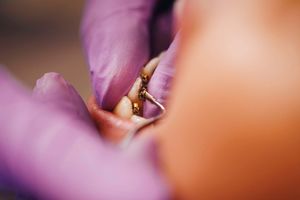
Deadly tradition of gum cutting: How cultural practice is killing babies
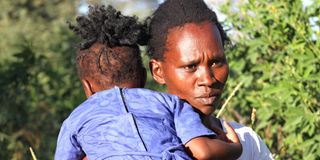
Veronica Masila during the interview in Kathyaka Village, Makueni County on May 13, 2025. She lost her two-month-old baby to traditional gum cutting complications three months ago.

What you need to know:
- Gum cutting, rooted in the mistaken belief that swollen gums cause fever, diarrhea, and vomiting, has led to severe suffering and preventable deaths among infants.
A fresh grave greets visitors at Veronica Mutua’s homestead on the edges of Kathyaka town in Makueni County. The heap of earth forms a poignant reminder of Baby Sarah Mutheu, the family’s last-born who succumbed to traditional gum cutting complications three months ago.
“Sarah was a dear one because she carried my mother’s name,” Veronica tells Healthy Nation.
As the rest of the world celebrated Valentine’s Day on February 14, Baby Sarah’s death plunged the family into mourning. “She died at Kibwezi Sub-County Hospital as I watched helplessly,” the 35-year-old mother of three says, with eyes swelling in tears.
Also read: Myths fuel barbaric removal of 'milk' teeth
The 45-day-old baby joined a growing list of babies who have suffered and died from traditional gum cutting, a dangerous practice that is deeply entrenched in the Kamba culture - Kitui, Machakos and Makueni counties. The procedure, which involves cutting the gums, is believed to hasten the sprouting of a baby’s milk teeth and alleviate fever, diarrhoea and vomiting, common symptoms wrongly attributed to teething.

Belinda Gatugi holds Baby Ethan Musoi at Kibwezi Sub-County Hospital in Makueni County on May 13, 2025. The two-month-old baby survived traditional gum cutting complications.
Traditional gum cutting is done by individuals who claim to have inherited the skill from their older relatives. They charge a modest fee for the service. In other cases, young mothers go for older relatives believed to be experts in gum cutting whenever their babies present with severe fever, vomiting and diarrhoea during the teething period. A spot check by Healthy Nation has established that the gum cutters use crude weapons such as stones, nails and sharpened bicycle spokes to gouge out the targeted gum.
Baby Sarah’s story is not unique.
The Healthy Nation team came across Baby Ethan Musoi, who was fighting for his life at Kibwezi Sub-county Hospital after undergoing traditional gum cutting. His distraught mother recalled how the two-month-old infant fell victim to a conspiracy involving old relatives. “Ethan’s grandmother used soda ash and tea leaves to rub his gums after he presented with fever, diarrhoea, and vomiting,” says Belinda Gatugi. The infant’s condition worsened, leading to hospitalisation.
Troubling pattern
Talking with parents whose children have undergone the practice reveals a troubling pattern. Many of them vow to never expose their children to the painful procedure again. “Watching a baby agonise due to fever, diarrhoea and vomiting is unbearable. However, watching a baby wail under the pain of a crude gum cutters tool is more devastating. I ran away when the wailing intensified,” Benson Mutua recalls his recent experience after taking his two-week old daughter to a traditional gum cutter near Kithimani in Machakos.
Blustus Kakundi, Kibwezi Sub-county Medical Superintendent, explains the deadly consequences. “Traditional gum cutting is a disaster. It is one of the leading causes of child morbidity and mortality in Kitui, Machakos and Makueni counties, where the procedure is widely practiced.”
Also read: Doc, does baby teething cause fever and diarrhoea?
According to Dr Wycliffe Kimani, a pediatrician based at Makindu Sub-county Hospital in Makueni County, traditional gum cutters introduce bacteria into the bloodstream of infants through crude tools, leading to meningitis (brain infection), pyelonephritis (kidney infection) and myocarditis (heart infection)
Traditional gum cutting has alarmed authorities in the region, which records more than 40 deaths in every 1,000 children born before they attain the age of five years, according to the Kenya Kenya Demographic and Health Survey (KDHS) of 2022. An analysis of the cause of deaths points to gum cutting.
Healthy Nation’s attempt to assess the burden of gum cutting has revealed a lack of data within the Ministry of Health. "MOH 705, the tool we use to capture data on diseases and track outpatient services, has no provision for gum cutting. This makes it hard for us to indicate the severity of the problem. This problem needs to be fixed," said Simon Kavisi, the head of health records in Makueni County.
Makueni County government relies on uncoordinated data on gum cutting, which individual hospitals collect on booklets. At Kibwezi Sub-county Hospital, the data seen by Health Nation show that two out of the 20 babies admitted at the facility with gum cutting complications between January and May have died. At the Makindu Sub-county Hospital, seven out of 44 babies admitted with similar complications between January and May have died.
According to a senior Makueni County medic, some parents who lose babies to gum cutting complications insist that medics should record the cause of deaths as pneumonia ostensibly to avoid the stigma associated with the harmful cultural practice. “This masks the actual impact of traditional gum cutting,” she told Healthy Nation on condition of anonymity since she is not allowed to speak to the media.
The persistence of traditional gum cutting despite public health campaigns highlights the deep-rooted cultural beliefs and systemic challenges in combating this harmful practice. Some practitioners often evade scrutiny or justify their methods. Rhodah Muia’s case in Makueni County exemplifies the contradictions faced by communities: while health officials decry the dangers, Rhoda defends it as a "necessary" intervention for teething-related symptoms, despite the evident trauma and risks.
She uses pieces of soda ash to slice gums of children who present with fever, vomiting and diarrhoea. “The child cries hysterically. It is a painful experience for the child and the mother. But the pain is necessary,” she said.
Some residents like Reverend Lucas Wambua, whose wife is a gum cutter, argue for a gradual end rather than ‘outright criminalisation’.
Machakos County has intensified awareness after 10 babies succumbed to gum cutting, while Kitui County government banks on community health promoters to combat the vice.
“We are working with administrators, traditional birth attendants, community health promoters and gum cutters to gradually ultimately phase out traditional gum cutting,” said Makueni Deputy Governor Lucy Mulili, who has been the face of the county’s campaign against traditional gum cutting. A key message in the campaign is that parents should take babies to hospital as soon as they present with fever, diarrhoea and vomiting. The campaign, which is being led by top medics, also encourages parents to use safe teething remedies like approved gels or powders to soothe sore gums during the teething period instead of cutting the gums.
[email protected]