Global fund lifeline: Kenya secures sh12.3bn as HIV infections rise

Kenya has secured a vital Sh12.3 billion Global Fund grant for the financial year starting July 2026

Kenya has received a Sh12.3 billion grant from the Global Fund for the financial year starting July 2026 to sustain HIV treatment for over 1.3 million patients, reduce tuberculosis-related deaths, and contain malaria amid a sharp contraction in external health funding.
The budget documents tabled in Parliament offer critical relief to the country as major donors, particularly the US government, are reducing their support for Kenya’s health sector.
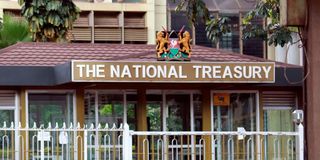
The National Treasury Building in Nairobi.
The Treasury will manage most of the funds, totalling Sh9.8 billion, as the central coordinating and disbursement unit for medicines, testing supplies, and programme support. The State Department for Public Health and Professional Standards has been allocated Sh1.71 billion, while the State Department for Medical Services will receive Sh800 million.
The HIV programme will receive the largest share of Sh8.83 billion (more than 70 per cent of the total), which highlights both the scale of the epidemic and the cost of providing lifelong antiretroviral therapy to over a million patients.
Malaria has been allocated Sh2.28 billion, while tuberculosis will receive Sh1.26 billion.
The HIV allocation will fund antiretroviral drugs, testing kits, laboratory reagents, condoms and community-based prevention and care programmes.
Despite decades of intervention, Kenya’s HIV burden remains significant. As of 2024, approximately 1.3 million individuals, including 62,798 children, were living with HIV. According to the National Syndemic Diseases Control Council (NSDCC), new infections rose by 19 per cent, from 16,752 to 19,991, while AIDS-related deaths reached 21,000.
“Aids-related deaths, recorded at 21,007 in 2024, remind us of the need for a renewed focus on early diagnosis, treatment adherence, and retention in care,” said Dr Ouma Oluga, Principal Secretary for Medical Services.
In March, appearing before the National Assembly Committee on Health, NSDCC acting Chief Executive Officer Douglas Bosire warned that Kenya was recording around 54 new HIV infections daily, putting further strain on an already overburdened treatment programme.
“We are seeing at least 54 new infections every day. This means more people will require treatment, which increases the financial burden on the health system,” said Mr Bosire. He also noted that TB screening among people living with HIV had dropped by 46 per cent between 2024 and 2025, a worrying trend, given that tuberculosis is the leading cause of death among immunocompromised patients.
The Sh1.26 billion TB allocation will support the detection, treatment and management of drug-resistant strains of TB. In 2024, Kenya reported 96,865 TB cases out of an estimated 124,000, leaving approximately 20 per cent undiagnosed.
Although TB deaths have declined by 66 per cent since 2015, progress depends heavily on sustained funding for diagnostics and treatment. Ministry of Health data shows that 14 people die from TB in Kenya every day, roughly one every two hours.
The Sh2.28 billion malaria allocation will fund insecticide-treated nets, indoor residual spraying, and treatment drugs, particularly in high-burden regions such as western Kenya and the coast. Although malaria cases fell by 17.8 per cent from 4.45 million to 3.78 million between 2023 and 2024, climate shocks continue to undermine control efforts. For example, the 2024 El Niño rains triggered a spike in transmission due to flooding.
Meanwhile, the grants come with domestic obligations. Kenya has committed to co-financing the programmes with $593 million (Ksh76.5 billion) from its own budget under the current funding cycle, which was signed in June 2024. This signals a shift towards long-term sustainability.
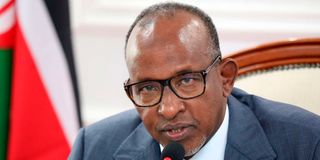
Health Cabinet Secretary Aden Duale at the ministry offices in Nairobi on March 10, 2026. He said his ministry views the audit “not as a critique but as an invaluable statutory tool that has played a critical role in helping them identify early transition gaps and continuously strengthen internal controls and governance frameworks”.
During a meeting with Global Fund Vice President Bience Gawanas in Nairobi in April, held alongside the World Health Summit Regional Meeting, Health Cabinet Secretary Aden Duale outlined plans to align future Global Fund support with Kenya’s health digitisation strategy and the financing model of the Social Health Authority (SHA).
“Sustainability is a continuous journey anchored in strong domestic resource mobilisation,” said Mr Duale, adding that the government is enhancing the Kenya Medical Supplies Authority's (Kemsa) capacity to optimise the delivery of medicines to remote areas.
Budget projections indicate that the peak year for disbursements under the current grant cycle will be 2026/27. HIV funding is expected to remain high at Sh9.75 billion in 2027/28 before declining to Sh4.47 billion in 2028/29.
Meanwhile, malaria funding is expected to drop to Sh666 million by 2028/29, while TB funding will decline to Sh552 million, signalling the end of the current cycle around that period, pending new negotiations.
Kenya has partnered with the Global Fund since 2003, receiving cumulative investments totalling approximately $2 billion (Sh258 billion). The country has also pledged $10 million (Ksh1.29 billion) to the fund’s seventh replenishment (2023–2025), though this payment is still outstanding, and no commitment has yet been made for the eighth replenishment cycle, which will cover the period from 2026 to 2028.