Grieving mother among dozens freed from Mama Lucy Hospital after Sonko, Sakaja intervene
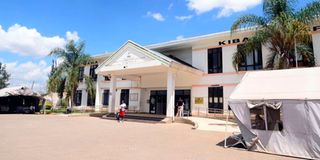
Mama Lucy Kibaki Hospital in Nairobi.

What you need to know:
- The mass release of 95 patients at the hospital highlights the devastating human cost of unpaid medical bills and the urgent crisis facing Kenya’s health financing.
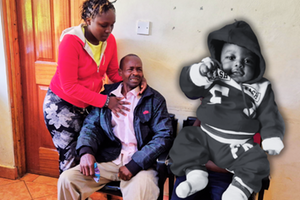
Tabitha Atieno’s labour began on the evening of October 5 with a rapid succession of sharp, agonising contractions.
Her body heavy with anticipation, she was carried by her husband, a casual labourer whose strength seemed to fail with every hurried step, until they reached Mama Lucy Kibaki Hospital, where a security guard and nurse welcomed them.
By midnight, she lay on a delivery bed, clinging to the hope that had sustained her for nine months. The world narrowed to gritted teeth and strained effort. When the baby finally arrived, the room fell silent. There was no cry from little lungs, only concerned and empathetic looks from the staff. A nurse gently announced that her baby was dead. After she was stitched up, came another announcement: she might need a blood transfusion.
Later, at the ward, with empty hands and teary eyes, she broke the news to her husband.
“He had been dismissed and told to leave me at the hospital upon admission. He, however, came back at around 1am, and that’s when I told him what had happened. We were both devastated,” says Atieno.
“We have a six-year-old son, and have been waiting eagerly to receive our child, a girl. I could feel her playing that day before the labour started. The hospital informed me that she was under distress, and that it contributed to her demise,” she says.
Five days later, on October 10, the hospital gave her the discharge papers. But she also received a bill for Sh39,000. Tabitha, a housewife whose family lived day-to-day on her husband’s unpredictable wages, had no money.
She had not registered for the Social Health Insurance Fund because, she says, she lost her ID and hadn't managed to replace it.
Without payment, there was no going home. Her husband couldn't save her. She was detained.
“The detention was a continuous humiliation, forcing me to process the devastating loss while locked within the institution that had witnessed it. Meanwhile, the hospital handled the final, solemn duty: they buried my baby.”
Days bled into one another, marked by the despair of her husband’s failed attempts to raise the impossible sum.
Then, on Monday, she was handed her documents and told she was free to go, following an intervention by former Nairobi County Governor Mike Sonko.
She walked out of the hospital gates, not with the triumphant exhaustion of a new mother, but with the quiet, devastating emptiness of a woman who had traded a child for a debt, only to have the debt paid by a stranger. She is free, but the cost of a life that never got to cry remains a burden she will carry forever.
Twenty-nine other mothers walked alongside her, each heading home to rebuild a life they had left and reunite with their families.
30 women
Confirming their release, the hospital’s Chief Executive Officer Fred Obwanda said 30 women who had been held at the maternity ward were released following a Sh2.2 million debt clearance by Sonko.
A further 65 women from the surgical, paediatric, and gynaecological wards were later released after Nairobi Governor Johnson Sakaja cleared their Sh7 million debt.
Commenting on the matter, Mr Obwanda called on Kenyans to register for the Social Health Insurance Fund, stating it is unwise to depend on well-wishers.
“If hospitals depended on well-wishers, all facilities would collapse. We must educate our citizens that there is already a social health insurance that they need to register for,” said Mr Obwanda, adding: “If they register, they can be taken care of in primary health care centres, which are level 2,3 and 4, where they will get services for free.”
He added that the county has hired over 300 health workers in the health centres. “There are drugs there, but people don’t want to go there; they want to complicate the system,” he said, adding: They didn’t have to come to a county referral hospital like Mama Lucy. Here, we have consultants and advanced doctors, and maintaining these services costs a lot of money. If we rely on well-wishers, hospitals will not function.”
He urged the public to utilise the government's plan, noting: “Let everyone register, and when they need to go to a hospital, let them start with a primary healthcare facility. They will rarely end up at level 5 because almost all ailments can be handled at the primary level.”