Growing up with cancer: One family’s long battle across generations
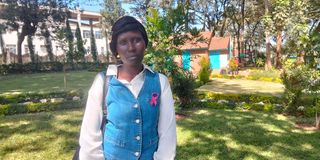
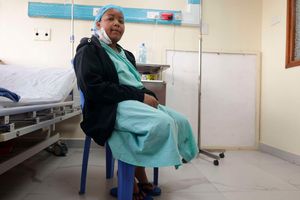
Linda Adhiambo, a 32-year-old former chef who is battling breast cancer, during the interview at KNH Oncology Centre on February 4, 2026.

What you need to know:
- The drugs keeping Adhiambo going are not cheap, and they are not always available through the public health system or covered in full by standard insurance.
- When the system falls short, patients end up in private facilities, where the same drugs cost even more.
Cancer rarely announces itself. Many families only realise what they are dealing with when the disease is already advanced. In Linda Adhiambo’s family, however, cancer has returned again and again across generations.
It started with her grandfather’s household. He had four wives. Two of those homes were spared. In the other two, cancer struck.
In the first home, cancer worked through four people. It started with the matriarch, who died of a brain tumour, then took her daughter to breast cancer. A daughter-in-law followed, lost to pancreatic cancer, and then a grandchild to stomach cancer.
In the third home, the home of Adhiambo’s maternal grandmother, the story was no different.
Caren Anyango was a farmer, and by all accounts, a woman who took great pleasure in her grandchildren. She liked gathering them around, cooking more food than the family could finish, and telling stories late into the night. She was the kind of grandmother children remember for the rest of their lives.
Then, in 2007, cervical cancer arrived.
Her health slowly deteriorated. The woman who had once run a home and a farm became frail and thin. She was in pain most of the time. Hospital visits became a regular feature of family life. The frequent meals stopped, and the farm slowly disappeared under weeds.
Adhiambo was 15 when this happened. After school and on weekends, while her friends went about their normal teenage lives, she was at her grandmother’s side, learning things no 15-year-old should have to learn. There were no specialised palliative supplies available to them. So she washed the rags that served as pads, hung them on the line to dry, and then used them again.
“I would wash the rags, hang them to dry, then use and wash them again,” she recalls.
Her mother went out to work. The caregiving fell to her daughter. This went on for more than a year, and it left a mark that never fully went away.
“People do not always realise the weight a caregiver carries. Sometimes, we feel even sicker than the patients we are looking after. You have to hide your tears, stay strong, and be the pillar for your family, even when you feel completely helpless inside,” she says.
That same year, 2007, her grandmother died.
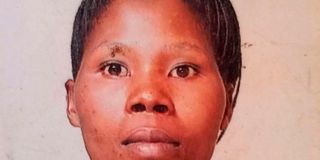
Helida Atieno, Linda Adhiambo’s mother who succumbed to breast cancer in 2013.
Four years passed. Then the disease came back, and this time it came for Adhiambo’s mother.
Helida Atieno was diagnosed with Stage 2 breast cancer. The diagnosis set off a familiar chain of events in a family with little money to spare: hospital visits, rising bills, fundraisers, pills and injections. There was also the helplessness of watching her mother suffer from a disease they could not control. As the elder child, Adhiambo once again stepped in.
But what stayed with her longest from that period was not the illness itself. It was how other people treated them because of it.
Atieno needed to travel from Migori to Nairobi for chemotherapy at Kenyatta National Hospital (KNH). They needed somewhere to stay. They went to a relative’s home.
“We went to my uncle’s house in Nairobi, who turned us away, claiming that my mother smelled. He said she would infect him and his household, and told us to figure it out or go back home,” Adhiambo recalls.
It did not stop there. On public transport, other passengers made the journey even harder, complaining loudly about the smell, asking whether she was carrying a corpse, and demanding that the two of them get off the vehicle. The smell was coming from her mother’s open wound.
“In the matatu, passengers complained incessantly about the smell, asking me whether I was ferrying a corpse, and calling for us to alight. I remember my mother crying and asking me whether she indeed smelled like one,” she says, her voice breaking.
The driver eventually stepped in and restored order.
Before a return visit to KNH, they called the uncle again, hoping something in him had shifted. It had not. He told them once more to find somewhere else. Mother and daughter decided they would sleep in the hospital corridors if they had to. A doctor found out and arranged a bed for her mother.
For two years, Atieno fought. She fought the cancer, and she kept raising Adhiambo and her brother. Then she died.
The last image Adhiambo has of her mother is of a woman in a hospital bed, intubated, on oxygen, and frail. On the morning she died, Adhiambo had stepped out briefly to fetch her younger brother from town. When they came back, their mother was gone. Her body had already been moved to the next room, covered and tagged. The two of them travelled home upcountry that night.
“We became orphans, yet were still left with the responsibility of announcing her death to the extended family. It was devastating. The future was uncertain. We relied heavily on God to carry us through,” she says.
The years after her mother’s death were hard, but slowly, things began to settle. She was getting on with her life. Then in 2017, she noticed a nipple discharge from her right breast. She went to hospital, had an ultrasound, and was told it was a cyst. A surgeon removed it. She was told it was benign and went home.
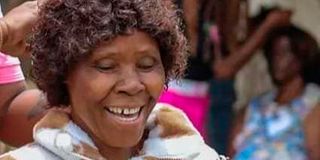
Mary Adoyo, Linda’s aunt who died at the age of 50 following a long battle with ovarian cancer.
In 2020, she welcomed a baby boy. When she tried to breastfeed, one breast produced no milk. Back at the hospital, she was told the surgery had been done on the main milk duct and that this had compromised the others. She went home and breastfed with one breast.
Then, in September 2023, her back started giving out.
The pain was bad enough to make her job as a chef and waitress impossible. At home, she could barely wash her child or do laundry. She went for physiotherapy for weeks, both she and her doctors assuming it was a muscle problem. It took X-rays, then CT scans, then a CT-guided biopsy to find the truth: there was a tumour in her spine.
“Doctors said the tumour was cancerous, but they could not locate where it had originated. They requested another test called immunochemistry, which showed that the tumour was originating from the breast. Six years down the line, it has metastasised, from the breast to the lymph nodes, to the bones,” she says.
“When I received this diagnosis, I was paralysed by the sense of a recurring nightmare. I could not walk, I could not run, I could not sit for long. Even sleeping was a problem. I cried. I knew I was going to die,” she says.
She went through 10 sessions of radiotherapy. Her appetite took a hit. Wounds developed on her thigh. Surgery was off the table because the cancer had already spread too far. She still has both breasts, and she lives with constant pain in her pelvic area.
Around the same time, she lost her job. Her supervisors ran out of patience with the back pain she kept reporting.
“Before my diagnosis, I used to work as a chef. However, I faced a lot of mistreatment from supervisors whenever I mentioned the constant pain in my spine. I was eventually laid off and had to figure out rent, food, and general provisions for my child. I fully relied on friends, a few family members, and the church before eventually starting a clothes business, which mostly involves hawking to friends on the days my body allows it. The returns help with my son’s needs and my own medication,” she says.
Then there is the cost of staying alive.
Medication nightmare
The drugs keeping Adhiambo going are not cheap, and they are not always available through the public health system or covered in full by standard insurance. When the system falls short, patients end up in private facilities, where the same drugs cost even more.
“I was taking Fulvestrant and Palbociclib, which are very expensive and not available at Kenyatta. Palbociclib is Sh47,000 in tablets, and Fulvestrant is around Sh52,000. You are supposed to use them every three weeks. I am often forced to pay out-of-pocket for drugs because my body cannot go without,” she says.
The two drugs must be taken together. Getting only one is not an option.
“You find that the drug amounts exceed the monthly allocation. You may get one drug, but you cannot use one drug alone; they must go together, so you have to top up with cash. And if you go to a private facility, it is even more expensive. Fulvestrant can go up to Sh90,000, while Palbociclib can go up to Sh68,000,” she adds. And even after buying the drugs, taking them is not straightforward. The targeted therapies knock down the body’s white blood cell count, which means the patient has to be tested before every cycle to confirm her immunity is strong enough to handle another dose.
“The doctor cannot give you the drug before checking your blood levels and immunity. Sometimes your immunity drops to 0.3, when the ideal range is between 2.0 and 4.0. You are then given a booster. The booster makes you sick. You go back for another test, and if the results are still not within the normal range, you get another booster. Only when your levels come up can you begin another cycle of medication. And for each test, you must spend money,” she explains.
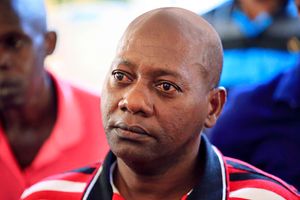
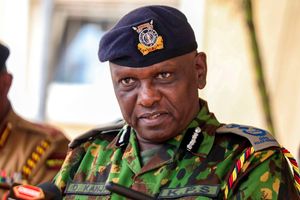
Dr Elias Melly, the Chief Executive Officer of the National Cancer Institute of Kenya, says the Social Health Authority (SHA) has begun covering some cancer services, but many modern therapies remain out of reach.
“Accessibility of these novel therapies is still a challenge. Cancer care is individualised and some treatments are simply too expensive,” he says. He adds that while such treatments are widely used in high-income countries, access in developing nations is a different story. “In other countries, these newer therapies are already used as first-line treatment. But because of cost, countries like ours often access them 15 to 17 years later.”
While all of this was happening, Adhiambo was also watching her maternal aunt go through something she recognised all too well.
In November 2024, her aunt began having what seemed like ordinary stomach trouble, a persistent ache, a nagging pain in the lower back. She put it down to the kind of tiredness that accumulates in a body that has worked hard for many years. Perhaps ulcers. She waited for it to pass.
It did not pass.
At Homa Bay County Teaching and Referral Hospital, doctors raised the possibility of ovarian cancer. A family that had already buried so many came up against the same wall they always came up against: disbelief, then silence.
“With a painful family history of this disease, we were all in denial and retreated into a necessary silence. We could not believe cancer had come for another person in our family,” says Adhiambo.
Kenyatta National Hospital confirmed it. Stage 4 ovarian cancer, in both ovaries. The doctors recommended surgery first, then six cycles of chemotherapy. For a while, it seemed to be working. The family allowed themselves to hope a little. Then a PET scan in December 2025 brought the news that the chemotherapy had not worked and the cancer was still spreading.
Another six cycles were prescribed. The disease did not respond. The oncologist recommended two more cycles, the last resort. Her aunt’s body could not hold out after the first dose. She was too weak. The treatment was stopped.
What came next was hard to witness. Her belly and feet filled with fluid until she looked like a heavily pregnant woman. Doctors drained the fluid regularly and moved her to palliative care. The goal was no longer to cure her. It was to manage the pain.
Adhiambo sat with her through all of it. She had lost her mother, this same aunt’s younger sister, to cancer. She understood what was happening, and she stayed.
“We attended cancer events together, walking a journey of shared grief and defiance. When her hope flickered, I would blow on the embers, encouraging her to keep standing,” she says.
A few days before her aunt was discharged, she called the family together and told them what the doctor had said: she was being sent home because there was nothing more that could be done. She arrived on a Sunday. She died on Wednesday morning.
The loss was especially difficult for Adhiambo because she had seen this journey before.
“Her death has shaken me to the core. It is very traumatising. Now everyone is looking at everyone else and wondering who is next. I am terrified because I am also battling cancer. My doctor called me and said that I am no longer on curative treatment and that my treatment has shifted to palliative. This is exactly what my aunt went through. I am scared for my life,” she says. Across the country, there are families just like Adhiambo’s, quietly battling the same menace. Data from the National Cancer Institute of
Kenya (NCIK) puts the number of new cancer cases at over 47,000 every year, with more than 32,000 deaths. More than 86,000 people are living with cancer that has persisted for more than five years.
The institute notes that breast cancer is the most common cancer among Kenyan women, making up about 23.3 per cent of all female cancer diagnoses. Cervical cancer comes second at 19.7 per cent, driven largely by HPV infection; vaccination and regular Pap smears go a long way in reducing the risk.
Among men, prostate cancer accounts for 14.4 per cent of all cases. Oesophageal cancer, common in parts of the country where people drink very hot beverages and use tobacco, accounts for about 11.7 per cent of all cases nationally.
Dr Melly says blood cancers, leukaemia and lymphoma, form another significant category, affecting both adults and children. Among children, acute leukaemia is the most common, though kidney cancers and brain tumours in younger patients are increasingly being reported. The NCIK reports that more than 229,732 women have been screened for breast and cervical cancer, with 3,225 on treatment as at the end of 2024.
The institute points to several challenges: too many patients arriving at hospital only when the disease is already advanced, a shortage of specialists and equipment, and a high burden of infection-driven cancers. Growing lifestyle risks tied to tobacco and alcohol are also a concern, as is the sheer cost of cancer care, which quietly bankrupts families long before it kills the patient.
Dr Melly says the chemicals used in agricultural production, possible pollution in water sources, and radiation exposure in mining areas also contribute to cancer risk, factors that cut across sectors beyond health alone.
He notes that the burden of cancer is rising but investment is not keeping up, with funding particularly limited for institutions responsible for coordinating the national response.
On screening, he says focusing on breast, cervical, colorectal and prostate cancers could significantly reduce the burden. “Together, those four cancers account for almost 60 per cent of all cancers in Kenya,” he says.
“The most effective and least costly approach is prevention and early detection. If we detect cancer early, outcomes are much better and lives are saved,” he adds.