Hospital closed in 2019, now accused of botched c-section, KMPDC respond
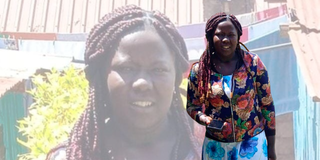
Phyllis Wanjiru, aged 32, died on September 11 after developing complications following a caesarean section at St Teresa Maternity and Nursing Hospital.

A man's account of his wife's tragic death following a C-section at St. Teresa Maternity and Nursing Home in Kikuyu has ignited fresh accusations of medical negligence against a facility that was closed and had its director's license revoked in 2019.
Joseph Wanyonyi alleges that his wife, Phyllis Wanjiru, bled for hours after a caesarean section and later died at Kenyatta National Hospital (KNH), to which she had been referred for emergency care.
The ordeal began on September 9, when the couple went to St Teresa's to arrange a bed in the maternity ward for a gynaecology appointment scheduled for the following day.
“My wife was not in labour. In fact, we walked together, from home to the highway, before boarding a vehicle to the hospital. The terrain is steep, but she was okay,” said Wanyonyi.
Shortly after they arrived at the hospital, the director, Dr Moses Mwaura, reviewed her file and told them they were proceeding directly to theatre within 30 minutes. Wanyonyi was directed to an upstairs ward while his wife was taken for the procedure.
"A few hours later, I was told that the surgery had been successful and that both mother and baby were well. I was allowed to see my wife and we talked for hours. She complained of stomach pain, but a doctor at the facility dismissed it as normal. I then left to go home and check on our other children," says Wanyonyi.
"At around 9 pm, I received a frantic call from my wife saying that she had overheard the doctors saying that they wanted to transfer her to Kenyatta National Hospital and that she was scared." I rushed back to the hospital, but I was not allowed to see her. Soon after, an ambulance arrived and, after a confusing wait, my wife was brought out and placed inside. I joined them.”
“During the journey, my wife was unable to speak, and the ambulance staff were indecisive about which hospital to go to, eventually deciding on KNH. Upon arrival at Kenyatta, at 1am, the situation was chaotic,” says Wanyonyi.
The nurses from St Teresa's left his wife's wheelchair at the entrance to the labour ward, forcing Wanyonyi to push his wife into the ward while holding their newborn baby.
He says that KNH doctors informed him that his wife had lost four litres of blood due to internal bleeding. After stabilising her, they told him that she needed a second surgery to stop the bleeding, which would probably mean removing her uterus. His wife, who was now stable enough to speak, reportedly gave her consent, telling the doctors, “Do whatever it takes to save me.”
He was then asked to go outside and pray, leaving him alone and anxious. He begged St Teresa's staff to take the baby back to the facility.
The following morning, after the surgery, Wanyonyi recalls being told he could go and see his wife in the ICU. However, upon arriving at the unit, he was told that he could not go in and had to wait in the doctor's office. While he was waiting, a doctor approached him, confirmed his details and the nature of his relationship with his wife, and then left. The doctor returned to inform him that his wife's heart had collapsed and that she had been resuscitated.
The doctor then left again, only to return and inform Wanyonyi that the main issue his wife was facing was a lack of blood.
"He explained that they had only managed to get one pint of blood, but that my wife needed five," said Wanyonyi. It was at this point that he began making desperate efforts to find blood, including writing a social media post to request donations. Everything happened so fast. Within 15 minutes of my arrival at the doctor’s office, I was informed that my wife had succumbed,” cries Wanyonyi.
The next morning, he was informed that the bleeding had stopped. However, due to the significant blood loss, she had been taken to the ICU for life support.
Minutes later, a doctor informed him that his wife's heart had stopped and then been restarted. The doctor then asked him to organise blood donations. A few minutes later, he was informed that she had died.
“My wife's death was a direct result of negligence at St Teresa's. She was bleeding for hours, from around 2 pm until 10 pm, and nobody at the hospital informed me. No one from the first hospital officially informed me about the referral either,” laments Wanyonyi.
The post-mortem report shows that my wife was admitted to KNH on September 10 following complications after her caesarean section.
“During the autopsy briefing, the pathologist confirmed that my wife had no chance of survival due to uncontrollable internal bleeding. It was like she was leaking,” he says.
The family's account mirrors an incident from May 2019 that led to the closure of St Teresa's Maternity and Nursing Home. Following a public outcry over patient mishandling, the Kenya Medical Practitioners, and Dentists Board, in a joint inspection with other bodies, found "glaring gaps" at the facility.
The Board revoked the hospital's licence and also cancelled the operational licence of its medical director, Dr Moses Mwaura. There is no public record of it being reopened.
Daily Nation reached out to the KMPDC CEO, Dr David Kariuki, to seek responses regarding the reopening of the hospital, the reinstatement of Dr Mwaura’s licence, and the procedures and reasons for both.
In response, Dr Kariuki said the closure of the hospital and the revocation of Dr Mwaura’s license had only been temporary.
“When closing a hospital facility, we may close it either temporarily or permanently. We may even close sections of a hospital. I think this closure was temporary, meaning that conditions were given. Once these conditions are met, the hospital can reopen or the doctor can resume their practice,” said Dr Kariuki.
However, he said that he could not comment on the specific conditions placed on the hospital and Dr Mwaura, as he was out of the office and would need to access the hospital’s files to retrieve them.
A spot-check at the website of the Medical Practitioners and Dentists Council (KMPDC) shows that the hospital is licensed to operate this year. The check also reveals that Dr Mwaura is a general surgeon.
The specific details of what a general surgeon can do are outlined in the broader KMPDC Scope of Practice for Medical Practitioners, which includes performing surgical procedures, but the exact boundaries are defined by the practitioner's training, qualifications, and ongoing professional development.
According to the document, a general surgeon can conduct procedures on the oesophagus, stomach, duodenum, small intestine, colon, rectum, anus, liver, pancreas, spleen, adrenal glands, lymph nodes, breasts, abdominal wall, hernias, skin, soft tissues, vascular systems, head and neck, trauma, oncology, endoscopy, and paediatric surgery.
The same document also stipulates that gynaecologists handle maternal and foetal medicine, including preconception care, antenatal care, and care of women and their babies during labour and immediately after birth. This includes contraction stress tests, labour induction and augmentation, management of complications of labour, vaginal delivery, caesarean delivery, and post-partum management.
Gynaecologists also handle reproductive endocrinology and fertility, pediatric and adolescent gynaecology, gynecologic oncology, reconstructive pelvic surgery, sexual dysfunction and other general gynaecology, and critical care obstetrics.
In its defence, St Teresa Hospital issued a statement blaming Wanjiru’s death on postpartum haemorrhage (heavy bleeding after delivery).
The hospital alleges in the statement that Wanjiru visited with complaints of lower abdominal pain and a history of two previous caesarean deliveries. However, this is contrary to Wanyonyi’s account that he and his wife had only gone to the hospital to book an appointment with a gynaecologist in anticipation of the baby's arrival.
The hospital also says that an ultrasound carried out a few days earlier on Wanjiru showed that the baby was lying sideways, and that upon examination, she was found to be in labour.
“These findings made it necessary to carry out an emergency caesarean section under spinal anaesthesia. During surgery, the medical team discovered that the patient had placenta previa a condition where the placenta lies unusually low in the womb and can cause bleeding. At the time of surgery, the bleeding was minimal. A healthy baby girl weighing 3.1 kg was delivered and baby scored well at about 2:40pm,” says the statement.
“Approximately six hours later at about 9:30pm, the patient developed secondary postpartum hemorrhage (heavy bleeding occurring some hours after delivery). Women with a history of multiple caesarean sections and placenta previa are at higher risk of this complication,” the statement continues.
The statement notes that the attending surgeon and gynaecologist decided to refer her to Kenyatta National Hospital (KNH) for re-exploration and further management, that she was promptly transferred at 11 pm in the hospital ambulance, and that at the time of referral, Wanjiru was alert and stable.
“On arrival at KNH, she was received. The next morning, a representative from St Teresa Hospital followed up and we found out that surgery had been carried out successfully and she was recovering in the Critical Care Unit. Sadly, at about 11am we learnt that the patient later passed away,” the statement reads.
The hospital further notes that a post-mortem examination revealed that Wanjiru had lost her life due to Disseminated Intravascular Coagulation (DIC), a “rare but serious condition where the body's normal blood clotting process becomes overactive. This uses up the clotting factors and platelets, which then leads to uncontrollable bleeding. Patients with placenta previa, multiple caesarean sections and severe postpartum bleeding are at a much higher risk of developing DIC.”
“We wish to clarify that there was no instance of medical negligence. Our staff acted quickly and in accordance with professional standards to provide the best possible care under the circumstances. St. Teresa Hospital has already initiated a comprehensive review of this case to further strengthen our emergency preparedness. We are fully committed to working closely with Kenyatta National, and the patient's family to provide all necessary support, information, and follow-up.”