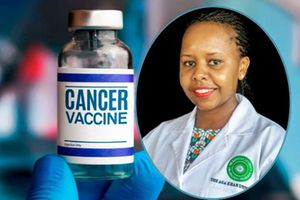
Kenya switches to one dose of HPV vaccine to improve uptake
Researchers from the Kenya Medical Research Institute (Kemri) and Massachusetts General Hospital (MGH) say they have found that a single dose of HPV vaccine is highly efficacious at 98 per cent over three years.

What you need to know:
- The decision, supported by the National Vaccine Institute and the Ministry of Health, aims to increase efficiency, reduce costs and improve vaccine uptake.
Kenya has introduced the single-dose human papillomavirus (HPV) vaccine, replacing the previous two-dose regimen, to increase the chances of protection against the virus and related diseases such as cervical cancer.
The decision, supported by the National Vaccine Institute and the Ministry of Health, aims to increase efficiency, reduce costs and improve vaccine uptake.
Previously, the HPV vaccine required a two-dose regimen (or three doses in some cases) to ensure optimal protection. Since the introduction of the vaccine in 2019, health officials have faced challenges in tracking down girls for the second dose, often leading to incomplete vaccination. Now, with the single-dose approach, young girls can receive full protection in just one visit.
According to the Kenya Medical Research Institute (Kemri), only 33 per cent of eligible girls in Kenya currently receive the first dose of the HPV vaccine while only 16 per cent return for the second dose.
"A single-dose HPV vaccination schedule could reduce the financial and logistical barriers we currently face, and Kemri will work closely with the Ministry of Health and researchers to apply these findings and ensure that every girl and young woman receives the single dose," said Prof Sam Kariuki, acting director general of Kemri.
The move comes about two years after researchers from Kemri and Massachusetts General Hospital (MGH) found that a single dose of the HPV vaccine was highly effective at 98 per cent over three years.
The decision to introduce a single-dose HPV vaccine is in line with the World Health Organization (WHO) recommendations, which confirm that one dose provides sufficient immunity. Recent studies show that a single dose of HPV vaccine provides long-term protection, making it a viable solution for countries with limited health resources, such as Kenya.
Gavi, the Vaccine Alliance, points out that reducing HPV vaccination from two doses to one significantly reduces the costs associated with procurement, transport and administration. This frees up resources for other essential health services.
According to WHO, a single-dose regimen makes it easier to reach more girls, reducing dropout rates and the logistical challenges of tracking them down for a second dose.
According to the HPV Information Centre, health workers in Kenya can now focus on increasing coverage, especially in rural and underserved areas, without worrying about follow-up doses.
"With the single-dose approach, we expect to see a significant increase in coverage, especially in rural communities where returning for a second dose has been a major challenge," said Dr Lydia Omondi, a public health specialist.
Cervical cancer is a major public health concern and the second most common cancer in women aged 15 to 44. According to the HPV Information Centre, Kenya records about 3,500 new cases of cervical cancer each year, resulting in more than 2,500 deaths annually.
The country has one of the highest burdens of cervical cancer in sub-Saharan Africa, mainly due to late diagnosis and low screening rates. Despite the availability of screening services, uptake remains low.
A study published in Boston Medical Center Public Health found that only 16.81 per cent of Kenyan women of reproductive age had been screened for cervical cancer. Many women do not seek medical attention until they develop symptoms, by which time the disease is often at an advanced stage.
Barriers to screening include stigma, lack of awareness, inadequate health facilities and financial constraints.
While the move to a single-dose HPV vaccine is a major step forward, challenges remain. Vaccine hesitancy, misinformation and cultural beliefs continue to hinder vaccination efforts.
In some communities, the HPV vaccine is still associated with early sexual activity, myths about infertility and religious concerns, making parents reluctant to vaccinate their daughters.
The Department of Health says it is committed to reducing the burden through targeted prevention and awareness campaigns.
"Early detection and vaccination are life-saving interventions. We must work together to ensure that women have access to these critical services," said Dr Patrick Amoth, director general of Health.
Since December 2022, eight countries have announced that they will switch to a single-dose HPV schedule, which previously required two to three doses, following updated guidance from WHO.