Kenya unveils National REDD+ emissions tracking system
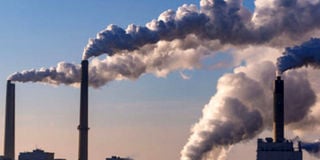
Carbon emission into the environment.

What you need to know:
- Kenya has rolled out a national REDD+ Registry to track and verify forest carbon credits. The system, launched with UK support, aims to boost climate finance and ensure transparency in carbon markets.
Kenya has officially launched a REDD+ (Reducing Emissions from Deforestation and Forest Degradation) Registry alongside pioneering REDD+ Nesting Guidelines.
The newly established REDD+ Registry is a centralised digital platform designed to track, verify, and manage emissions reductions from forest-related activities nationwide. By providing an integrated, transparent, and secure mechanism for registering forest carbon credits, the registry aims to strengthen Kenya's forest governance and environmental integrity and unlock vital climate finance opportunities for the country.
The launch was undertaken in partnership with the United Kingdom under the UK PACT (Partnering for Accelerated Climate Transitions) initiative, with technical support from Conservation International and registry technology provided by S&P Global Commodity Insights.
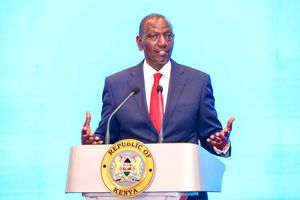
"This Registry serves as a foundational element of Kenya's National Carbon Market Infrastructure, functioning as the official national system for recording, tracking, and verifying emission reductions and forest-based carbon credits," said Cabinet Secretary for Environment, Climate Change and Forestry, Deborah Barasa, during the launch.
The registry technology, built using the Environmental Registry platform from S&P Global Commodity Insights, ensures robust security, customisation, and global connectivity. It connects Kenya's REDD+ Registry to S&P's Meta Registry, a cross-registry data-sharing system that enhances global transparency, traceability, and verification in carbon markets. This integration protects against double-counting of emissions reductions, a critical challenge that has affected the credibility of carbon markets worldwide.
Kenya is aligning the REDD+ Registry with its national climate laws, notably the Climate Change (Amendment) Act, 2023, and the Carbon Market Regulations, 2024. It will also integrate with Kenya's upcoming broader National Carbon Registry, thereby reinforcing the country's commitment to fulfilling its Nationally Determined Contributions (NDCs) under the Paris Agreement. This alignment ensures that REDD+ activities are fully embedded within Kenya's national carbon accounting and climate action strategies.
Guidelines
The Ministry of Environment introduced the Kenya REDD+ Nesting Guidelines in parallel with the registry launch. These guidelines provide a clear, consistent policy framework that allows smaller-scale or site-level REDD+ projects, typically managed by local communities, non-governmental organisations, or private landowners, to be "nested" into the national carbon accounting system. The guidelines codify equitable benefit-sharing mechanisms that ensure forest communities and indigenous people receive tangible and fair rewards from conservation efforts, balancing local action with national oversight and fostering inclusion.
The REDD+ Registry tracks the lifecycle of carbon credits generated through sustainable forest management, forest conservation, and enhancement of forest carbon stocks. It provides governments, the Ministry of Environment, Kenya Forest Service, conservancies, county administrations, local communities, and the private sector with a reliable, verifiable, and transparent repository of emissions reduction activities and credits.
This clarity builds international trust and confidence in Kenya’s forest-based climate mitigation efforts, opening new avenues for global climate finance, including both voluntary and compliance carbon markets, aided by Article 6 mechanisms of the Paris Agreement.
British High Commissioner to Kenya Neil Wigan hailed the Registry as “a powerful symbol” of the growing Kenya-UK partnership on climate and nature. He highlighted how the initiative strengthens Kenya's leadership in carbon markets and supports the shared goal of enabling people and nature to thrive.
Seif Mohamed, Managing Director of Conservation International East Africa, underscored the Registry's significance for advancing REDD+ implementation with transparency and accountability at its core. “It sets Kenya apart as a country focused on transparency and accountability in managing its REDD+ programme. He noted that the Registry establishes new benchmarks for carbon credit transparency, verifiability, and governance, positioning Kenya as a frontrunner in African climate finance and forest conservation.
To build local capacity and infrastructure, the UK will host the registry platform for an initial two-year period, serving as a transitional phase during which Kenya develops the institutional and technical infrastructure needed to operate the system independently. After this period, management responsibilities will transfer fully to the Kenyan government. This approach ensures Kenya's long-term operational autonomy while benefiting from international technical support in the critical early years.
This system is anticipated to unlock new revenue streams for Kenya's forestry sector by attracting private and public investment, particularly from UK-based finance, technology, and climate service firms. It is designed to generate revenues for both the government of Kenya and the local communities that steward the forests. The Registry also aims to reduce disputes over carbon rights and build a durable foundation for environmental, economic, and social benefit-sharing involving forest communities and indigenous people.
[email protected]