Misinformation still a major barrier to epilepsy care and support

Indiana University Associate Professor Jane Von Gaudecker, who is also the principal investigator at Beacon study project supported by Ampath, with health workers who provide care to epilepsy patients in Trans Nzoia on February 10, 2025

What you need to know:
- In Kenya, more than two million people suffer from epilepsy, with a prevalence study indicating one in every 100 people having the brain condition.
Negative cultural beliefs and misinformation surrounding epilepsy significantly impede proper medical care and social support for patients, experts say. They note that these misconceptions often lead to stigma, preventing individuals from seeking timely treatment and integrating fully into their communities.
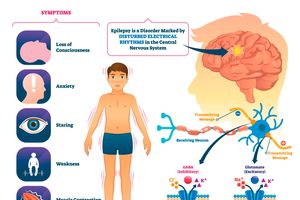
Epilepsy is a chronic noncommunicable disease of the brain that affects around 50 million people worldwide, according to the World Health Organization (WHO). It is characterised by recurrent seizures, which are brief episodes of involuntary movement that may involve a part of the body (partial) or the entire body (generalised) and are sometimes accompanied by loss of consciousness and control of bowel or bladder function.
Stakeholders who converged at Kitale National Museum in Trans Nzoia County on Monday to mark the World Epilepsy Day noted that there are many barriers to specialist care, including shortage of specialists.
Indiana University Associate Professor Jane Von Gaudecker, who is also the principal investigator for the epilepsy situation in Kenya, added that limited knowledge is a major barrier to epilepsy management.
“Communities in many countries still think that this disease is caused by curses, witchcraft or evil spirits, but we are here to convey the message that epilepsy affects the brain and patients can live seizure-free lives with proper medication,” said Jane, principal investigator at Academic Model Providing Access to Healthcare’s Beacon Study project.
Speaking during the event, caregivers and patients said stigma and misconceptions surrounding epilepsy make it harder for individuals to seek care and adhere to treatment.
“Many people believe that epilepsy is contagious or that those who have it should be treated differently. As a result, individuals with epilepsy often experience isolation, which can be even more challenging than the disease itself,” she added.
The Beacon project, implemented in Busia and Trans-Nzoia counties, aims to bridge this gap by providing evidence-based interventions that improve care retention, anti-seizure medication adherence, and overall quality of life for patients.
“By training nurses, clinical officers and medical officers, we hope to enhance care at the community level and bring effective epilepsy management closer to home. This will help people with epilepsy overcome barriers such as long travel distances to healthcare facilities and high treatment costs.”
“We must recognise the urgent need to address epilepsy as a public health priority. This World Epilepsy Day, we stand in solidarity with people living with epilepsy and reaffirm our commitment to improving their care and quality of life,” she added.
In Kenya, more than one million people suffer from epilepsy, with a prevalence study indicating one in every 100 people having the brain condition, according to the Beacon study.
In Trans Nzoia County, statistics indicate that over 1,000 patients suffer from the condition, but only about 200 are on record for treatment and care.
“This is one of the oldest conditions that is among neglected diseases, and the biggest challenge is that many patients are not coming out for treatment and care because of misconceptions and stigma associated with the disease, including barbaric cultural beliefs,” noted DrSylas Wambulwa, county coordinator of non-communicable diseases in Trans Nzoia.
He said through donor partnerships, the county government is creating awareness and bridging the treatment gap through subsidised medicines.
Dr Wambulwa highlighted that with the right diagnosis and treatment, most patients can live a normal life. “We have had a situation where we were chased away by a relative when we visited a patient because they believed it's not a disease but a curse, and this is what makes it difficult for patients to get timely help and care,” he added.
He said families with epileptic kin should seek the right help in medical facilities and stop going for traditional medicines that do not help them.
Epilepsy is not contagious. Although many underlying disease mechanisms can lead to epilepsy, the cause of the disease is still unknown in about 50 per cent of cases globally, according to WHO. Risk factors include brain damage from prenatal or perinatal causes (such as loss of oxygen or trauma during birth, low birth weight); congenital abnormalities or genetic conditions with associated brain malformations; a severe head injury; a stroke that restricts the amount of oxygen to the brain; an infection of the brain such as meningitis, encephalitis or neurocysticercosis, certain genetic syndromes; and a brain tumour.