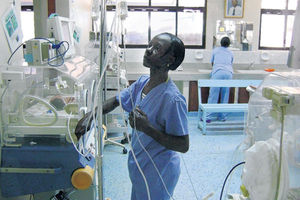
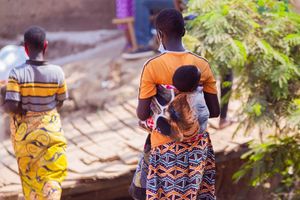
Moi Hospital pushed to the brink: Teenage pregnancy surge overwhelms newborn unit
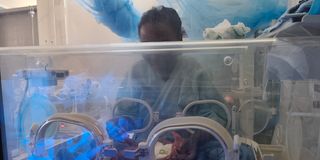
A preterm baby inside an incubator at the newborn unit of Moi County Referral Hospital in Voi, Taita Taveta. The facility has recorded a rising number of preterm births, mainly attributed to teenage pregnancies.

What you need to know:
- Medics identify hypertension and high blood sugar as common contributors, exacerbated by poverty, lack of education, and limited access to reproductive health services.
At the newborn unit of Moi County Referral Hospital in Voi, the cries of infants echoed through the corridors during World Prematurity Day on November 17.
But behind those sounds lies a deepening crisis: a sharp rise in preterm births, heavily linked to teenage pregnancies, is pushing the facility to its limits.
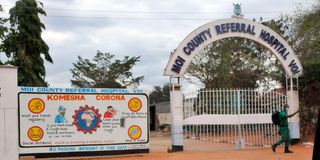
The Moi County Referral Hospital in Voi. Over the past year, the facility has seen 160 preterm deliveries; a trend health officials call alarming.
According to Steve Okello, the medic in charge of the Newborn Unit, the hospital has recorded 93 preterm births in the past six months. Twenty of these were born to adolescent mothers under the age of 17. Over the past year, the facility has seen 160 preterm deliveries; a trend health officials call alarming.
"Teenage pregnancies are the leading cause of preterm births at the facility. Many young mothers delivered here before their babies reached full term," Okello stated.
Medics warn the situation could worsen unless urgent interventions are made to support young mothers and strengthen maternal and neonatal care in the county.
The unit admits an average of 35 babies every month, primarily preterms and others with medical complications.
“Preterms are the most common cases we handle. The smallest baby we admitted weighed 750 grammes and was discharged after 86 days at 1.84 kilogrammes on November 4,” Okello said.
Currently, the unit is caring for 19 infants; 15 are preterm, two are on oxygen, and two are undergoing phototherapy. However, limited space, equipment, and personnel are straining its capacity to cope.
"We do our best with what we have, but we need more equipment, more staff, and better infrastructure. That would go a long way," Okello explained.
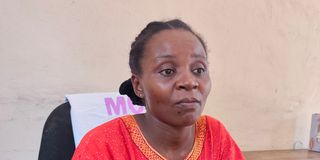
Mary Wakio recounts the loss of one of her preterm twins.
The surge is stretching the hospital’s thin resources and raising alarm over the well-being of both mothers and babies. The hospital practises Kangaroo Mother Care, but space constraints force mothers to do it beside the incubators instead of in a dedicated room.
Critical equipment is in short supply. The hospital has only seven phototherapy machines, yet the demand is for at least 15. While the supply of Continuous Positive Airway Pressure (CPAP) machines is sufficient, oxygen remains a persistent challenge.
Keep lungs open
The CPAP machines support newborns with breathing difficulties by delivering heated, humidified air and oxygen to keep their lungs open and ease respiration.
“We rely on cylinder oxygen, which is risky. We’ve lost babies during cylinder changes. Piped oxygen would make a big difference,” Okello said.
With only five incubators, multiple neonates are often forced to share, increasing the risk of infection.
Okello said staffing is another critical issue, with two consultants, two medical officers, and 11 nurses struggling with an overwhelming workload, especially during night shifts.
“If we could get more incubators, it would greatly improve care. Also, sometimes there’s only one nurse on duty. With so many babies to care for, providing quality care becomes difficult.”
Dr Juliet Macharia, the hospital’s gynaecologist, emphasised that early intervention is key to preventing preterm births, but many women seek help too late.
She identified hypertension and high blood sugar as common contributors, exacerbated by poverty, lack of education, and limited access to reproductive health services.
“Mothers often arrive with little or no antenatal care, increasing the risk of complications. Conditions like hypertension and diabetes are manageable if detected early, but many mothers come to us too late,” Dr Macharia said.
She stressed the need to educate communities about the importance of antenatal care, urging women to attend the clinics early and regularly.
“We need to engage the community to tackle the root causes.”
According to the 2022 Kenya Demographic and Health Survey, Taita Taveta has one of the highest teenage pregnancy rates in the country, with many girls under the age of 18 years becoming mothers.
Speaking during the World Prematurity Day event, Mchikirwa Ndelejai, founder of Mama Care, highlighted the immense emotional, physical and financial strain that mothers face after delivery. “They face many challenges, navigating the trauma of premature birth, which is not easy,” she said.
Her organisation donated toiletries and chairs to the struggling unit.
Meanwhile, in a boost to maternal and newborn care, President William Ruto has reaffirmed his administration's commitment to reducing preventable deaths among mothers and babies through strategic partnerships and targeted investments.
Speaking at State House during the handover of medical supplies from the World Health Organization (WHO), the President said the consignment would directly support maternal health systems across the country.
“No woman should die while giving life, and no baby should be lost to preventable causes,” he said.
He noted that the country’s maternal and newborn mortality rates remain unacceptably high, emphasising the need for urgent, coordinated action to reverse the trend.
Five counties with the highest maternal and child mortality rates - Elgeyo-Marakwet, Samburu, Marsabit, Tana River, and Siaya - have each received a fully equipped ambulance to strengthen emergency response and referral systems.
“300 maternal and child mortalities for every 100,000 are too high, and all efforts must be dedicated to bringing this down to 70," he said.
WHO Regional Director for Africa, Prof Mohamed Yakub Janabi, said the donation included 952 items of reproductive and maternal health equipment and training models to improve post-abortion care, particularly in underserved areas.